
Don’t worry, there’s nothing wrong with the blog, the image above is intended to encapsulate how we are all feeling as we begin to wind down our experience and process what this all means for us, and our purpose as we move forward.
Today was confronting, no doubt about it, and the thing about this journey is that some aspects make an instantaneous impact, like the immediacy of friendships formed with the Geckos, and others take longer to mentally fathom.
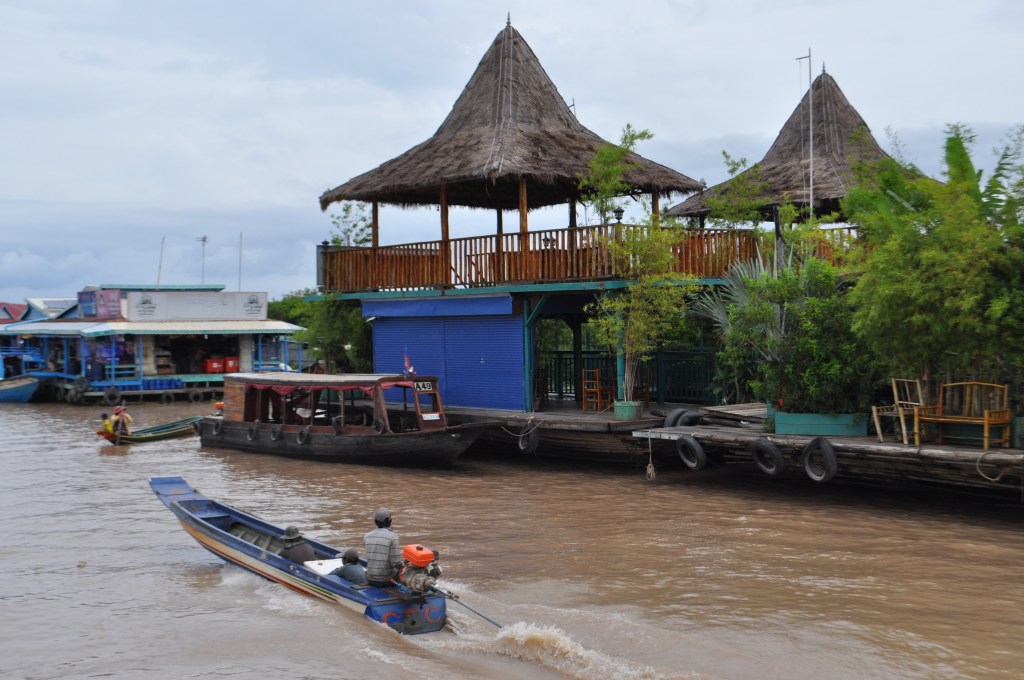
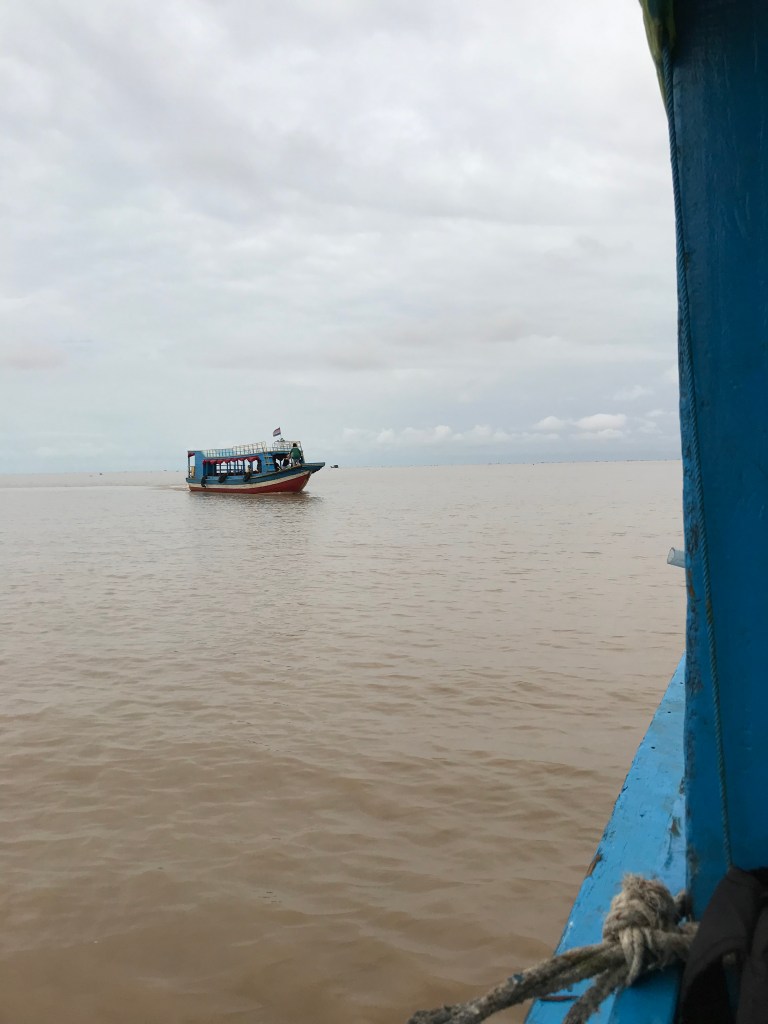
We began the day with a boat cruise at Lake Tonle Sap. This vast expanse of freshwater lake is the largest in South East Asia and varies in size depending on the time of year. During rainy season from June to October, the lake is filled by water flowing from the Mekong to 14 metres in depth a surface of 10,000 square kilometres. In dry season from November to May, its size reduces to 3,000 square kilometres and water flows out from the lake to the Mekong.
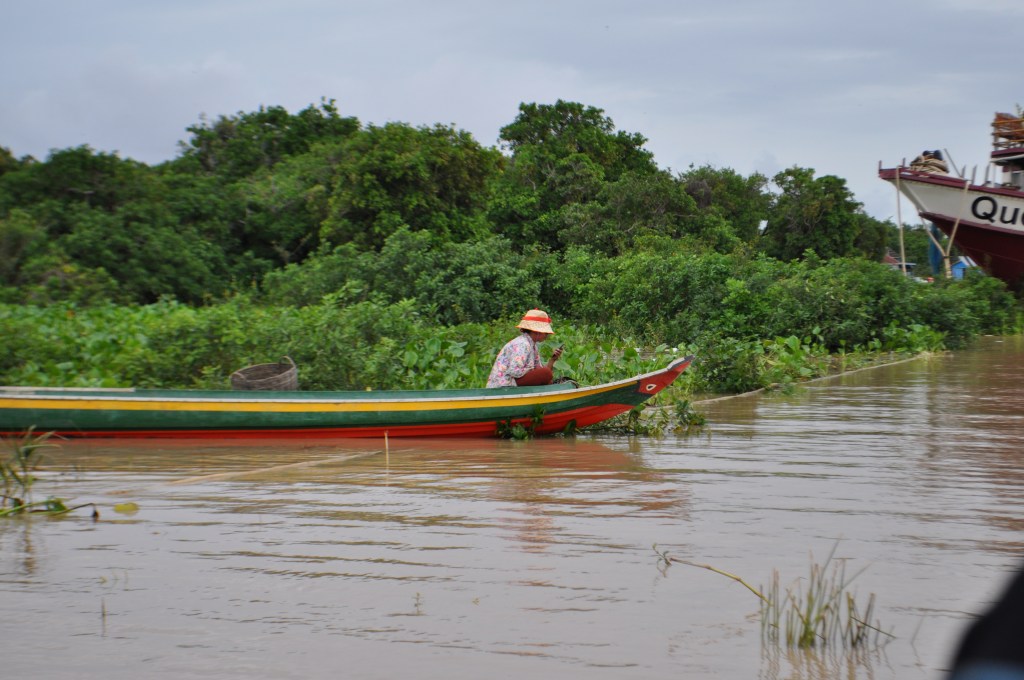
One of the poorest communities in Cambodia, with an average life expectancy of 54 years, traditional subsistence sees inhabitants living in floating villages and deriving income from tourism and aquaculture. This lake provides much of Cambodia’s biodiversity with over 300 species of fresh water fish, as well as snakes, crocodiles, tortoises, turtles and otters and more than 100 varieties of water birds.
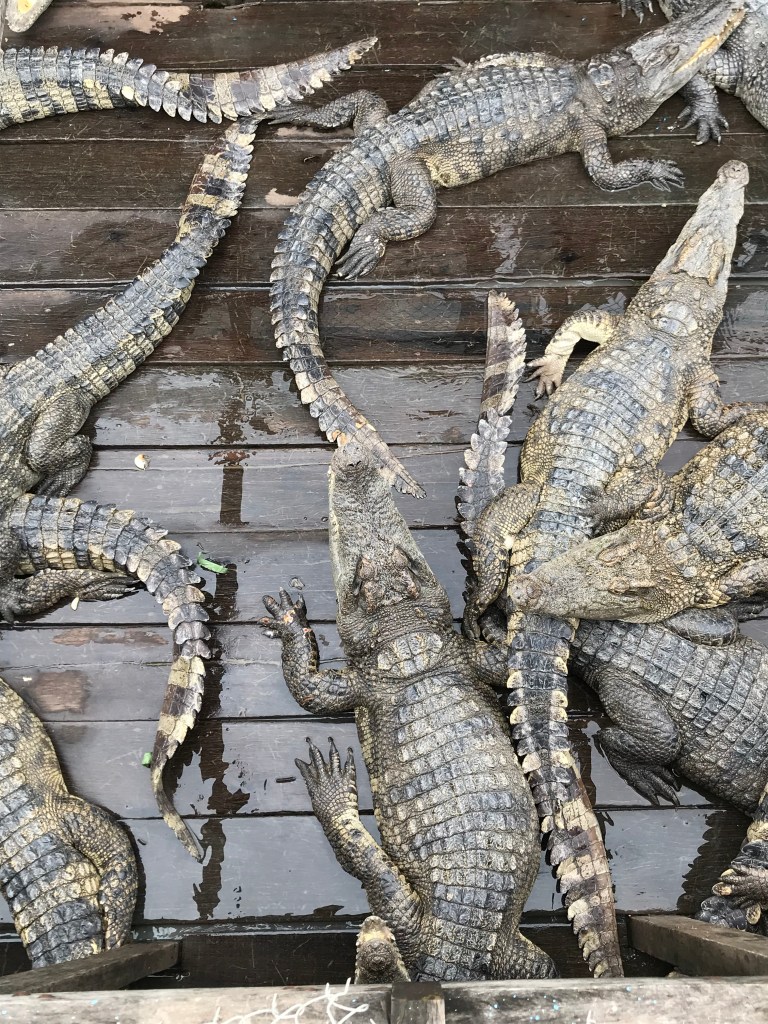
The pollution of the lake and presence of visible poverty was quite confronting. During the trip, small crafts drew alongside our boat, occupied by a mum and 4-5 children, some as young as 2 years of age, draped in snakes and begging for us to take photos. We stopped at a fish and crocodile farm, where the animals are bred for consumption and/or their hides, and were surprised by the number of animals kept in a small enclosure.
Amidst these horrendous conditions, people nonetheless manage to survive, and we need to be mindful of the line between discomfort and judgement as we react to such experiences. These communities have made a living here for generations, and their ingenuity and resourcefulness also is to be noted. Sadly, it is the effects of invasion, civil war, and more recently, a tourist influx which has brought with it pollution and waste, that has disturbed the traditional practices.
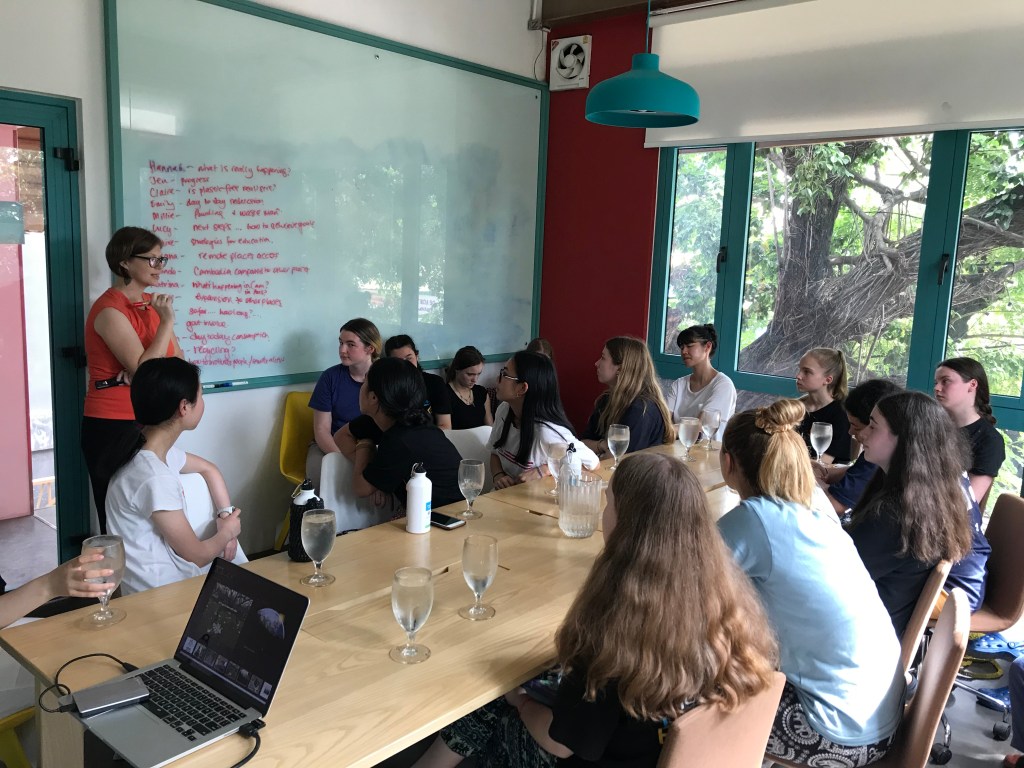
We spent the afternoon participating in a presentation and workshop with Sarah Rhodes from Plastic Free South East Asia. Beginning her career in tourism and digital marketing, Sarah found her way to Cambodia 5 years ago, working with Michael Horton from ConCERT, who we met yesterday. Sarah helped the students develop their wonderings about plastic use and pollution in the region, and left us with some practical tips to reduce consumption and make positive changes. She shared and recommended some online videos as well, to help better understand the background and causes of the problem. She shared some compelling statistics from research into single use plastics, including that the average amount of time that a single use plastic bag is actually used for its manufactured purpose, is 12 minutes.
Sarah kept a realistic and relatable tone in her presentation, and conveyed that instead of being crippled by perfectionism, we need to focus on doing what we can, when we can, to the extent that we can. This might mean getting that McDonalds drink, but requesting no lid or straw, as an example. She outlined the top 5 plastic enemies which are:
- Plastic/styrofoam food containers
- Plastic bags
- Straws
- Water bottles, and
- Coffee cups
If we all make an effort to at least reduce or substitute some of these items, the collective impact would be significant.
Tomorrow, we visit the APOPO visitor centre to learn how specially-trained African rats are being used in landmine clearing efforts. We will then travel by bus to our homestay at Kulen Mountain National Park, about 2 hours north east of Siem Reap. As we go off grid, we will ensure that your daughters continue to be well cared-for and get the most out of their experience.
 cggscambodiaimmersiontour.travel.blog