The Days app on my phone tells me we have just 25 days until we depart for the Cambodia December Tour. Hard to believe, considering we still have Exams and Headstart ahead of us, but this tour will certainly be something to look forward through as students face the academic challenges of the end of the year!
This blog will be updated a couple of times before our departure and daily throughout, excepting the homestay where internet coverage is limited. Please see the previous post Travel Tips for some useful information on the practical side of travel, including washing clothes and electricity adaptors.
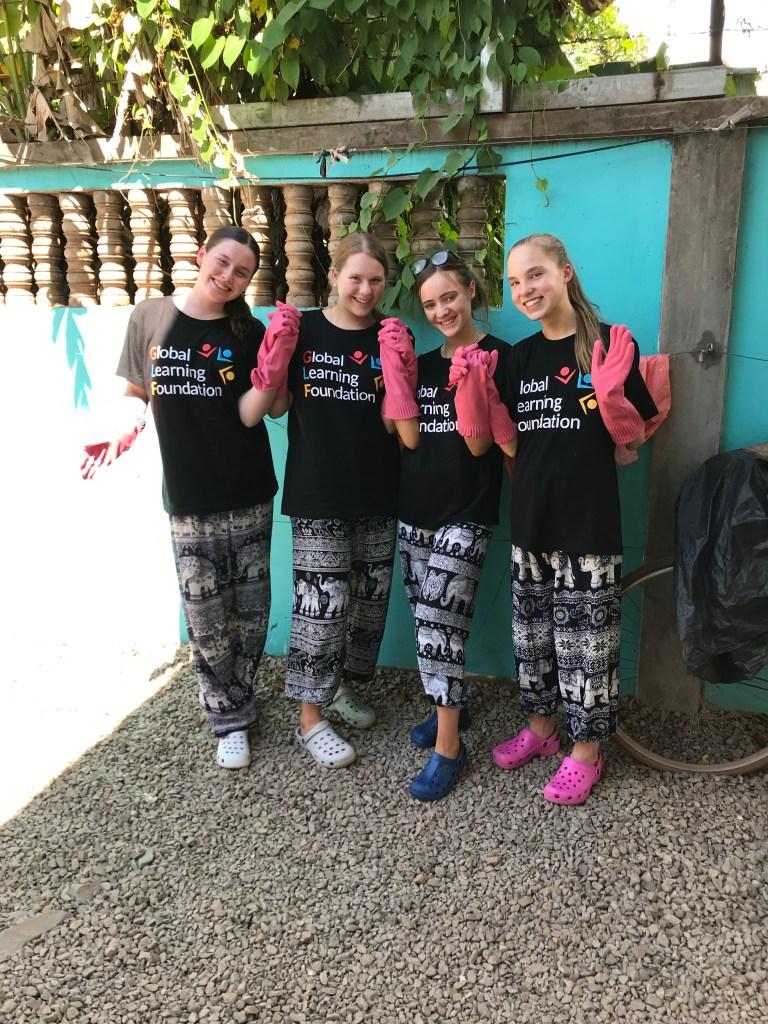
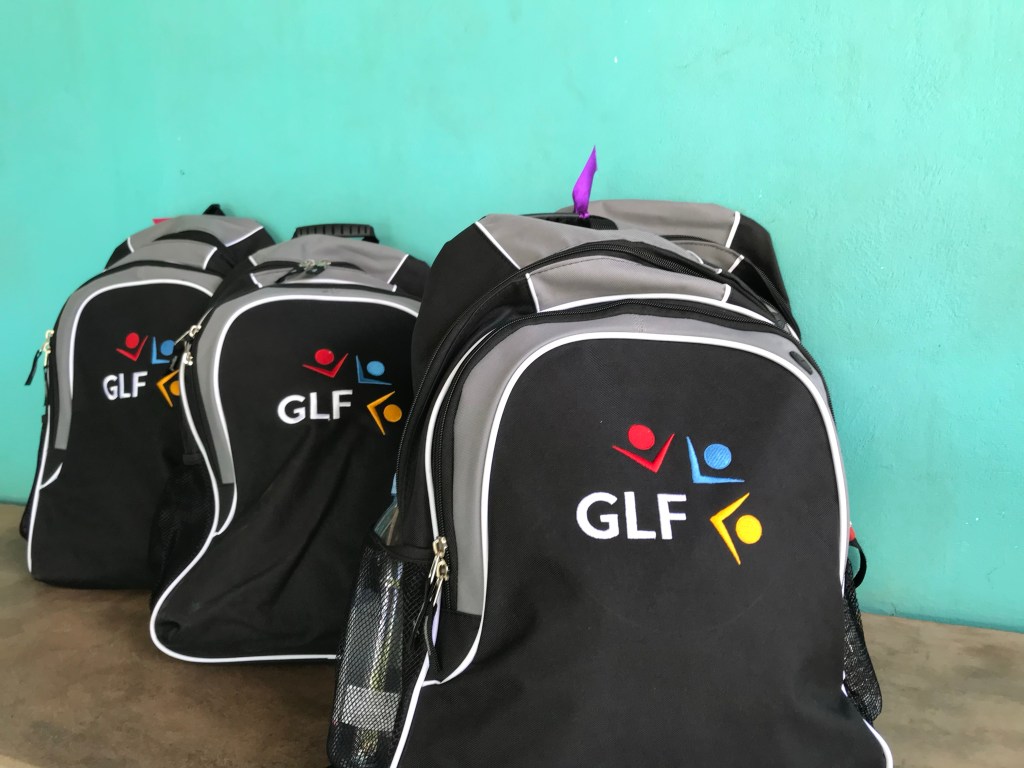
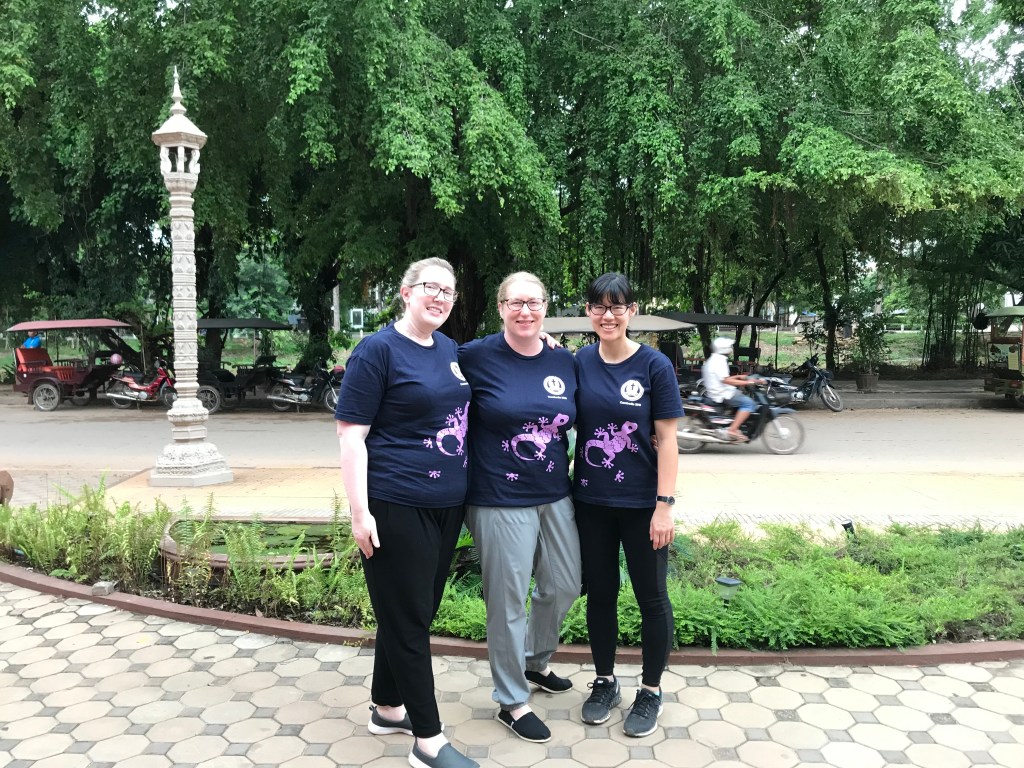
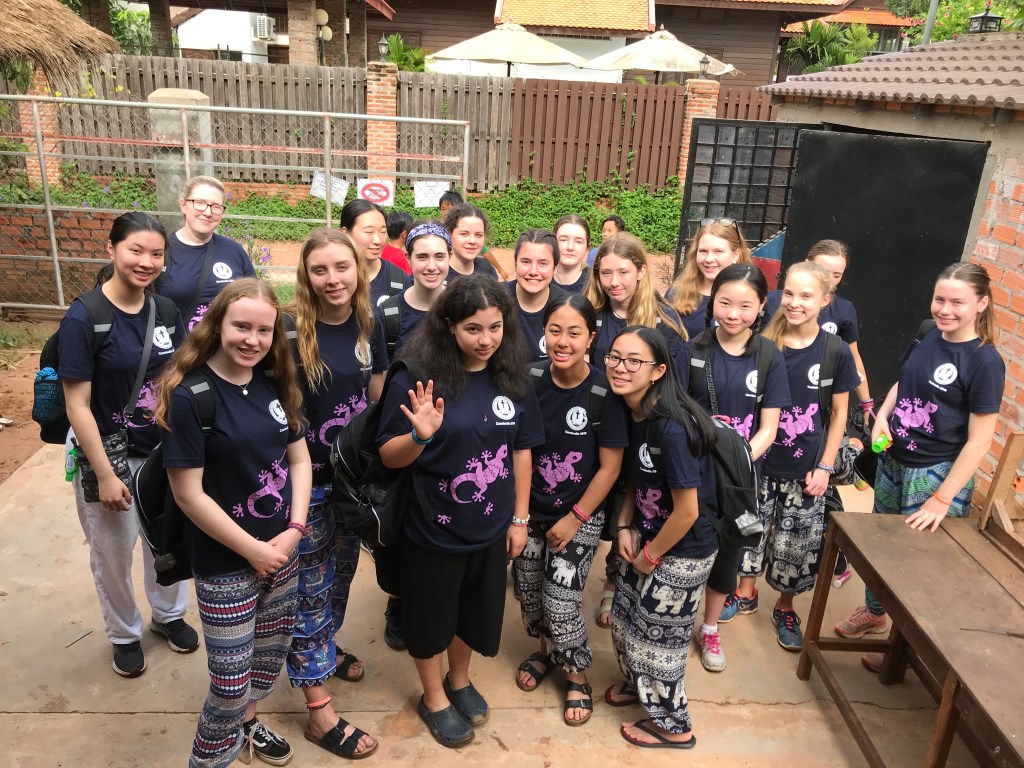
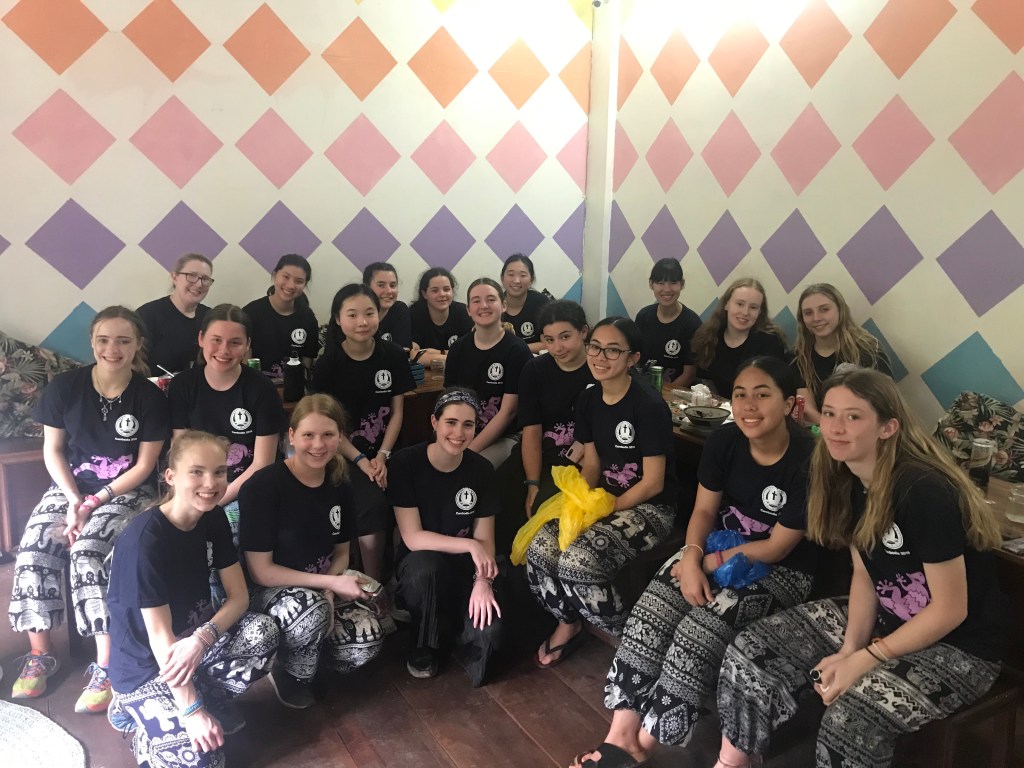
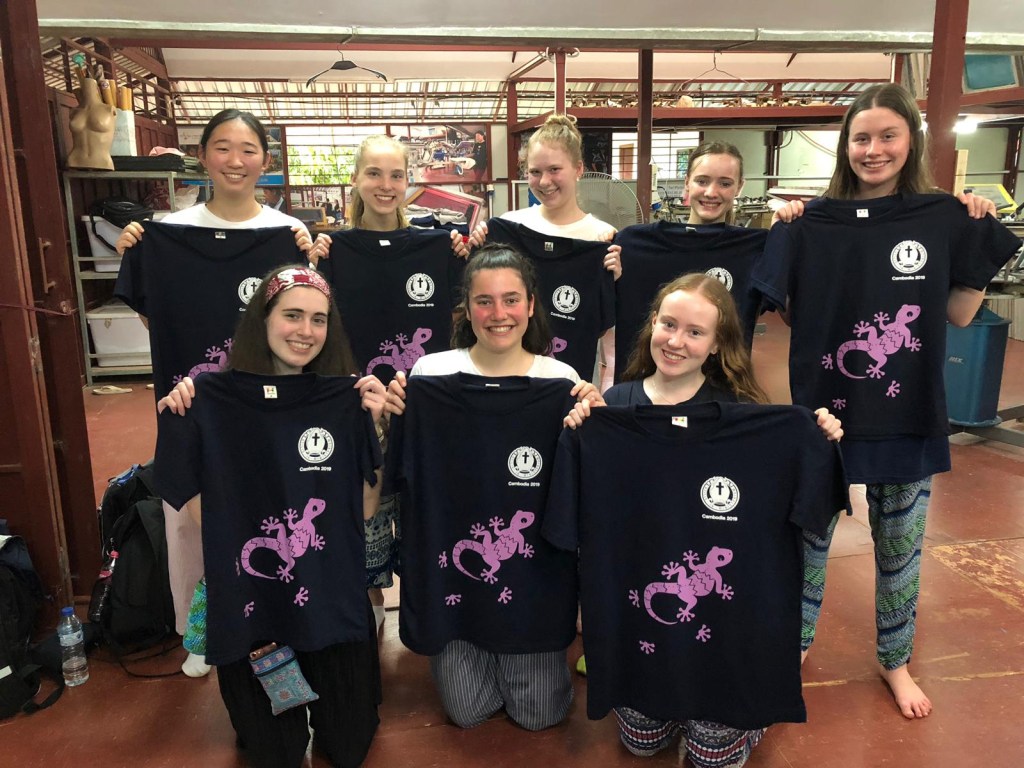
We will have the opportunity to come together on Thursday evening for the final parent briefing with GLE. Students will also receive their tour backpacks and t-shirts at this session. The backpacks are really practical and will be used for carry-on luggage. The t-shirts are worn during the tour, along with the one that you will print at the Silkscreen Printing Lab social enterprise.
Parent Briefing Details: Thursday 14th December CGGS Senior School Library 6.00-6.45pm
We’re back from the homestay! Soon we will be winging our way back to Melbourne and look forward to meeting you at Tullamarine very soon. This blog post will include details of our flight home and some updates on the homestay also.
Returning flight details and updates
VN781 is the flight number from Ho Chi Minh City to Melbourne. Scheduled arrival is 8.35am. You can track flight information on the Vietnam Airlines website, in case there is any delay.
Post-travel tips
Malarone is required for 7 more days after arriving home. Doxycycline is required for 28 days after arriving home. Please ensure your daughter sets an alarm on her phone to take the relevant medication at 10am every day. We have been taking this medication at 7am each day, so allowing for the time difference, 10am will be the best time
As our flight is overnight, the likelihood is that your daughter may be tired on Monday and need a nap
It may take some time for the full significance of this experience to become apparent for your daughter. Continue to ask open-ended questions and and help her work through her thinking. If she is feeling distressed, please do not hesitate to get in touch and see if we can help
If your daughter falls ill in the next week or so, please let us know; it is helpful to be able to correlate this information in case there is anything in common across the group. Email is the best means of contact during the break.
Reflections on the Homestay
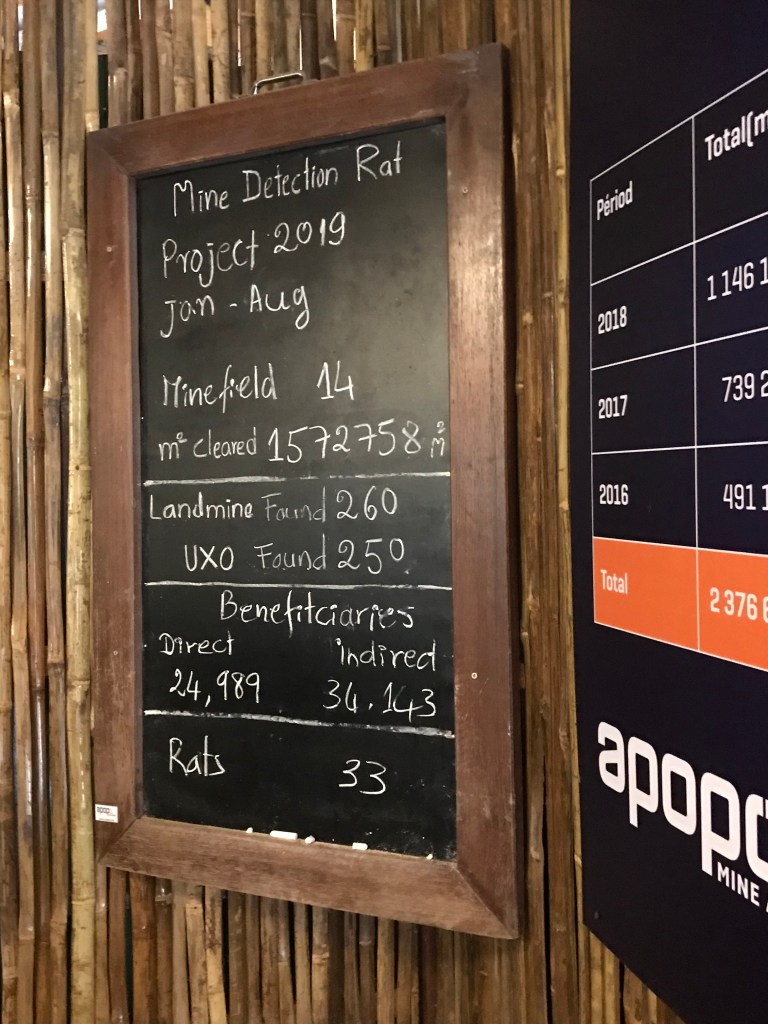
We checked out of our home away from home at City River hotel in Siem Reap on Friday morning, and headed to APOPO for the morning. A humanitarian de-mining project, APOPO was founded with the purpose of training rats to sniff TNT in landmines and thereby assist in mine-clearing efforts in previous conflict areas. The project is explained in the video below. The impact of APOPO’s work has increased exponentially each year since they started work in Cambodia in 2016.
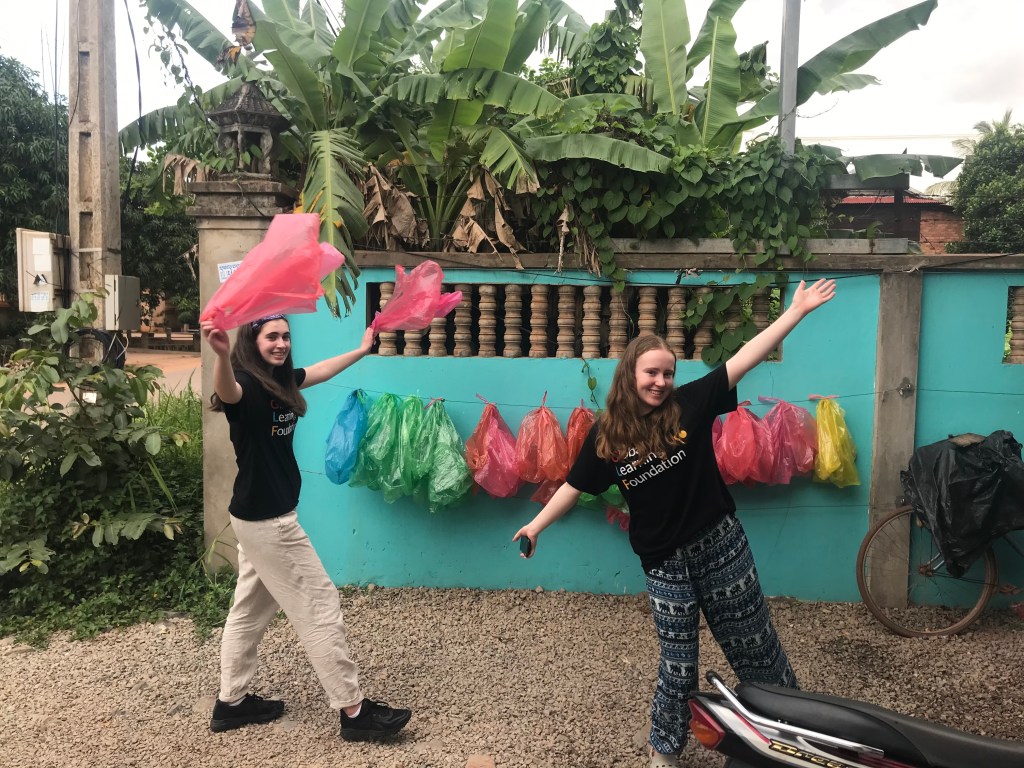
From APOPO, we began a 2 hour trip into the Kulen Mountain district of Siem Reap province. The “Dandenongs” of Siem Reap, the Kulen National Park is a day trip destination for locals and visitors, though hardly corresponds to the pristine national parks that we have in Australia. As most of Cambodia does not have centralised rubbish collection or recycling, the popular spot is sadly tarnished by mountains of plastic waste.
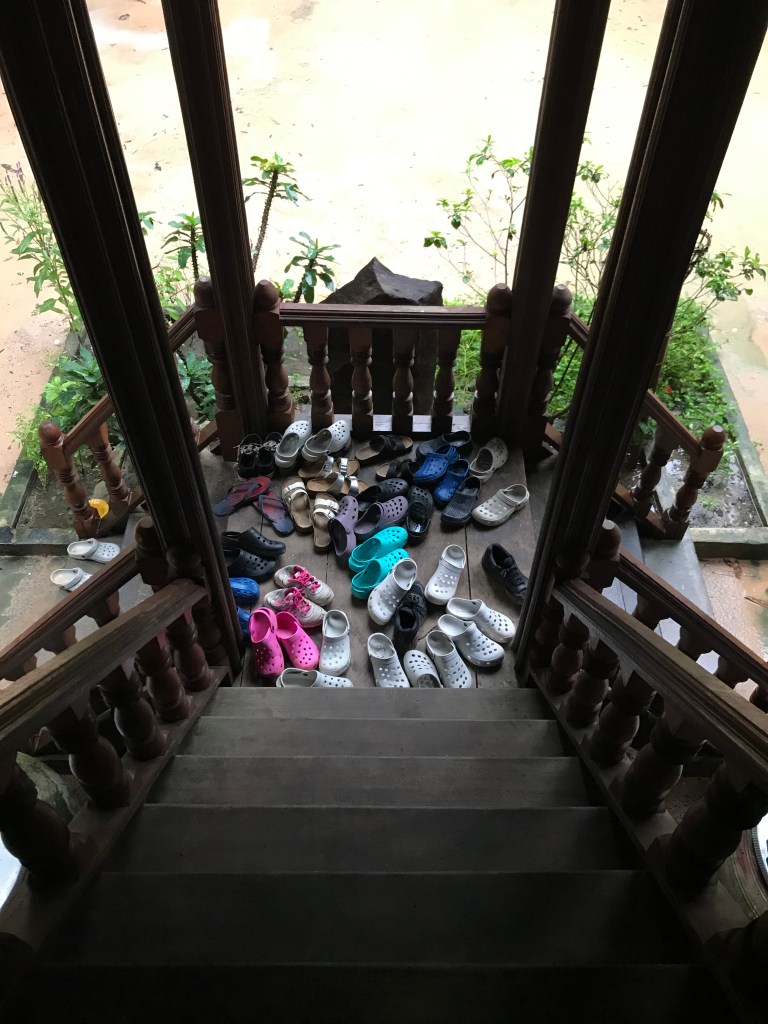
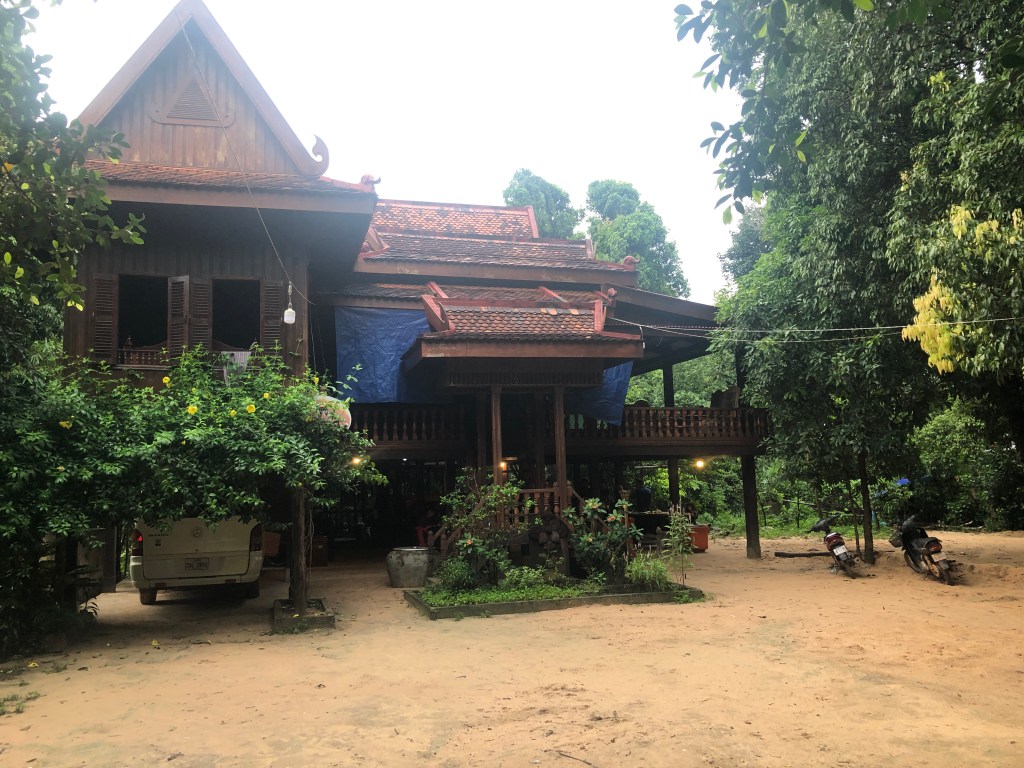
The degraded environment did not quell the enthusiasm with which we were received by our host family in this “Kingdom of Smiles”. We spent the two days in our homestay enjoying the meals so diligently prepared for us, and immersing ourselves in the sights and sounds of a rural environment: generators rumbling, roosters crowing, monks chanting, children capering and waterfalls rushing.
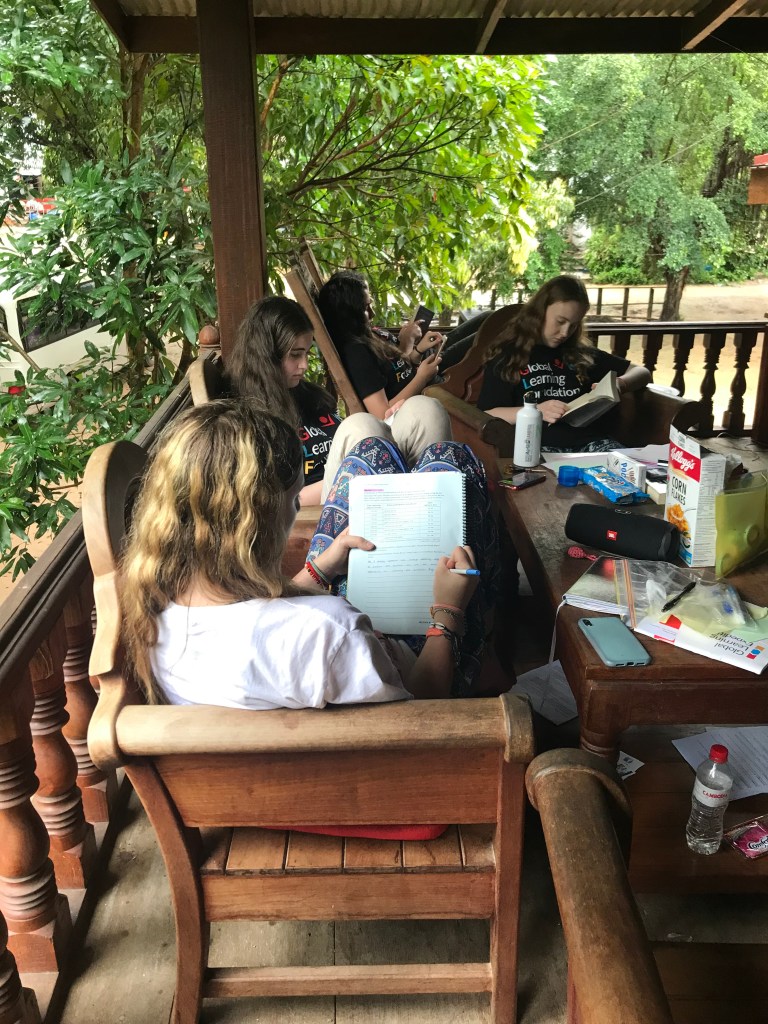
We led some discussion groups and the Year 11 students who came on the last Tour took a leadership role in sharing their knowledge and research into sex trafficking and modern slavery. We also had some hard-fought rounds of trivia, meditation, card games, journalling, reading and resting.
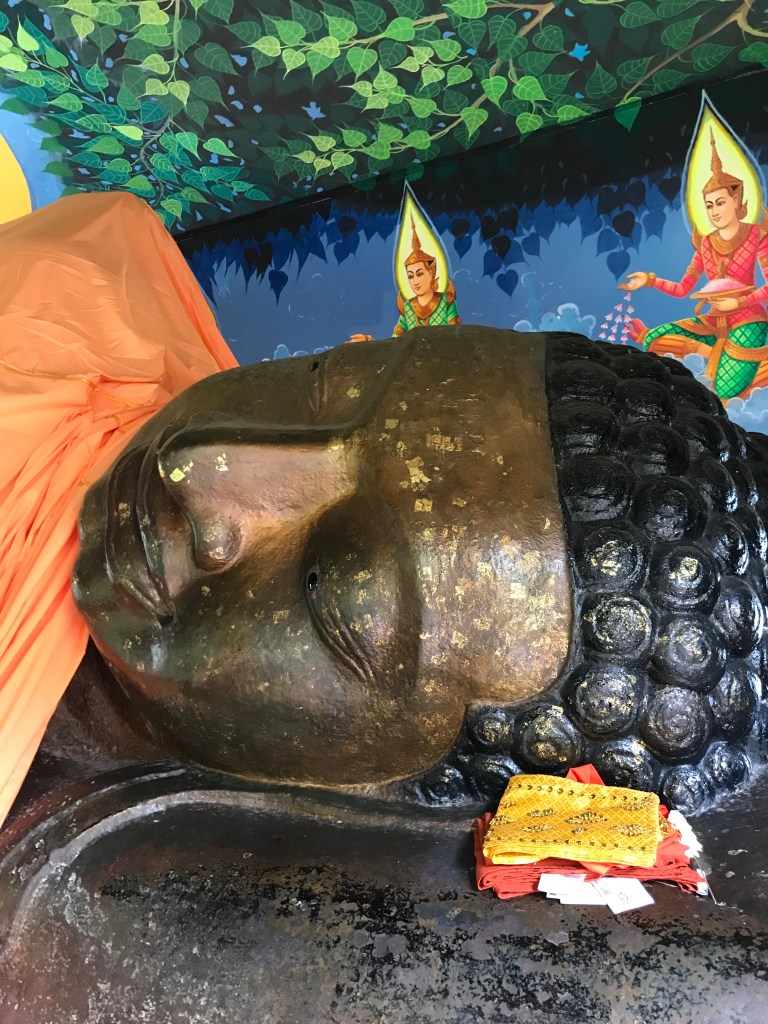
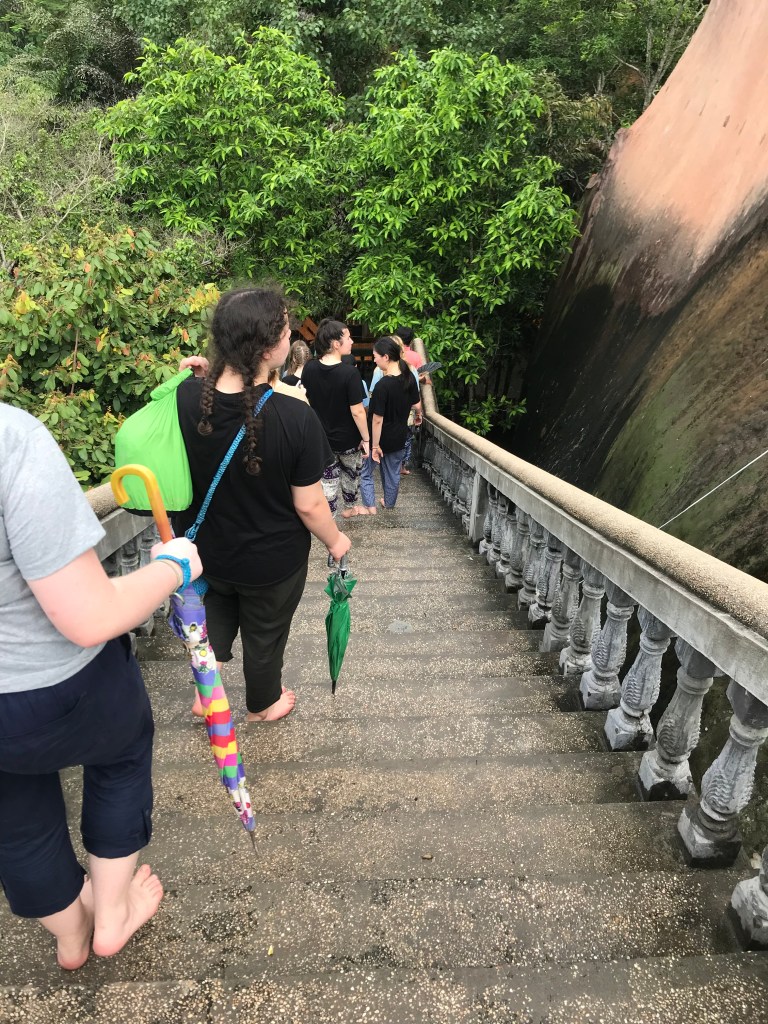
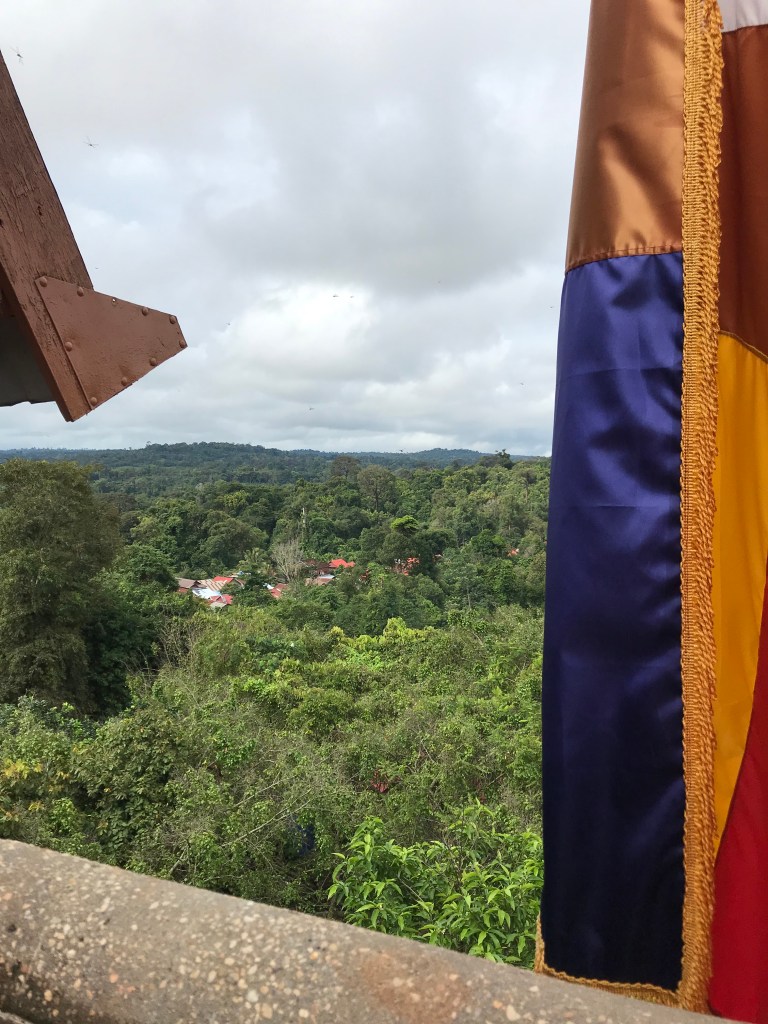
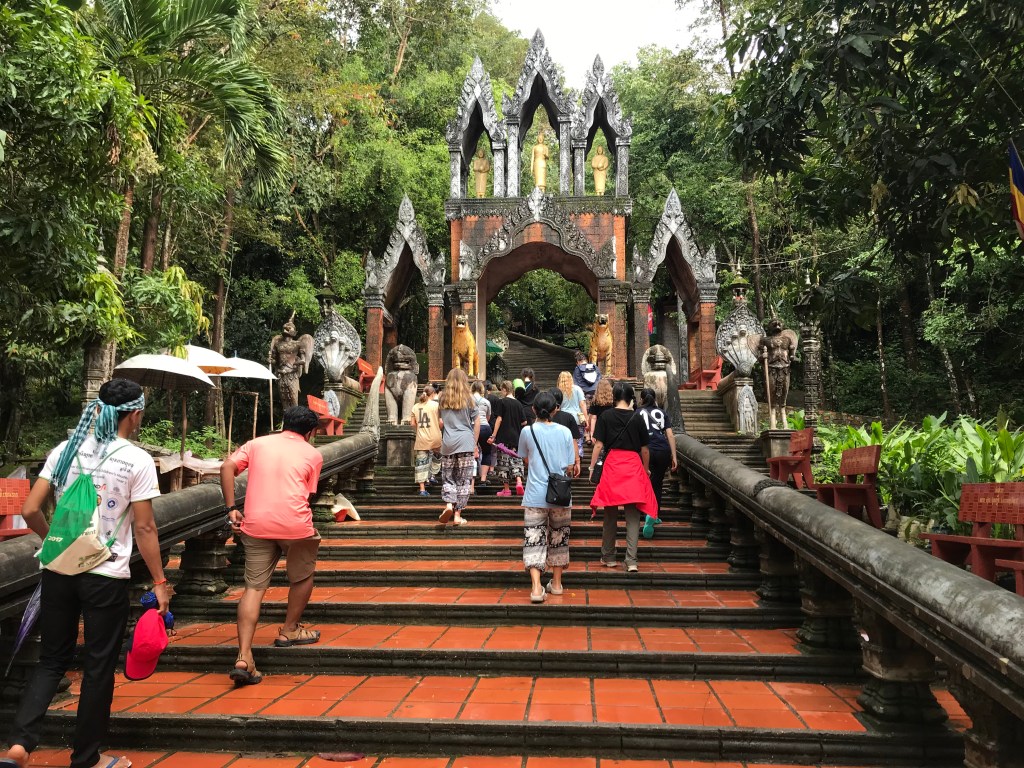
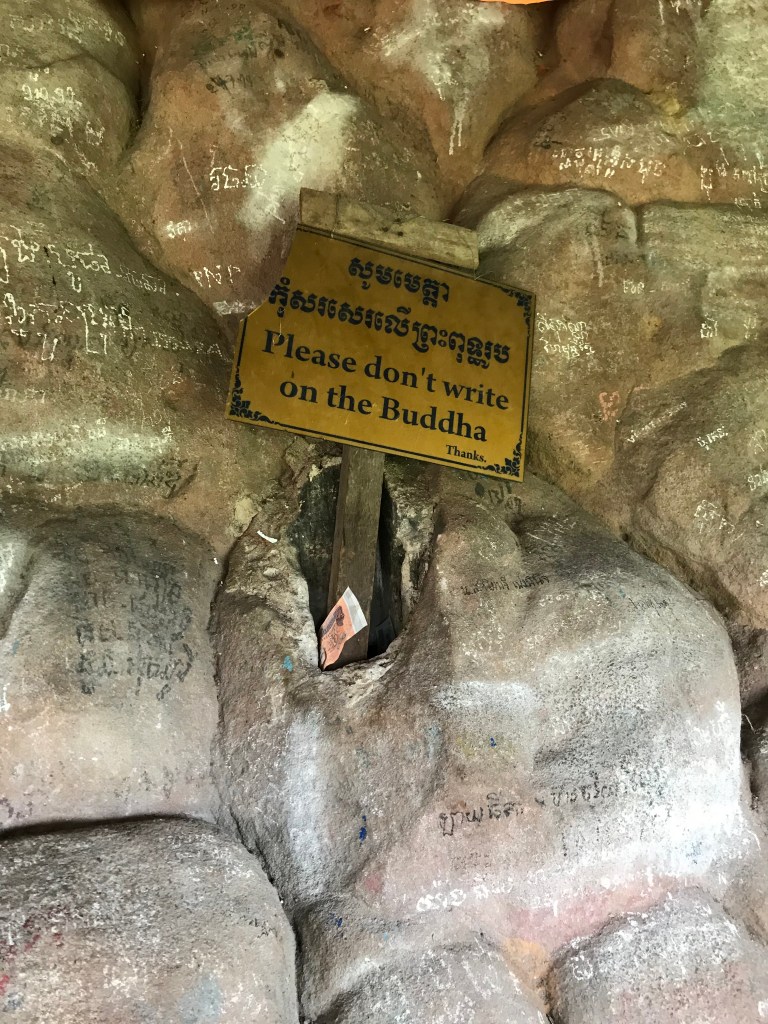
Despite the basic conditions, the students embraced the slower pace of village life, and on the second afternoon we took a walk to the local pagoda, designed to be elevated from the main village, the dramatic stairways and captivating vistas were enjoyed by the students. Some took the opportunity to see the giant reclining Buddha statue, and others chose to receive a blessing from the monks.
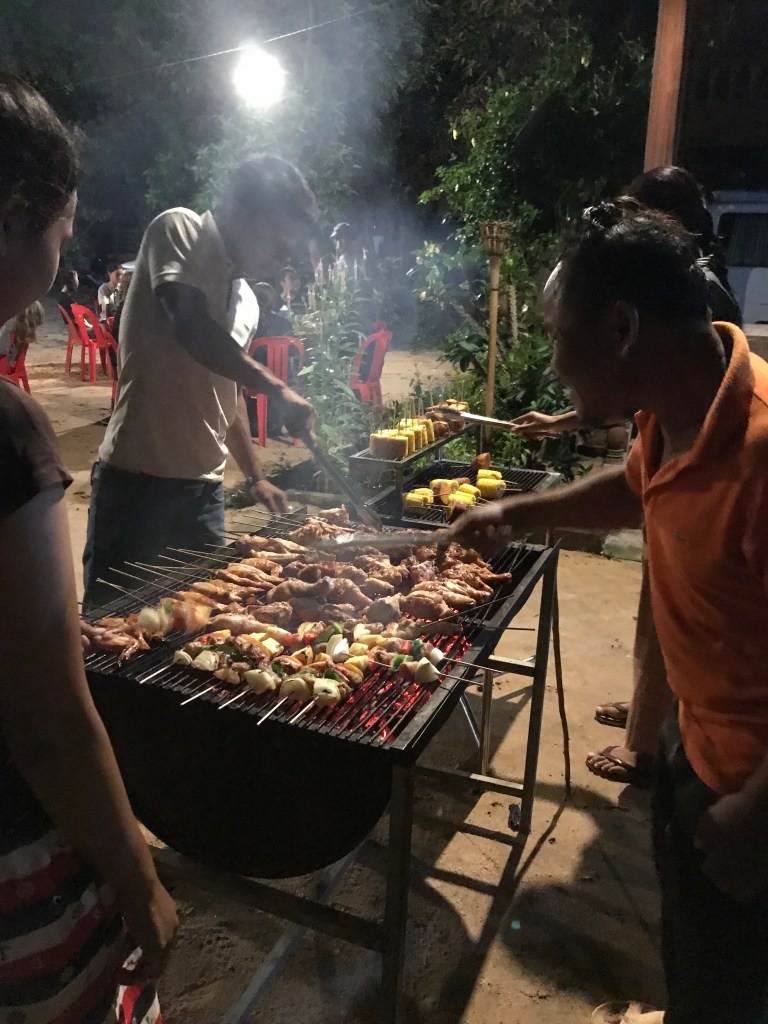
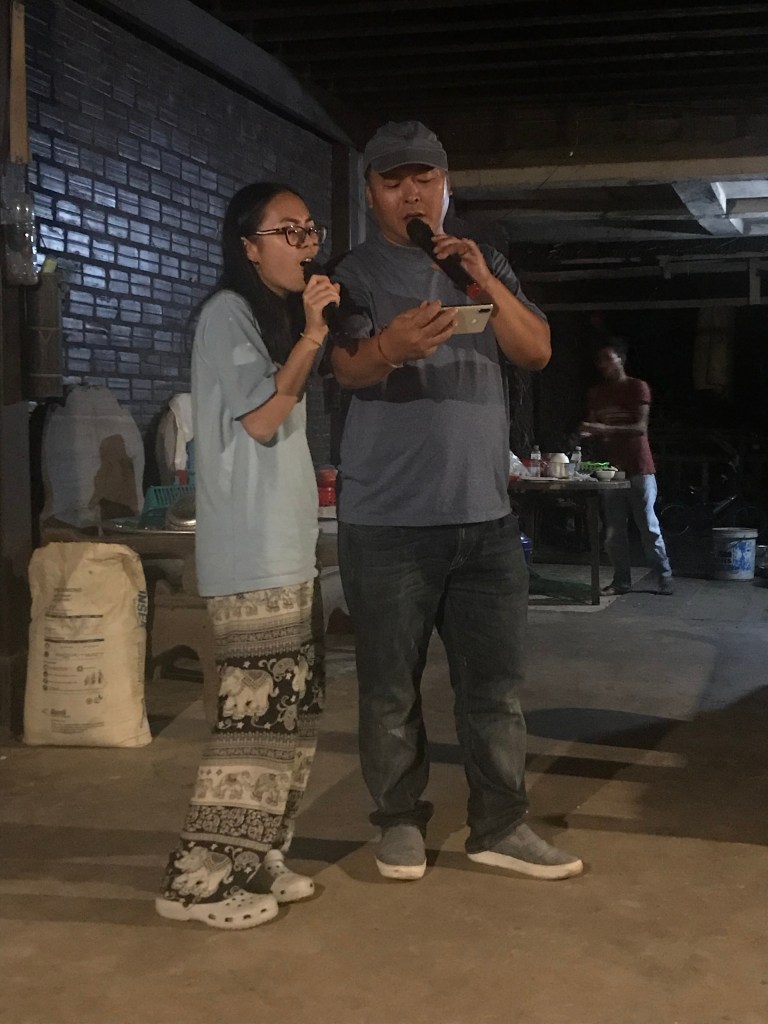
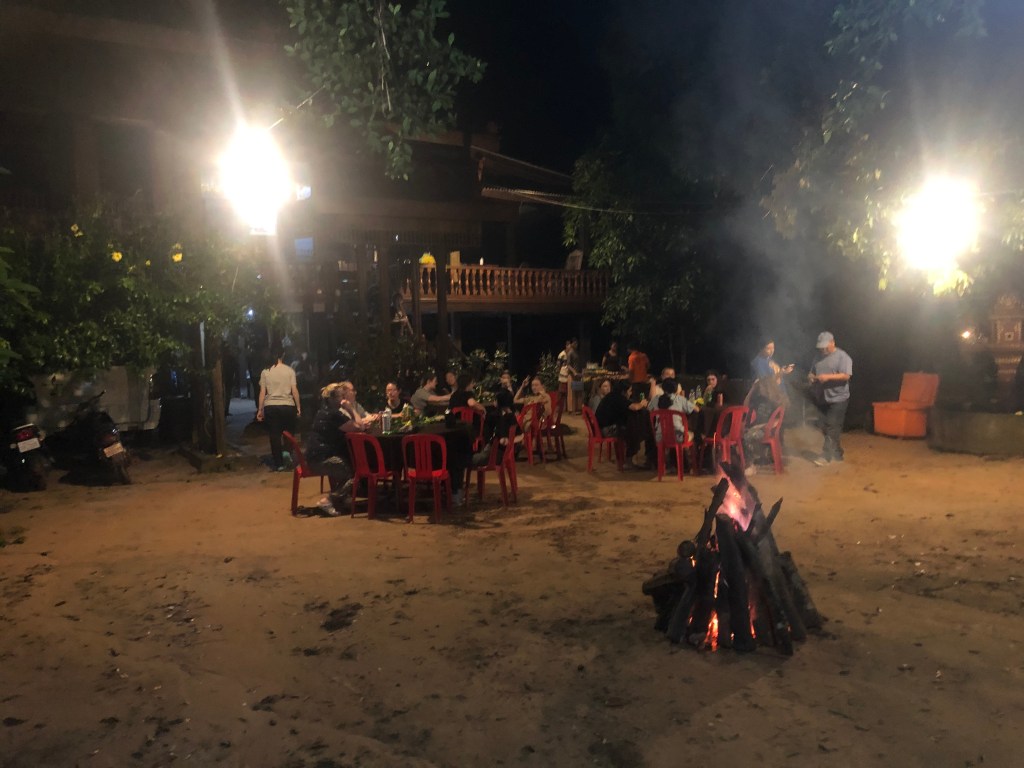
The final night in our homestay was set up as a big celebration, with a special BBQ dinner. We were joined by the wife and children of our host Seung, as well as the staff, and spent the evening enjoying karaoke and dancing around the bonfire.
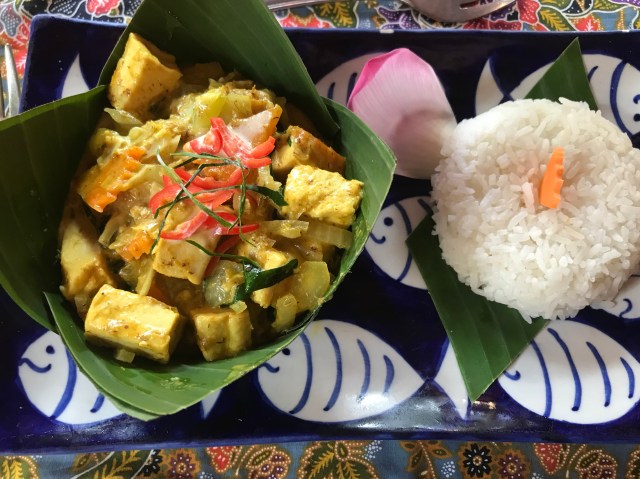
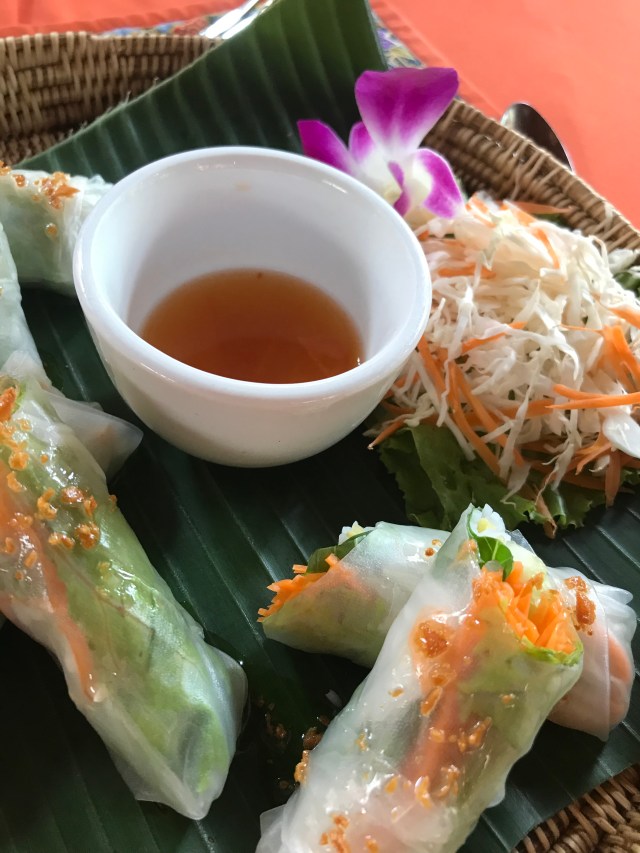
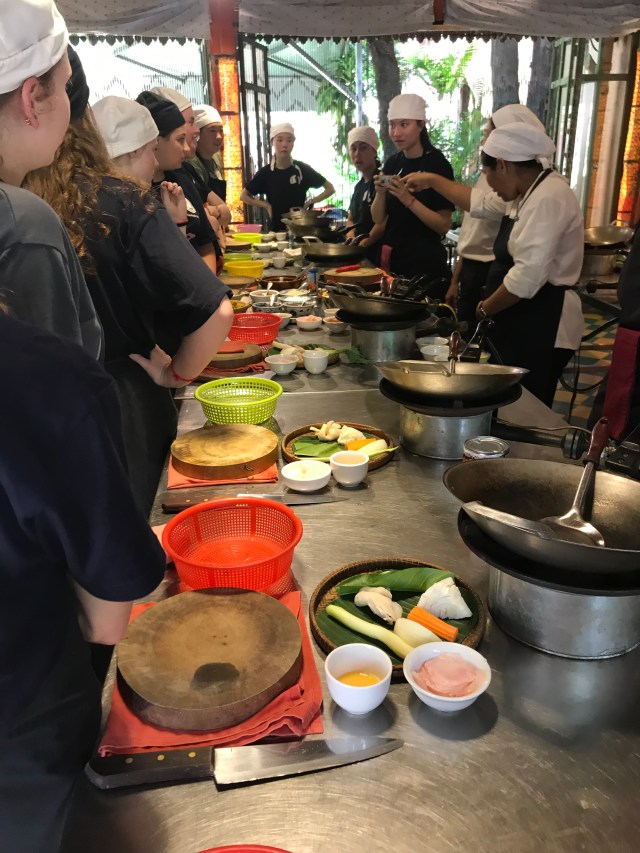
An early start to today enabled us to get back to Siem Reap in the morning and freshen up at City River Hotel, where they allowed us access to two rooms to have a shower and pack our suitcases up for the flight home. Lunch was cooked by ourselves as we participated in a cooking class and learned how to make rice paper rolls, amok curry and a special fried banana and coconut cream dessert: you may have to request these items on your family menu back at home!
Your daughters have relished in this experience, and we have loved having their company, humour, antics and thoughtfulness. All the very best, until we see you again,
Don’t worry, there’s nothing wrong with the blog, the image above is intended to encapsulate how we are all feeling as we begin to wind down our experience and process what this all means for us, and our purpose as we move forward.
Today was confronting, no doubt about it, and the thing about this journey is that some aspects make an instantaneous impact, like the immediacy of friendships formed with the Geckos, and others take longer to mentally fathom.
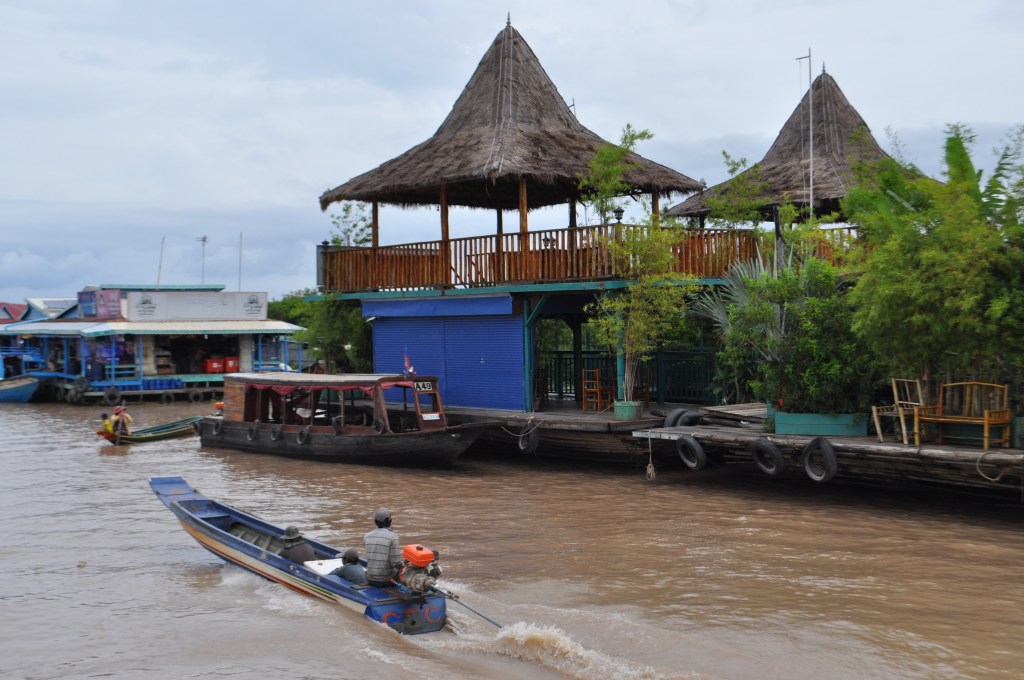
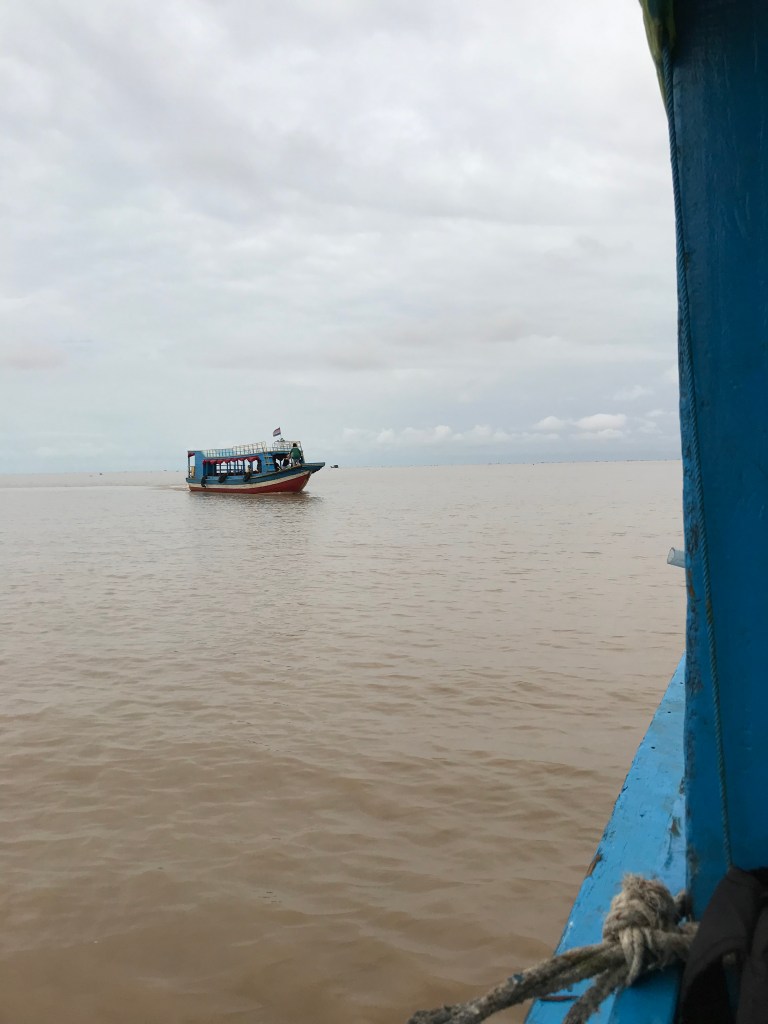
We began the day with a boat cruise at Lake Tonle Sap. This vast expanse of freshwater lake is the largest in South East Asia and varies in size depending on the time of year. During rainy season from June to October, the lake is filled by water flowing from the Mekong to 14 metres in depth a surface of 10,000 square kilometres. In dry season from November to May, its size reduces to 3,000 square kilometres and water flows out from the lake to the Mekong.
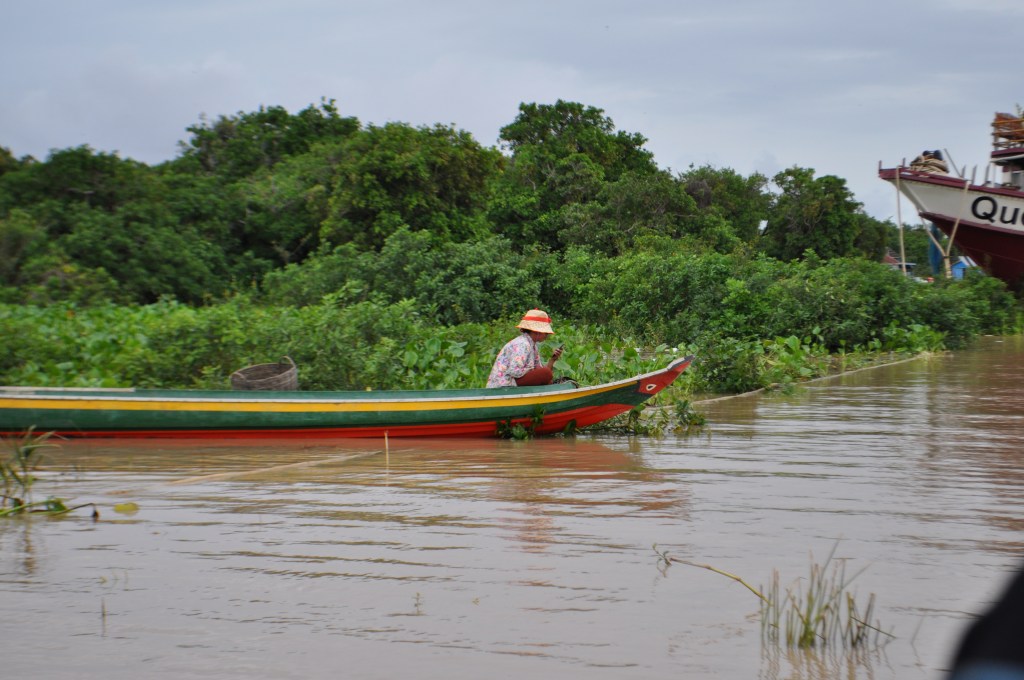
One of the poorest communities in Cambodia, with an average life expectancy of 54 years, traditional subsistence sees inhabitants living in floating villages and deriving income from tourism and aquaculture. This lake provides much of Cambodia’s biodiversity with over 300 species of fresh water fish, as well as snakes, crocodiles, tortoises, turtles and otters and more than 100 varieties of water birds.
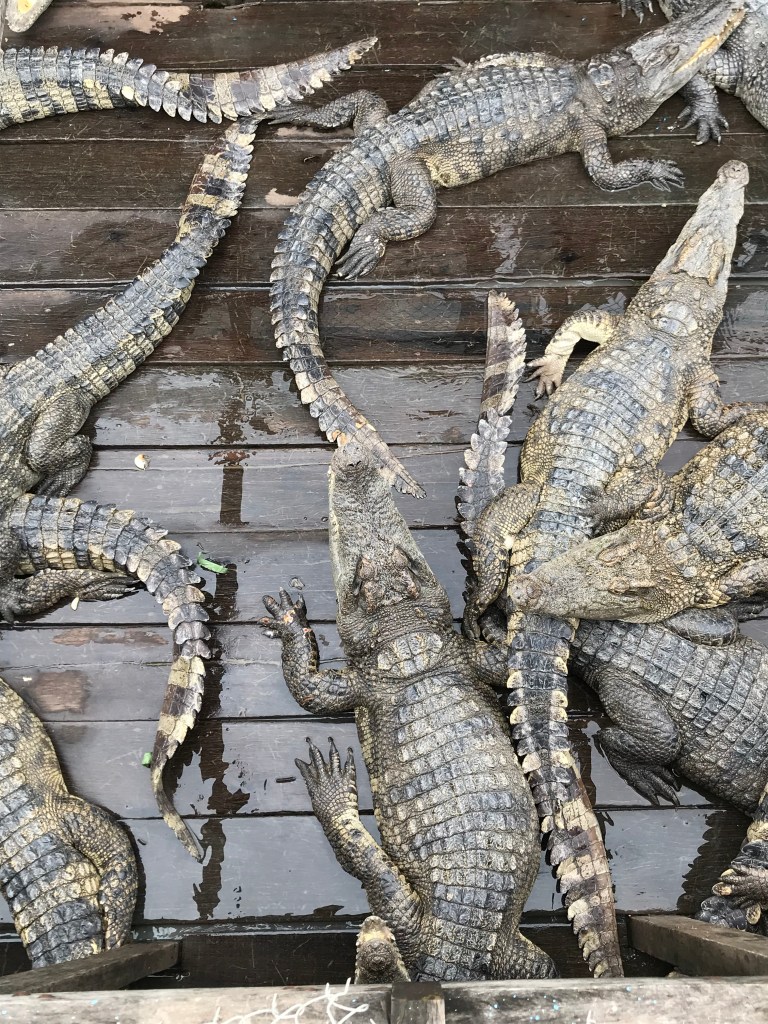
The pollution of the lake and presence of visible poverty was quite confronting. During the trip, small crafts drew alongside our boat, occupied by a mum and 4-5 children, some as young as 2 years of age, draped in snakes and begging for us to take photos. We stopped at a fish and crocodile farm, where the animals are bred for consumption and/or their hides, and were surprised by the number of animals kept in a small enclosure.
Amidst these horrendous conditions, people nonetheless manage to survive, and we need to be mindful of the line between discomfort and judgement as we react to such experiences. These communities have made a living here for generations, and their ingenuity and resourcefulness also is to be noted. Sadly, it is the effects of invasion, civil war, and more recently, a tourist influx which has brought with it pollution and waste, that has disturbed the traditional practices.
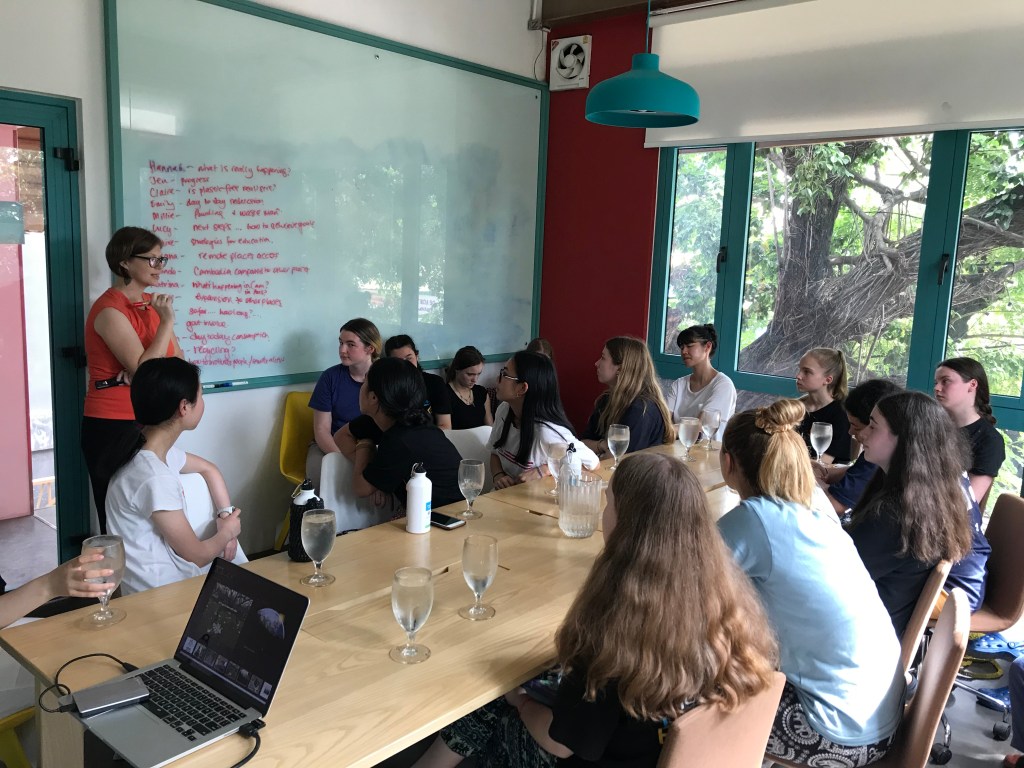
We spent the afternoon participating in a presentation and workshop with Sarah Rhodes from Plastic Free South East Asia. Beginning her career in tourism and digital marketing, Sarah found her way to Cambodia 5 years ago, working with Michael Horton from ConCERT, who we met yesterday. Sarah helped the students develop their wonderings about plastic use and pollution in the region, and left us with some practical tips to reduce consumption and make positive changes. She shared and recommended some online videos as well, to help better understand the background and causes of the problem. She shared some compelling statistics from research into single use plastics, including that the average amount of time that a single use plastic bag is actually used for its manufactured purpose, is 12 minutes.
Sarah kept a realistic and relatable tone in her presentation, and conveyed that instead of being crippled by perfectionism, we need to focus on doing what we can, when we can, to the extent that we can. This might mean getting that McDonalds drink, but requesting no lid or straw, as an example. She outlined the top 5 plastic enemies which are:
Plastic/styrofoam food containers
Plastic bags
Straws
Water bottles, and
Coffee cups
If we all make an effort to at least reduce or substitute some of these items, the collective impact would be significant.
Tomorrow, we visit the APOPO visitor centre to learn how specially-trained African rats are being used in landmine clearing efforts. We will then travel by bus to our homestay at Kulen Mountain National Park, about 2 hours north east of Siem Reap. As we go off grid, we will ensure that your daughters continue to be well cared-for and get the most out of their experience.
Our core purpose in this Service Learning Immersion Tour is to maintain and nurture our connection with Green Gecko. This is achieved through the interactions that take place during the tour, including visiting the temples, participating in workshops with the social enterprises, learning from the young Geckos, and sharing our prepared lessons with them. In addition, back in Australia, we participate in fundraising year-round, and keep up our connections by following their social media channels and liaising via the Global Learning Foundation, our tour provider.
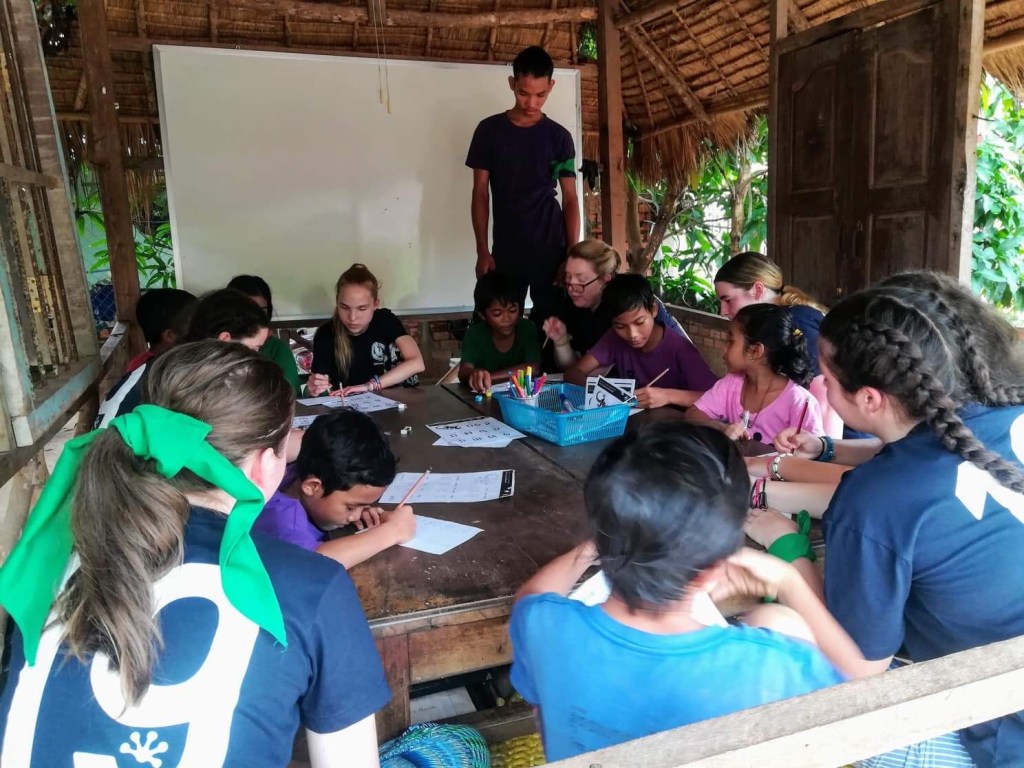
Today, it was our turn to share the prepared lessons with two groups of Green Gecko students: one group of primary school age children between 5 and 10 years of age, and one group of Grade 7-9 students between 11 and 14 years of age. The lesson activities are carefully curated and planned to optimise our time together and fit in with Green Gecko’s operating principles, being plastic free, interactive and addressing the subject areas of STEM and Art/Craft, which are not overly emphasised in their core school curriculum.
The Art & Craft group prepared two engaging activities: rock art with the younger Geckos and string art with the older ones.
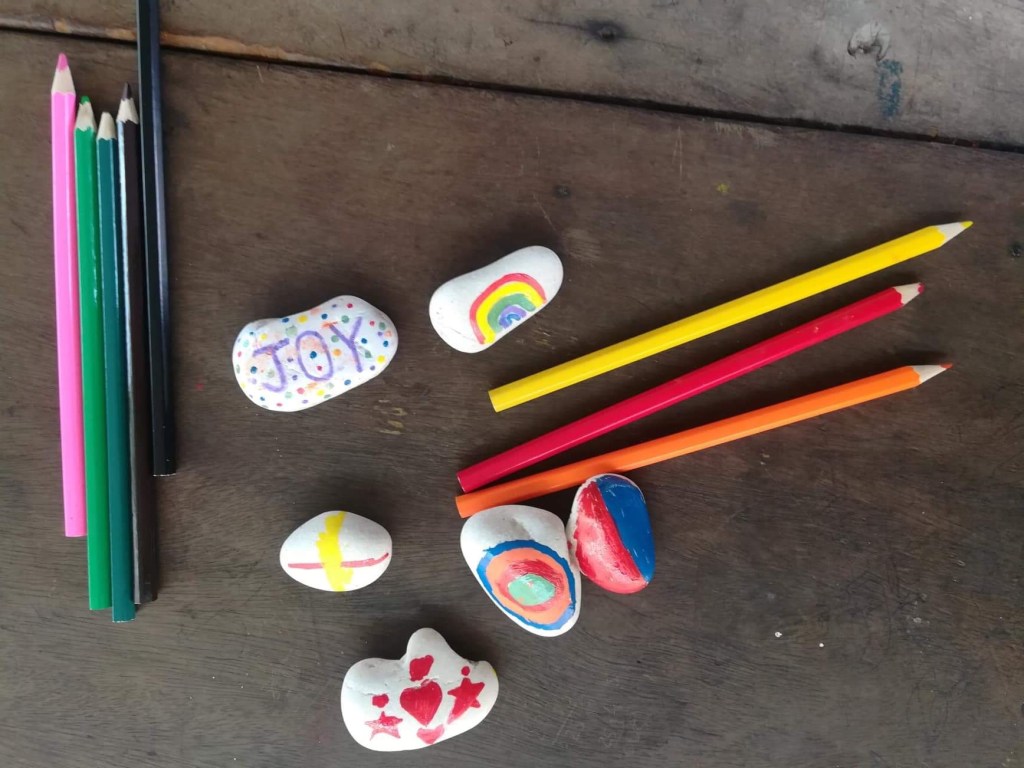
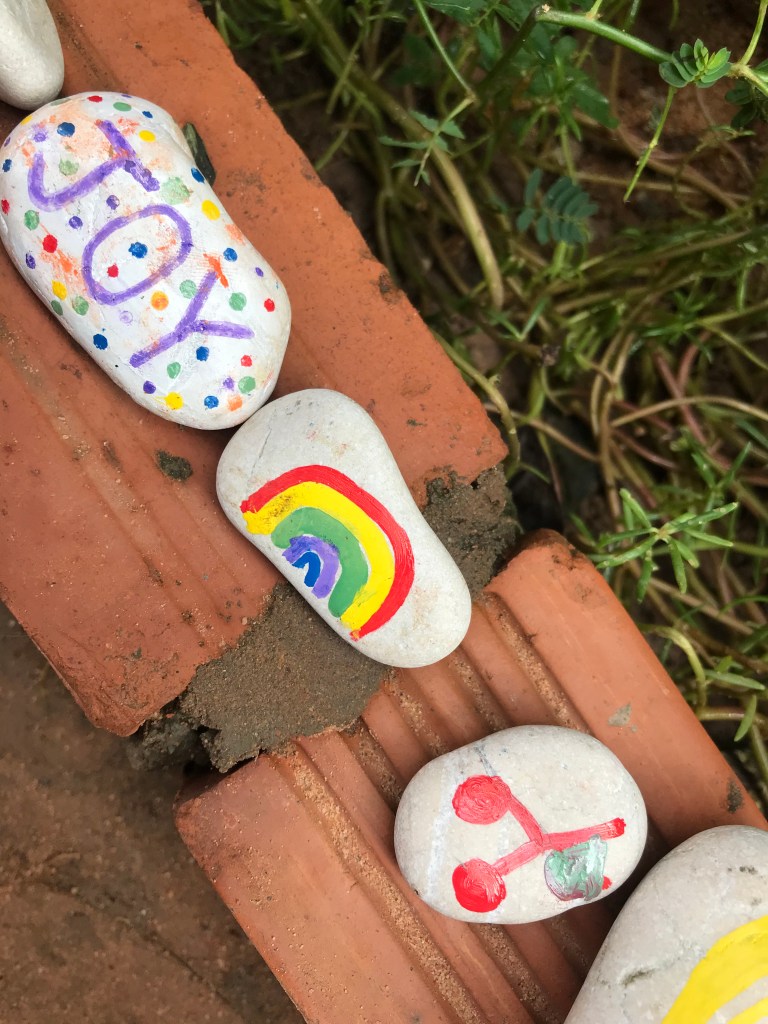
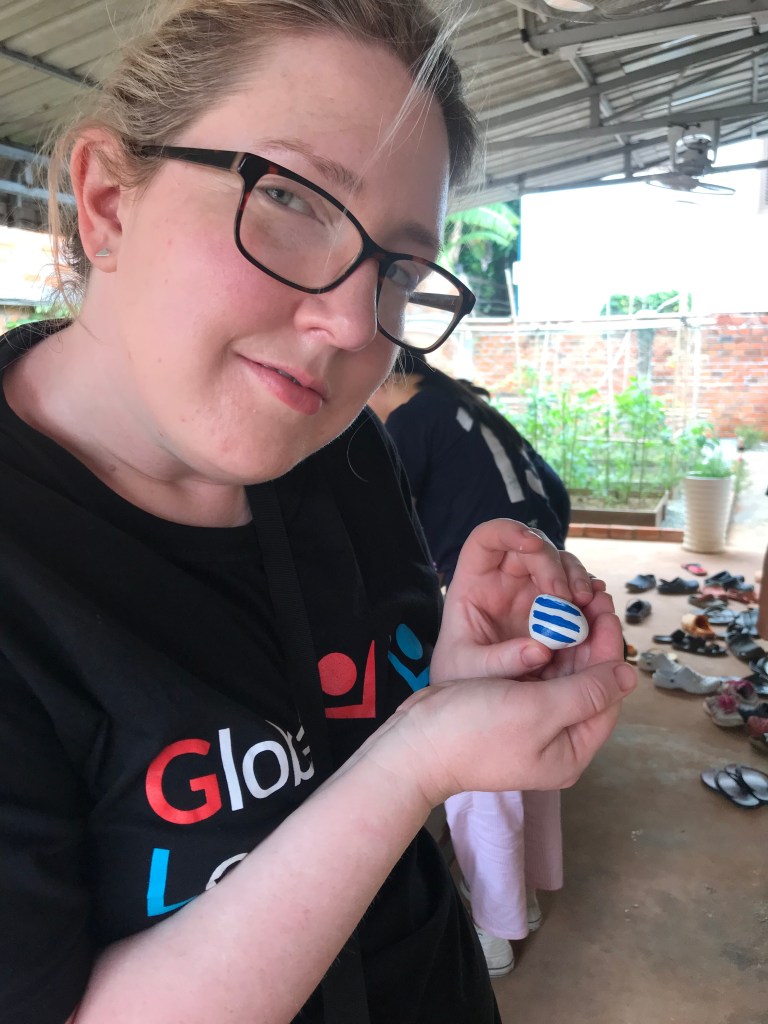
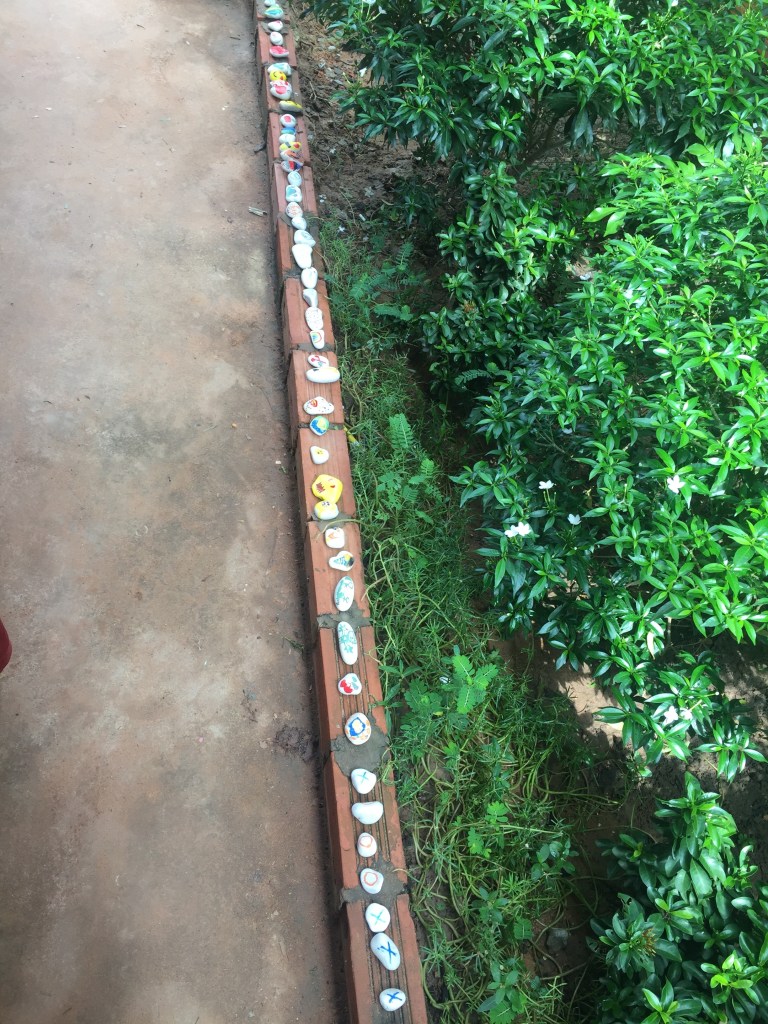
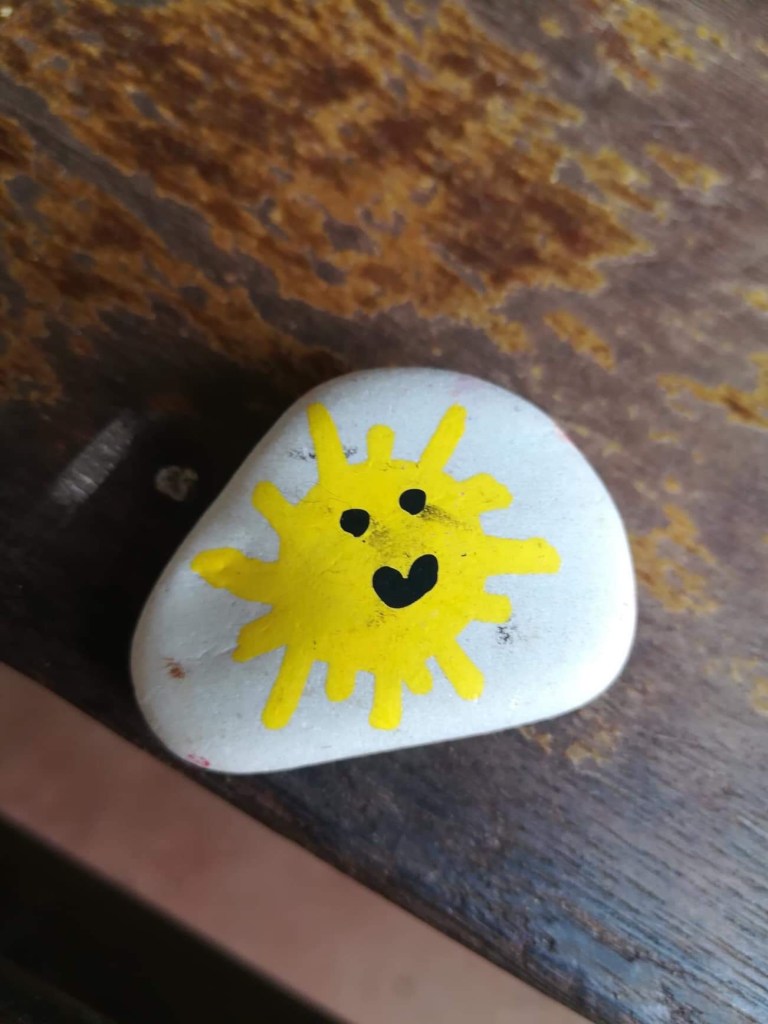
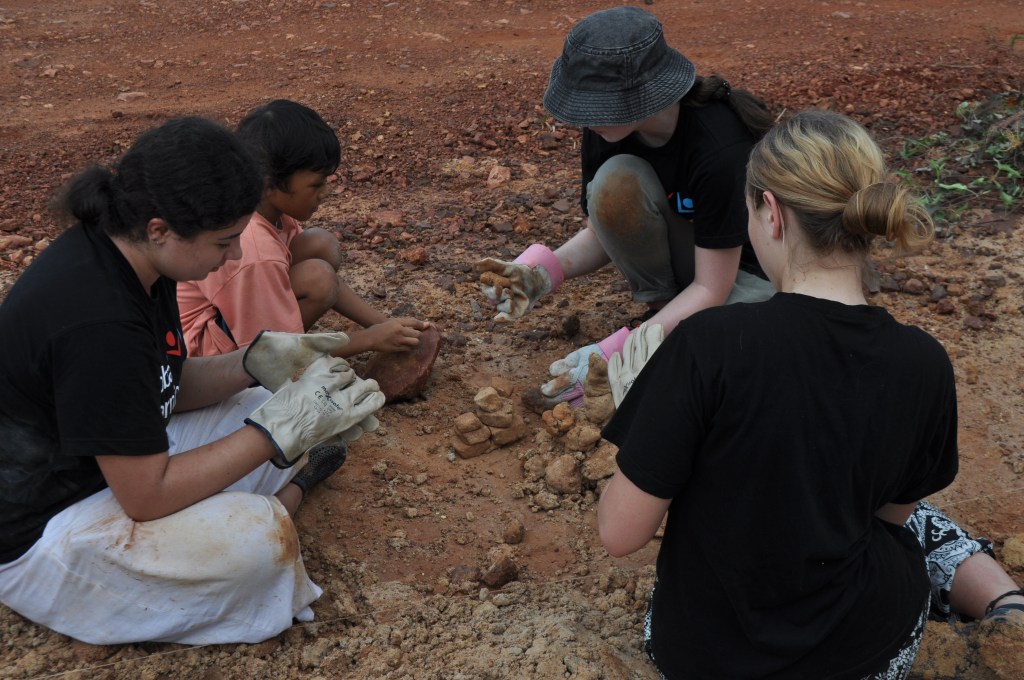
Rock Art
The CGGS students planned 4 prompts to help the young Geckos decide on what to paint onto their rocks:
Something to give to a friend
Your favourite food
Your favourite sport
How you are feeling right now
The kids are incredibly creative thinkers and readily came up with ideas, making for a beautiful collection of finished products
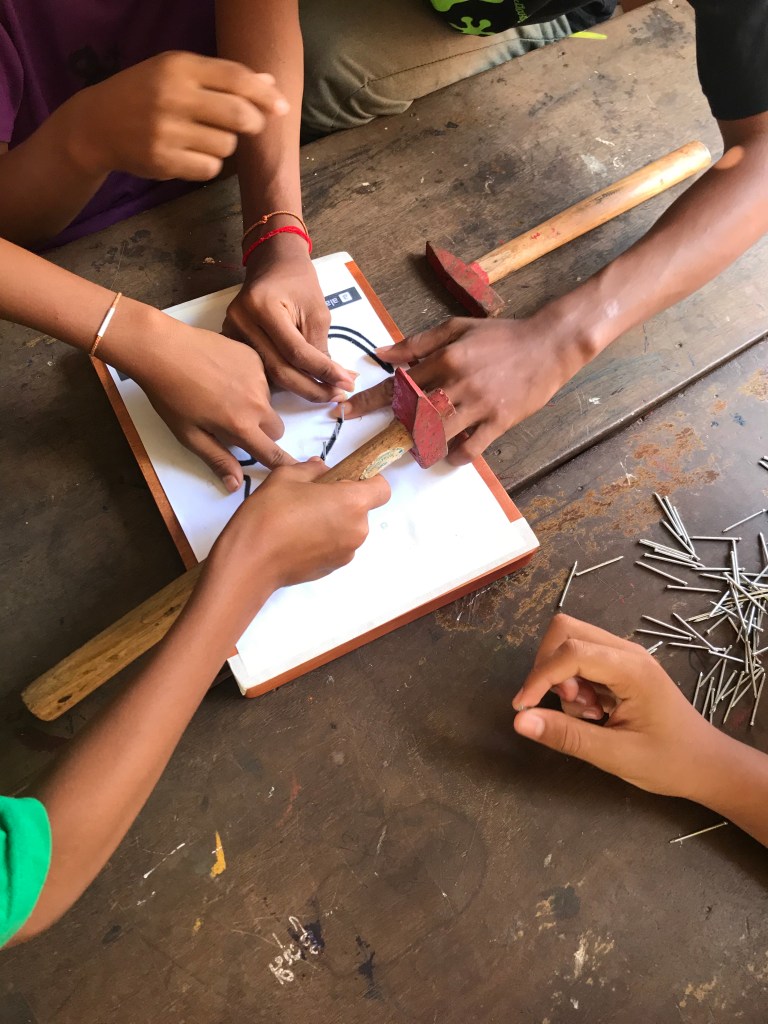
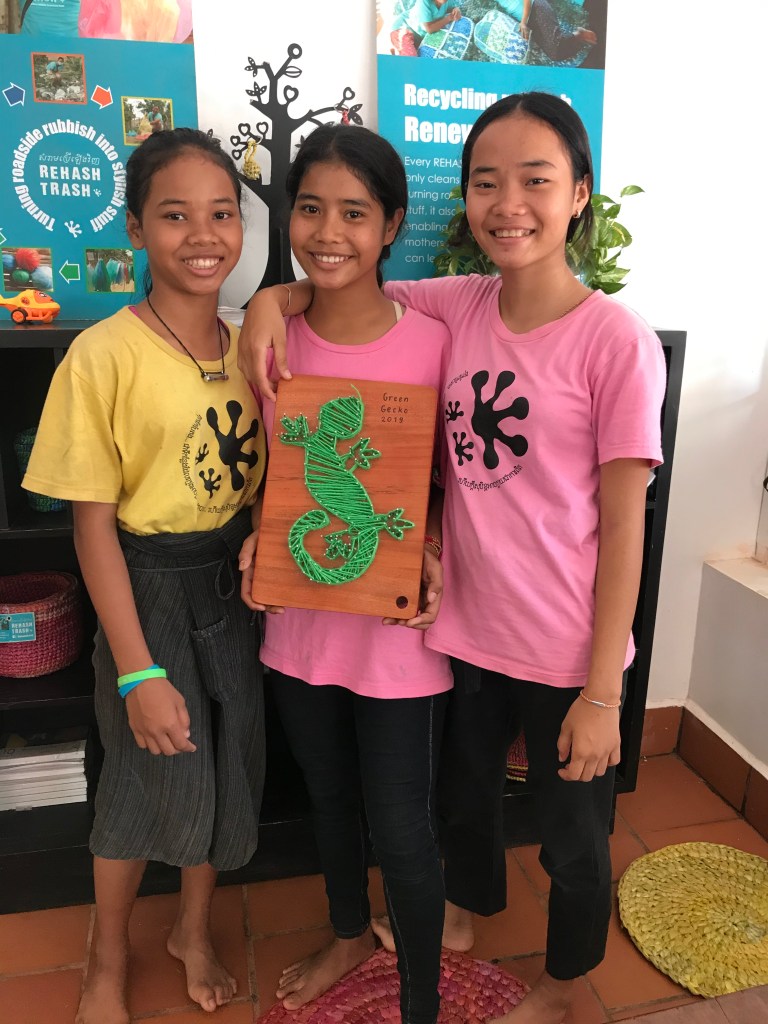
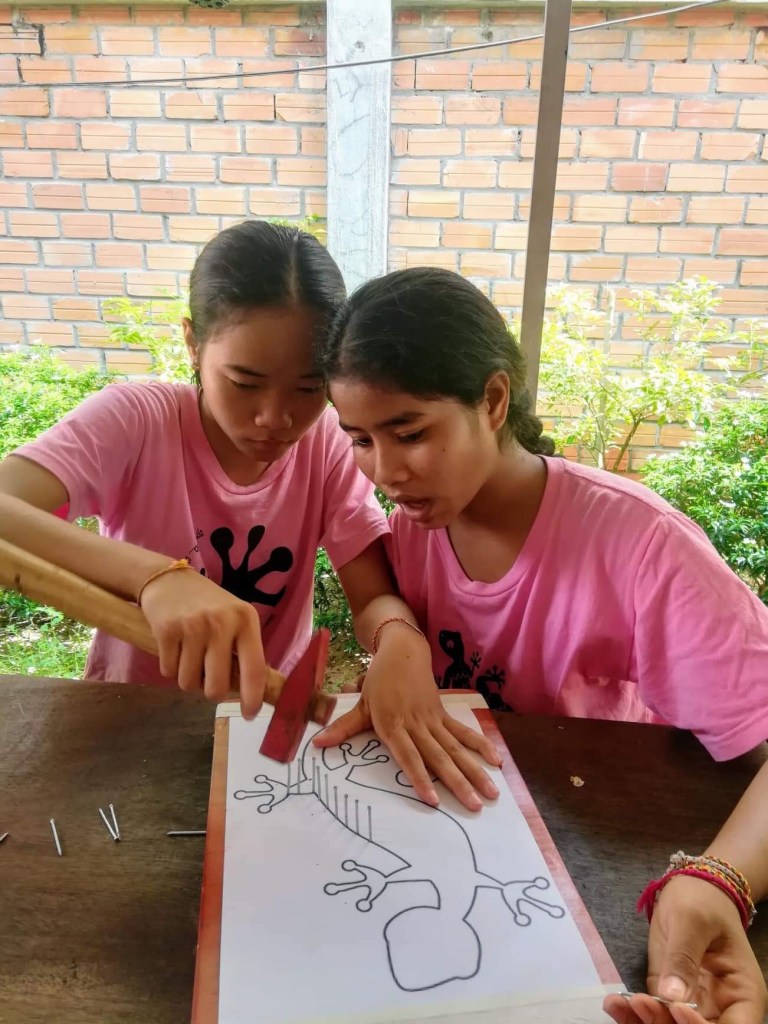
The Art and Craft activity for the older Geckos involved plenty of hammer banging and action, as they created string art versions of two symbolic animals to represent our connection: a kangaroo and a gecko. Srey Net and Kim Huoy in particular were completely engrossed in this activity and made a beautiful finished product. The Geckos also had the idea of asking each CGGS student to sign their name on the back of their boards, producing a beautiful keepsake of our time together.
STEM/Logic Activities
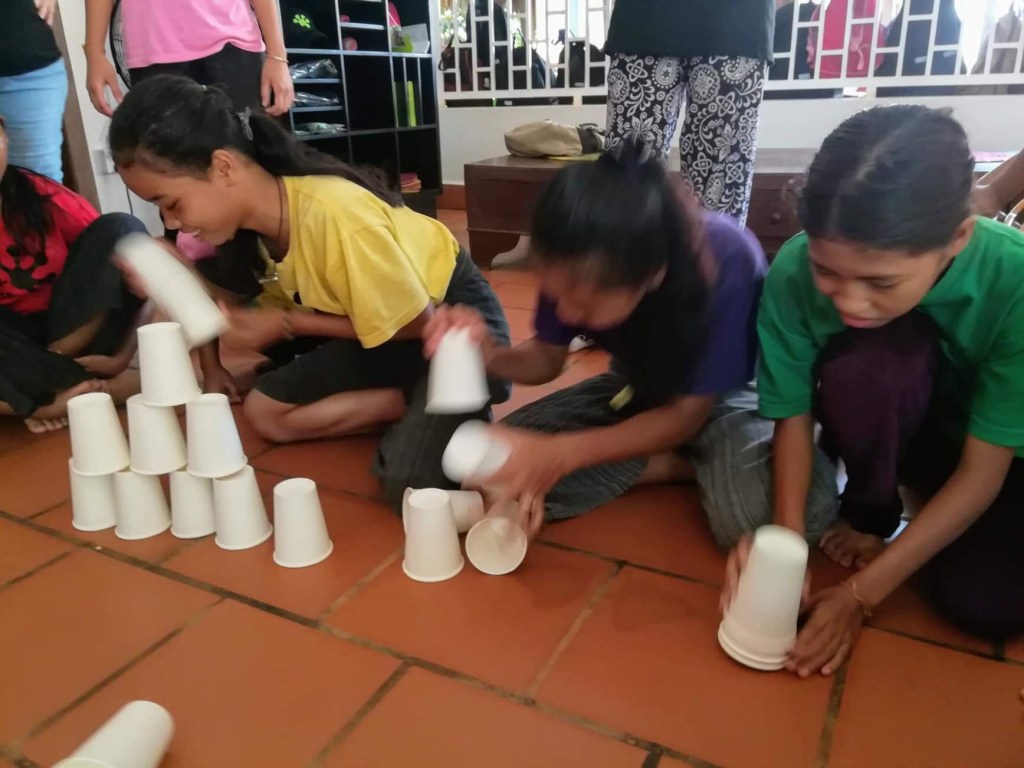
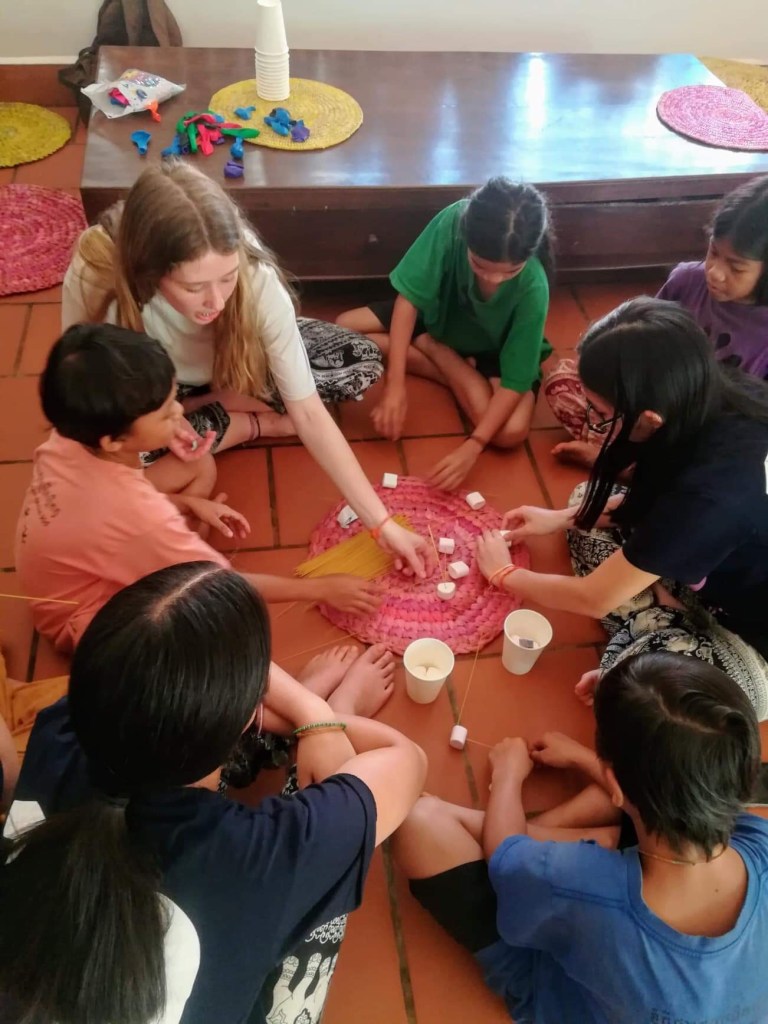
The STEM and Logic group focused on building collaborative problem solving challenges for their groups. The older kids enjoyed a raucous and competitive game of cup stacking, along with challenges such as blowing a paper cup off the table edge using an inflated balloon, or rolling a coin between a fork’s tines.
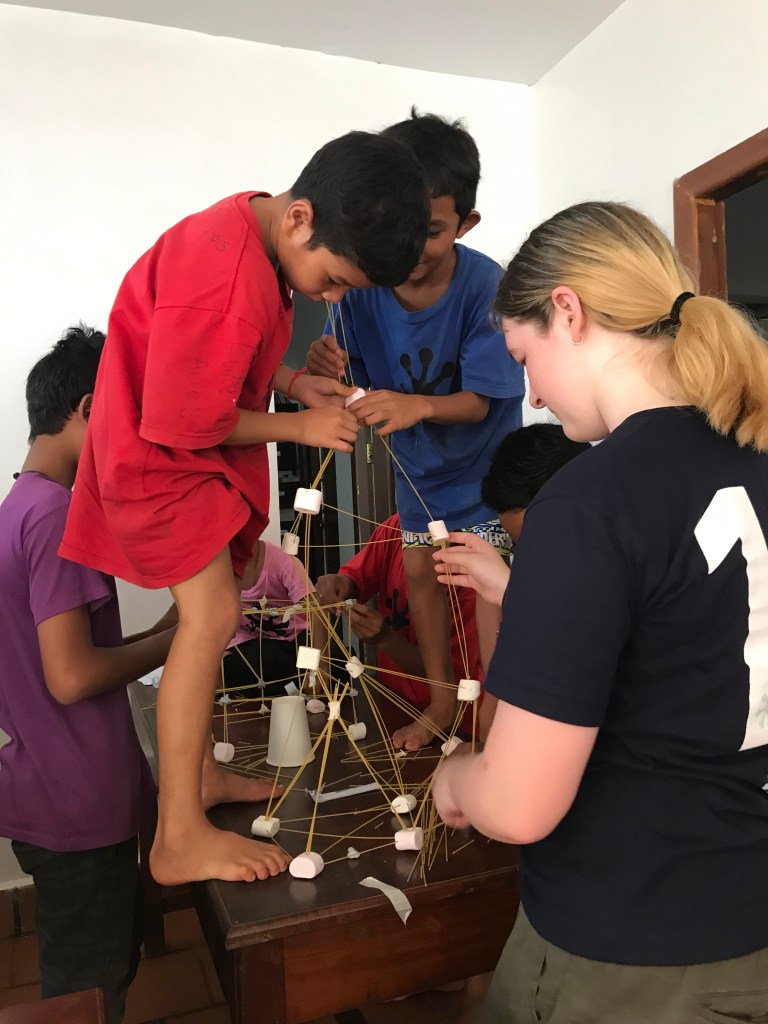
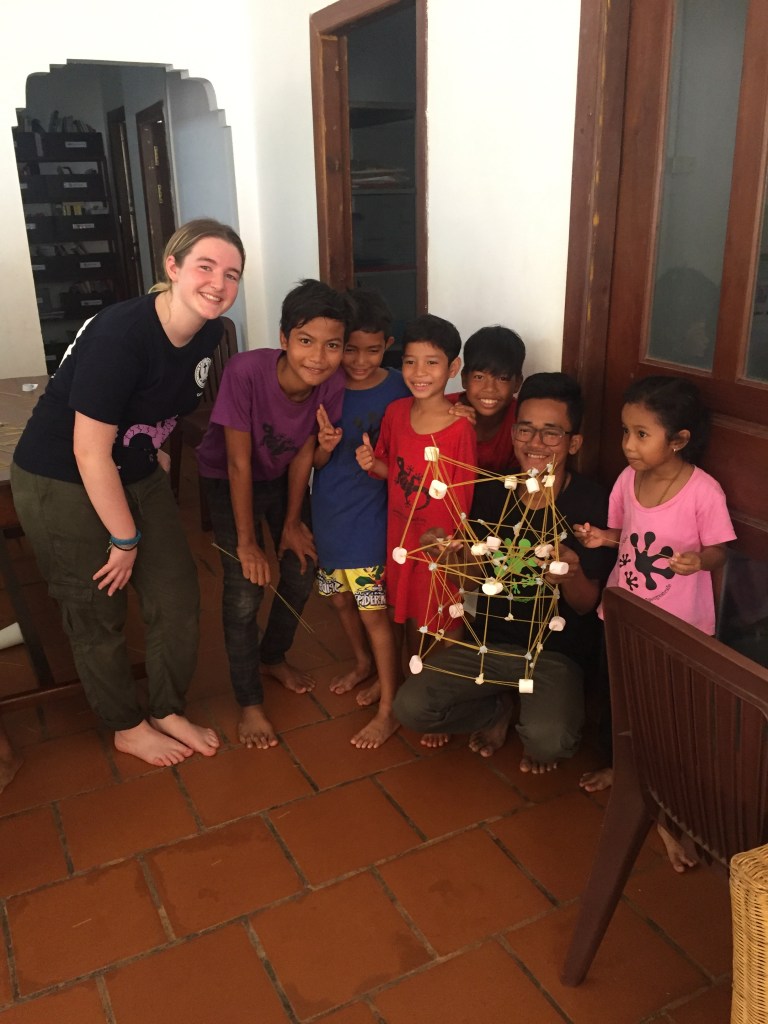
The younger Geckos created some amazing architecture in a spaghetti-and-marshmallow tower building competition. They also worked together to ‘cross the river’ and avoid getting swept away!
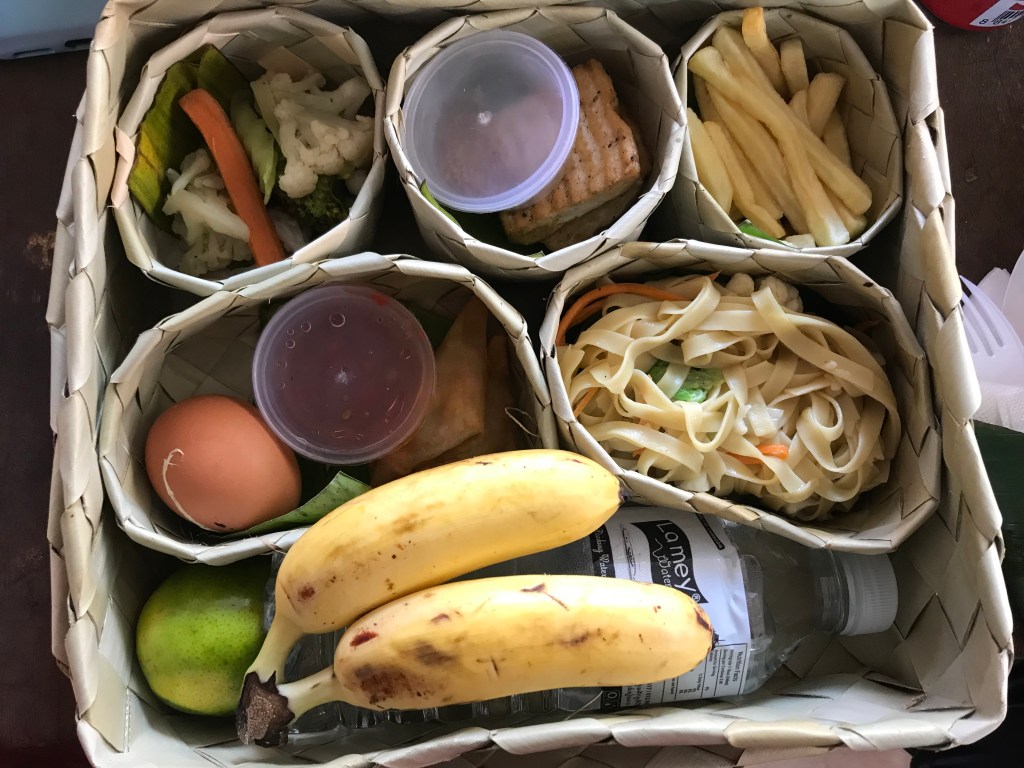
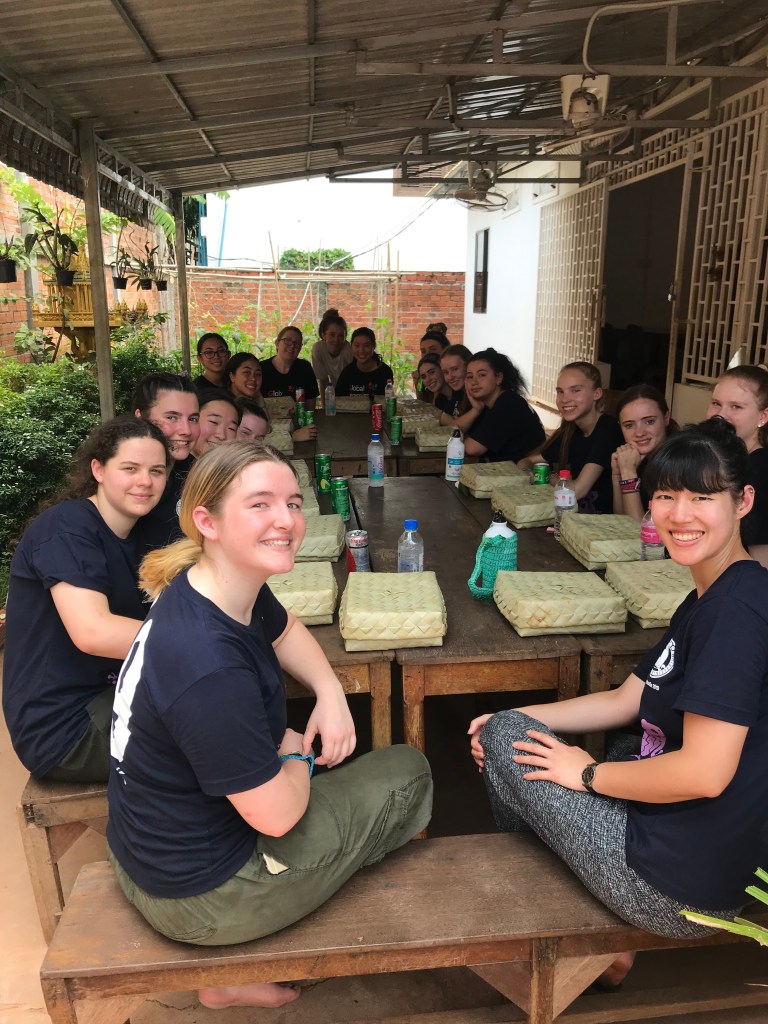
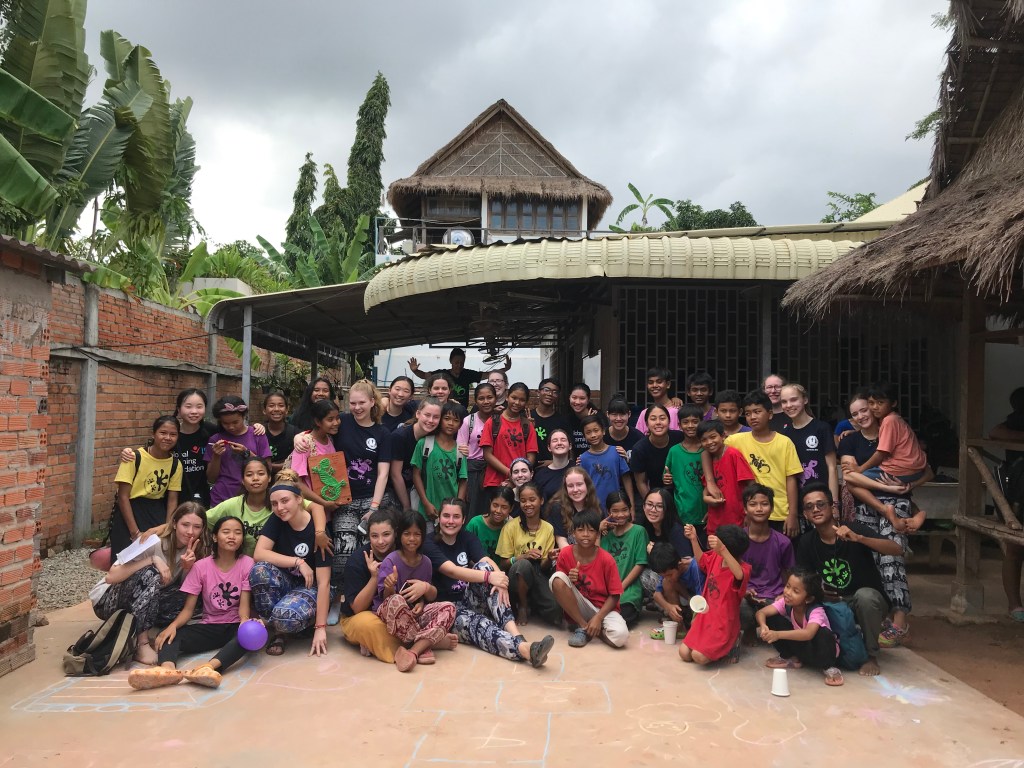
We enjoyed lunch at Green Gecko – a selection of items in a Cambodian-style woven bamboo Bento box. Then it was time to say some sad farewells as the Geckos left for their afternoon lessons or a rest. This is always a difficult part of the trip, and the phenomenal connections built in such a short time between our students and the Geckos is always heartwarming to see.
In the afternoon, it was Market Challenge time! Every year, the CGGS students participate in an Amazing Race-style challenge in the local market, purchasing items needed by Green Gecko. As it is nearly back-to-school time, the focus was on purchasing items like pencil-cases, hair-ties, backpacks and school shoes as well as daily essentials like laundry powder. This year, Kate from Green Gecko upped the ante and arranged for the challenge to take place at the Psar Leu market – where Siem Reap locals shop, and the communication had to be entirely in Khmer or an improvised, universal sign language! Each group of CGGS students was supported by one of the older Geckos, but the Geckos were not allowed to speak in Khmer with the stallholders. This was a really enjoyable way to gain an insight into everyday life here in Siem Reap.
Today’s reflections are from Minh and Megan:
Today was our last day to spend time with the Green Geckos. We had previously planned different STEM and Art activities suitable for their ages. Being able to immerse ourselves in their culture and language yesterday and teaching them games today allowed us to create a strong connection with them. Although it was sad to bid our final farewells to our Gecko friends, we will forever cherish the memories and lessons learnt from these incredible children. We’ve had the privilege of gaining a better understanding of our surroundings because of the Gecko kids and the Green Gecko Project. -Minh and Megan
We have been regularly debriefing with the students about what they are seeing, how they are feeling, and the insights that they are drawing from their experiences. Some of these will come to them straight away, and others may take longer to formulate or articulate. Parents can support by asking open questions of the students when they come home, or specific questions, such as “what was the highlight of your time with the Geckos?” or “what aspect of travelling annoyed you the most?” As a parent, I appreciate that it can be hard to elicit responses from our children sometimes, but it will be important to enable them to keep processing when they return.
We have two full days at the Kulen Mountain homestay coming up, leaving Siem Reap on Friday, and returning on Sunday for our flight home. During this time, we will be working with the students to help them express the ideas they have formulated during the tour, as well as having some down time to reenergise and socialise. The homestay is often a highlight of the tour for the students, despite the quite basic conditions. Please be reminded that we may not have internet access while at the homestay to update the blog, so please don’t be concerned if we go off the air after tomorrow.
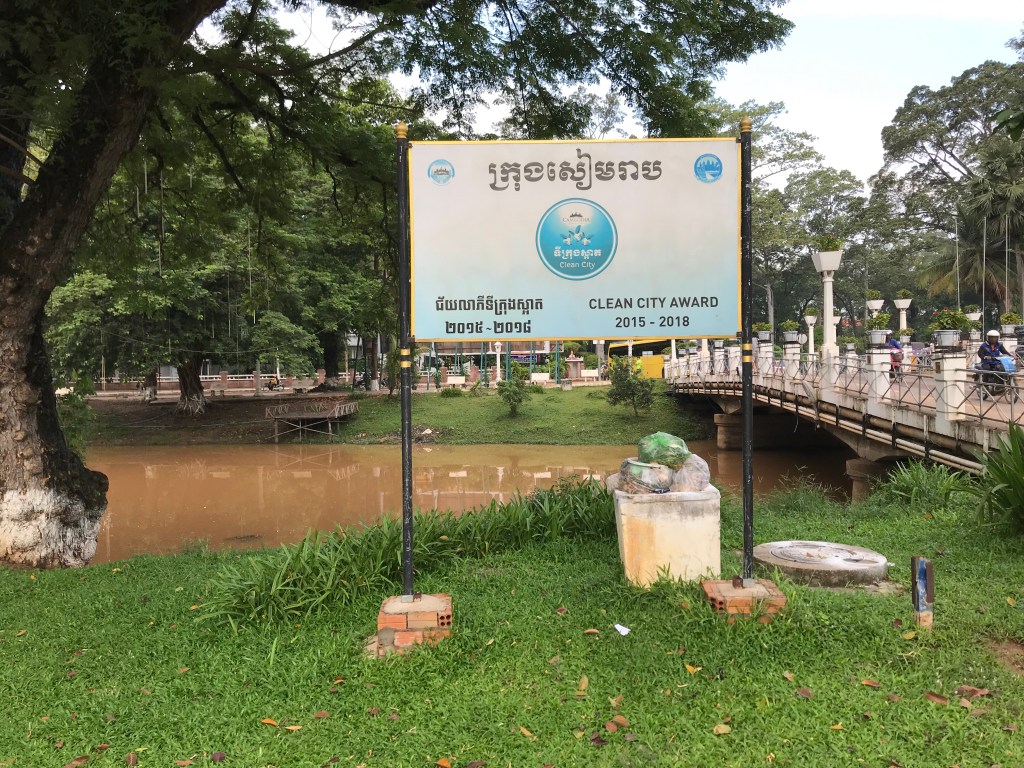
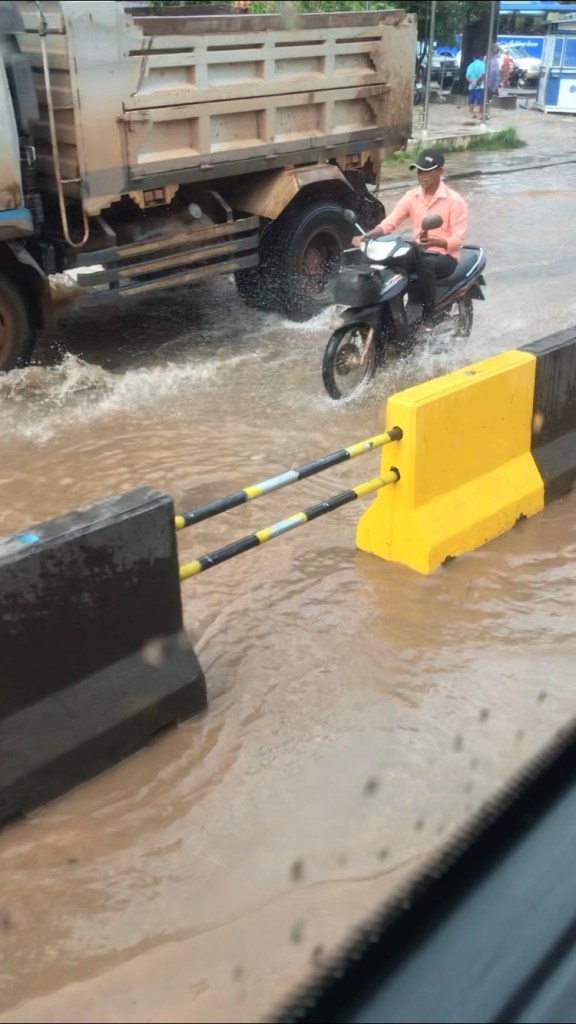
We’ll leave you with some food for thought – a photo that struck a chord of irony with us this morning, and a representation of one of the biggest challenges facing a tourist hotspot like Siem Reap.
We are well into our tour now, having spent our 5th day in Cambodia and the 6th day of the trip overall.
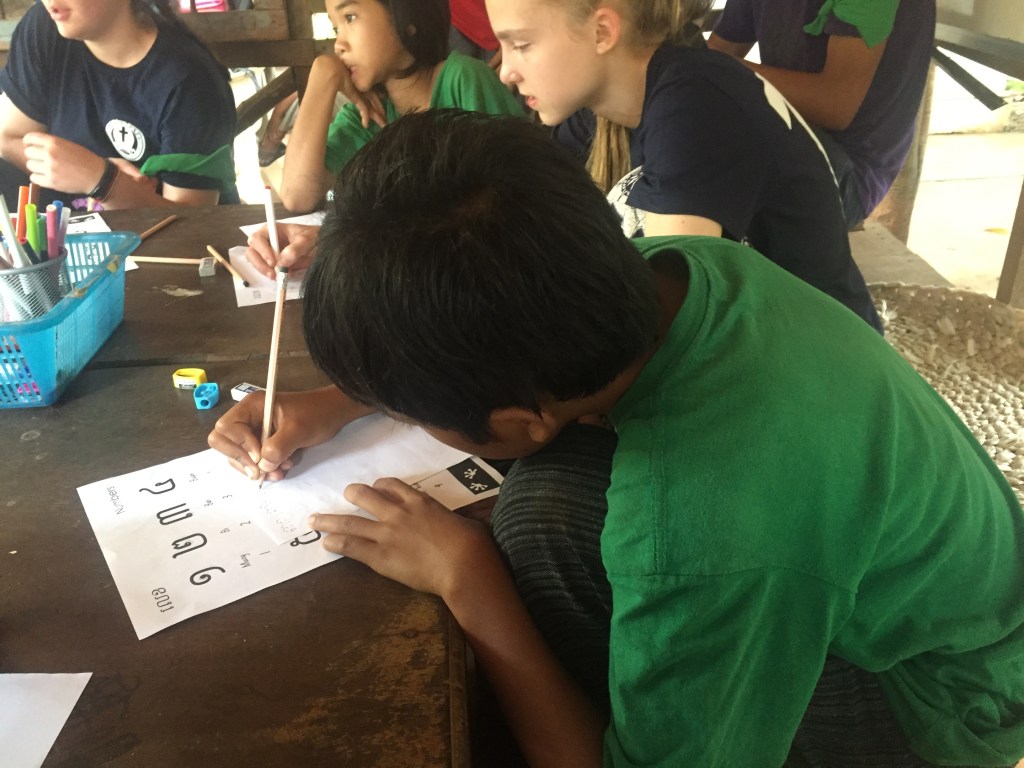
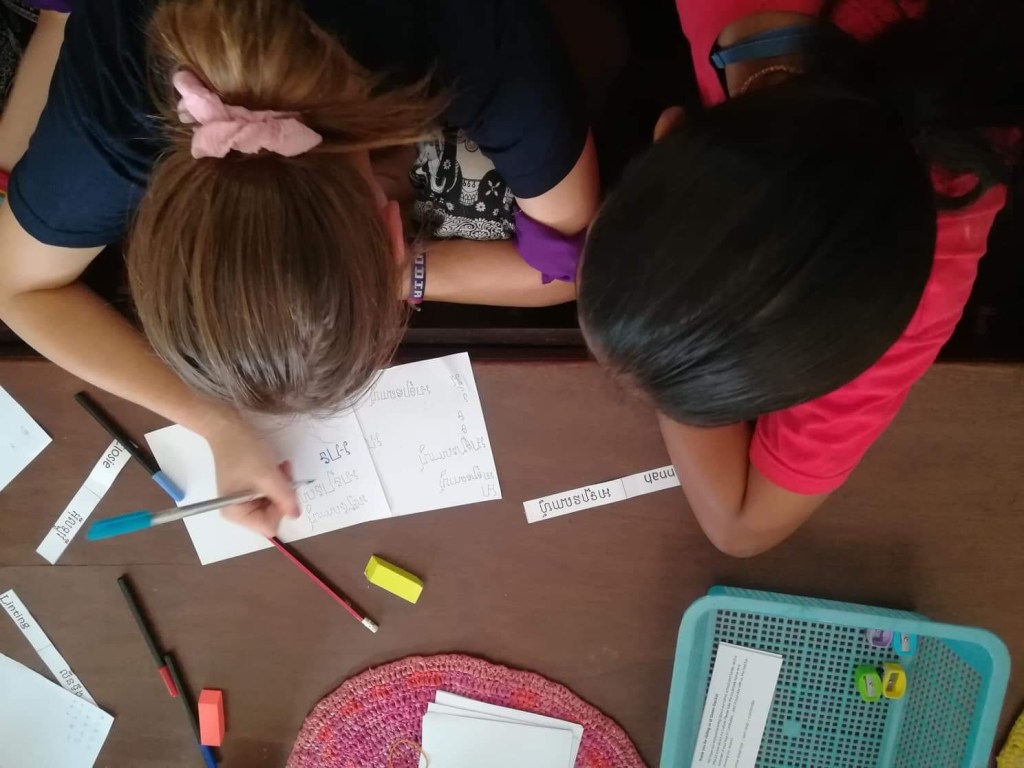
At Green Gecko today we were split into small groups and taught by the very enthusiastic, younger Gecko children. This format is a wonderful way of creating empowerment for the Geckos, and it is very intentional that the first ‘lesson’ interaction is them teaching us. It helps us be humble, recognise our own intentions, and allow the Geckos to engage with us on their terms.
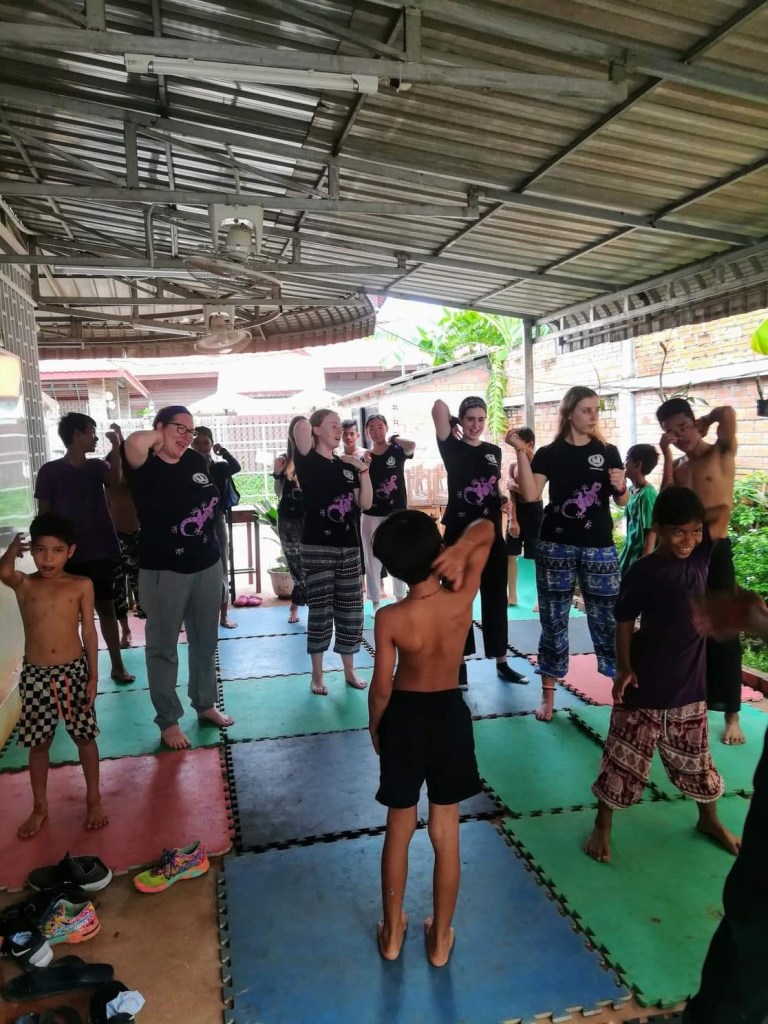
Khmer numbers, writing and martial arts were all explored in ‘round robin’ style at Gecko Central. The main objective of the session was to build leadership skills and confidence in the Gecko children. They took their role very seriously, encouraging (or rather insisting on) perfection from our students and leading with great enthusiasm and persistence.
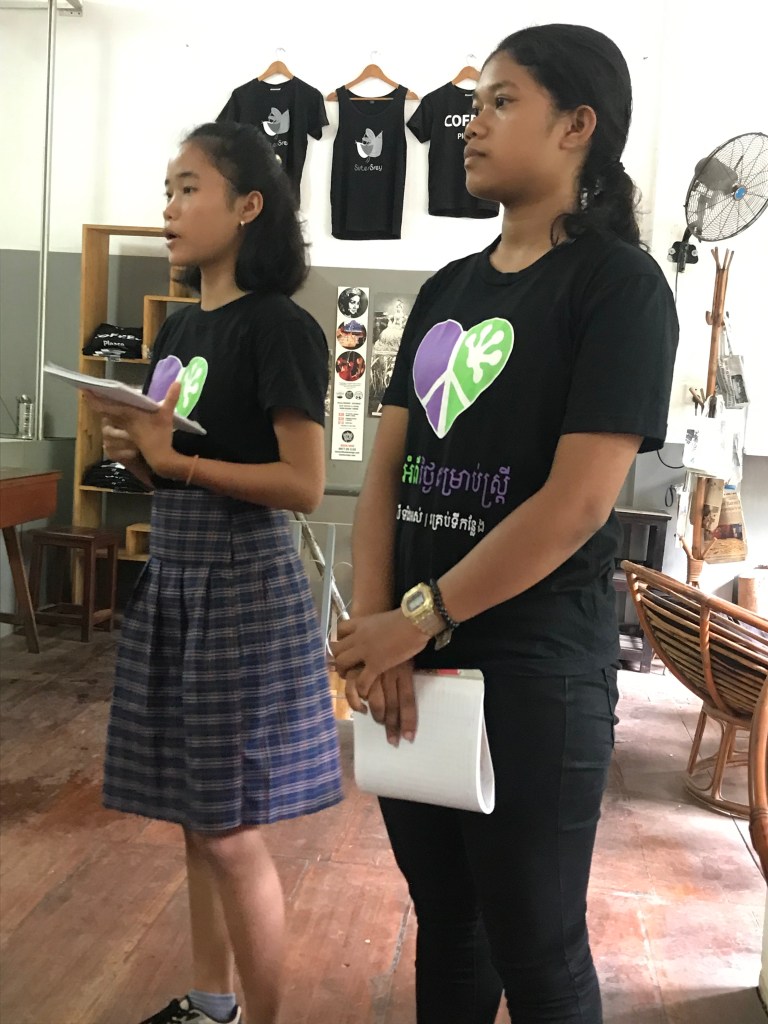
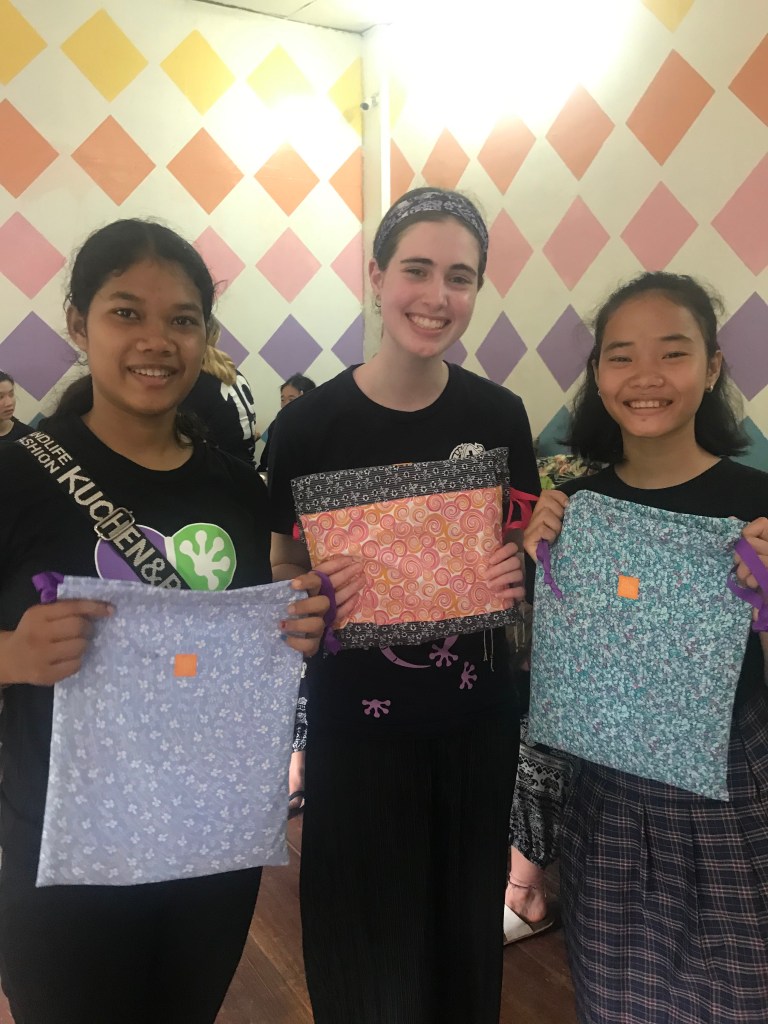
Lunch was at Sister Srey Cafe, and included a presentation about the work of Tnai Samrap Srey (Days for Girls) in Cambodia, led by two of the Gecko students. Back at home, our tour group spent time sewing and packing menstrual kits, which were then included in our luggage to travel here. Collectively, we brought 100 kits with us, which will be donated through workshops run by Tnai Samrap Srey to educate and empower girls to take ownership of their menstrual health and continue to engage in education and work, when they have their period.
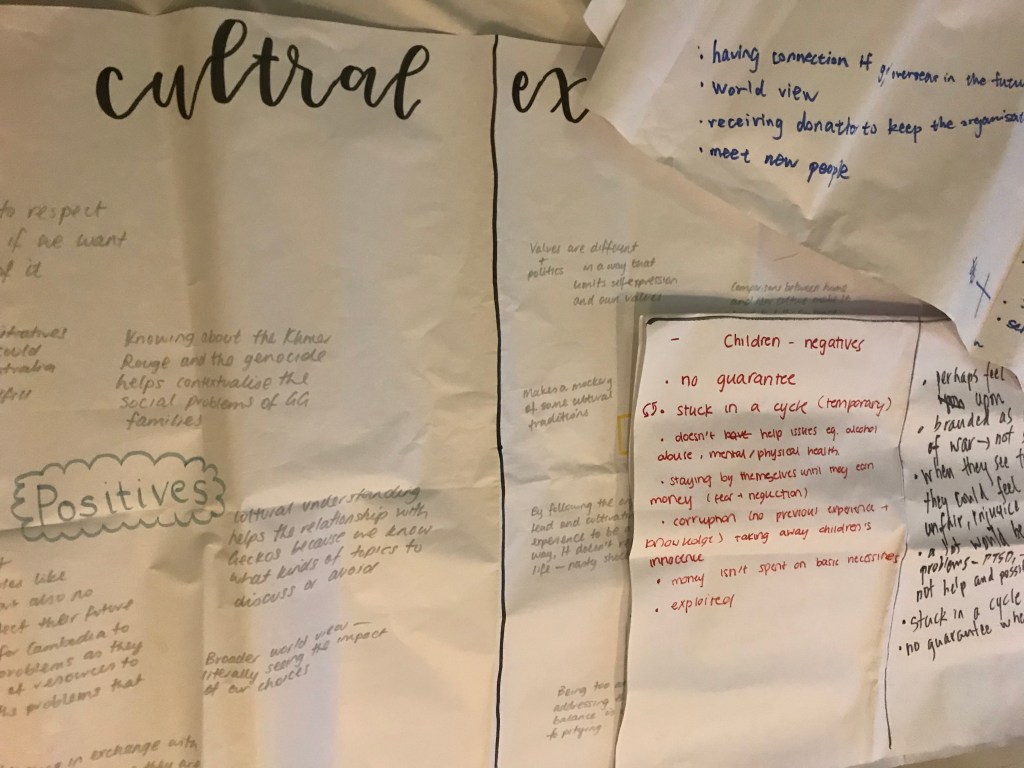
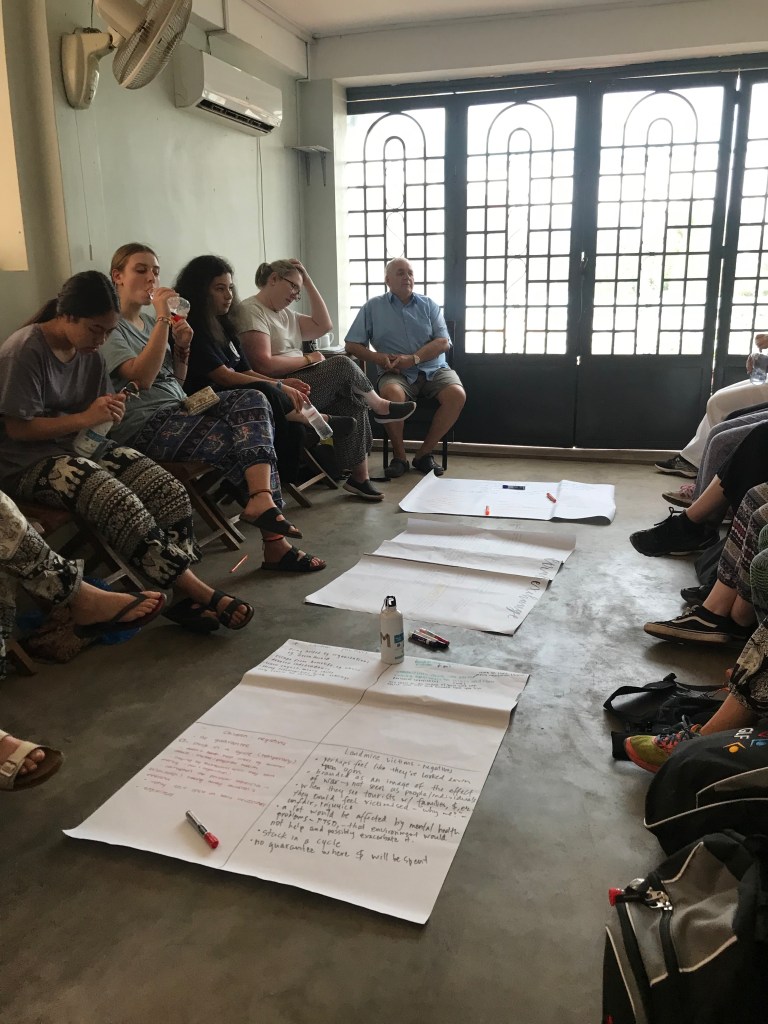
The afternoon consisted of a workshop with founder of the organisation CONCERT, Michael Horton. An expat from England, Michael’s work cultivates ethical and productive practices in NGOs and volunteer organisations, and he had us grappling with some really tricky questions to reflect on regarding our purpose and impact here in Cambodia. Topics discussed included:
What are the positives and negatives of volunteering in the developing world – both for ourselves and the people we seek to serve?
How important is cultural exchange and intercultural understanding. What are the benefits of learning about a new culture, and what problems might we encounter?
When we see children and adults, such as landmine victims begging on the street, should we be giving them money or working with organisations that develop sustainable long-term approaches?
We also talked about our role in enlisting people to support our efforts and how to develop and use influence. Michael’s insights garnered through 15 years of working with NGOs in Siem Reap was invaluable.
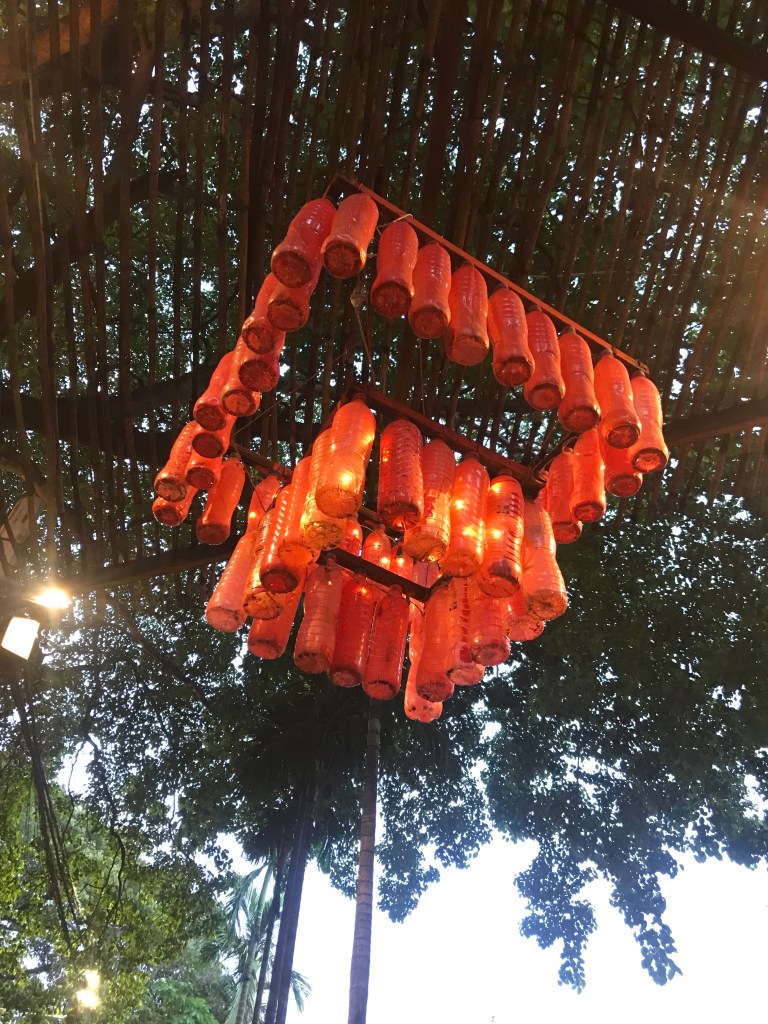
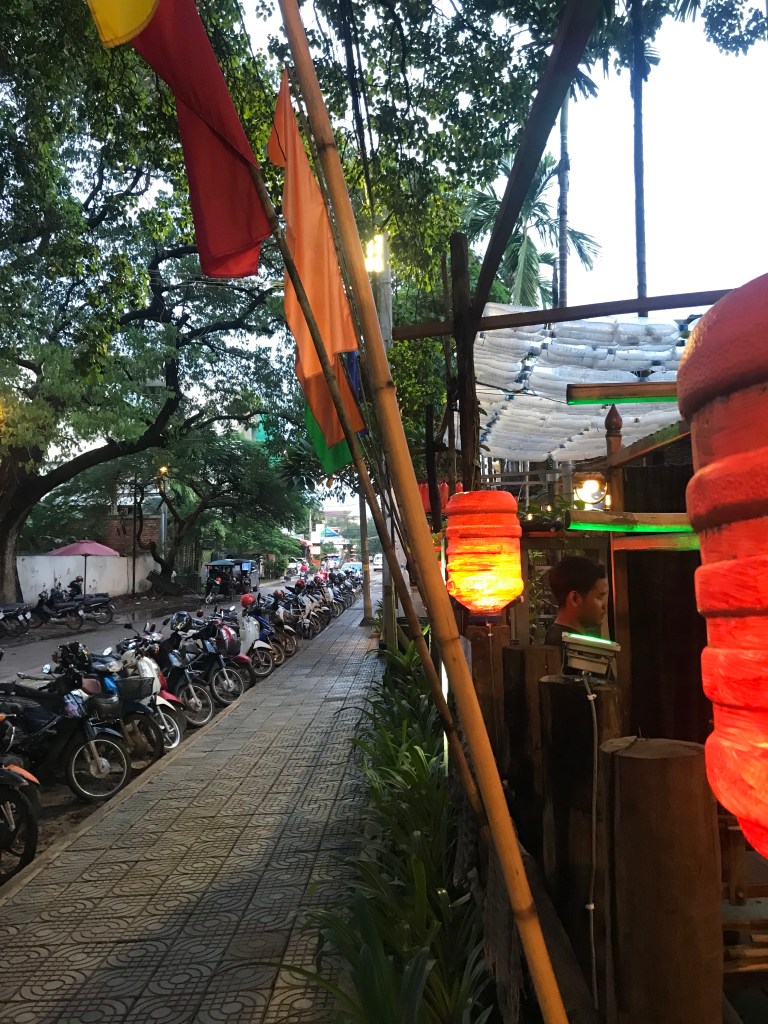
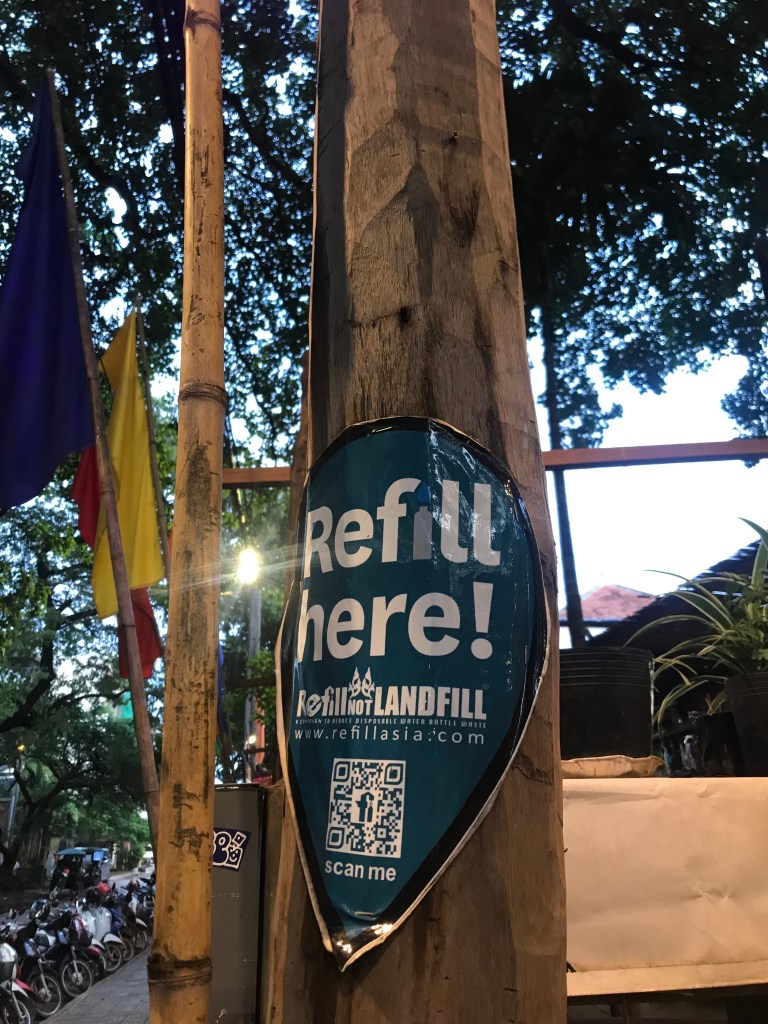
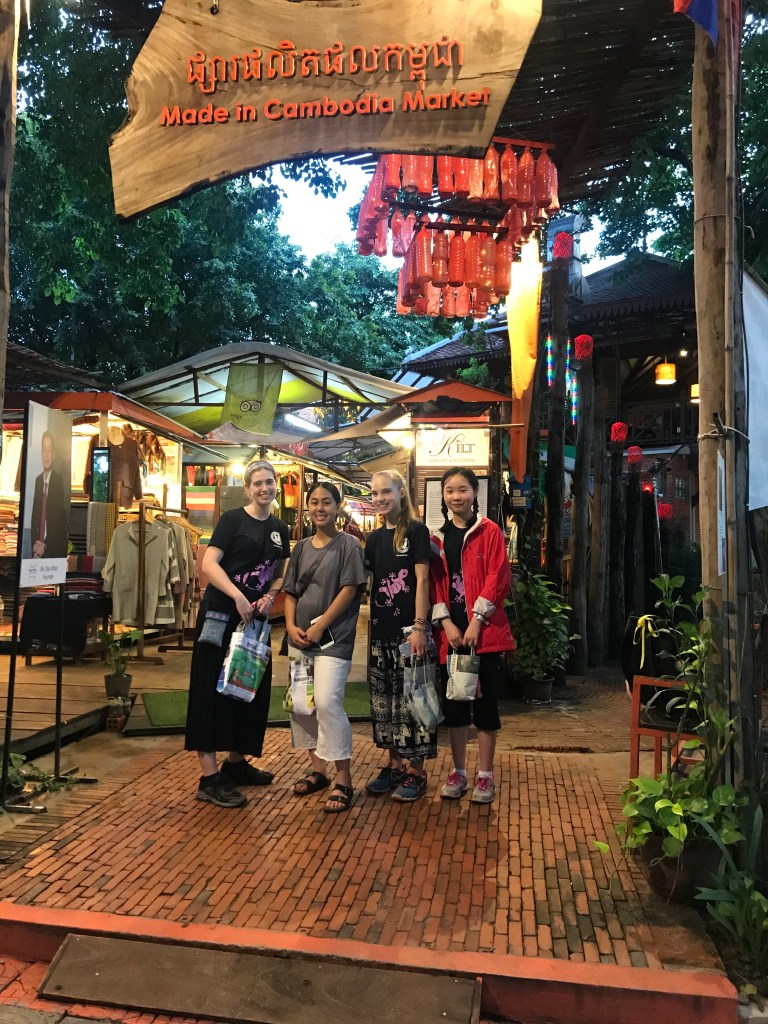
A little spare time this afternoon saw some students enjoying the pool deck, some resting and some taking another chance to visit the Made in Cambodia artisan market. The ambience here is stunning, and included are some photos of some of the creative repurposing of plastic products. The second photo shows that you know you are in South East Asia when motorbikes line the streetside as far as the eye can see!
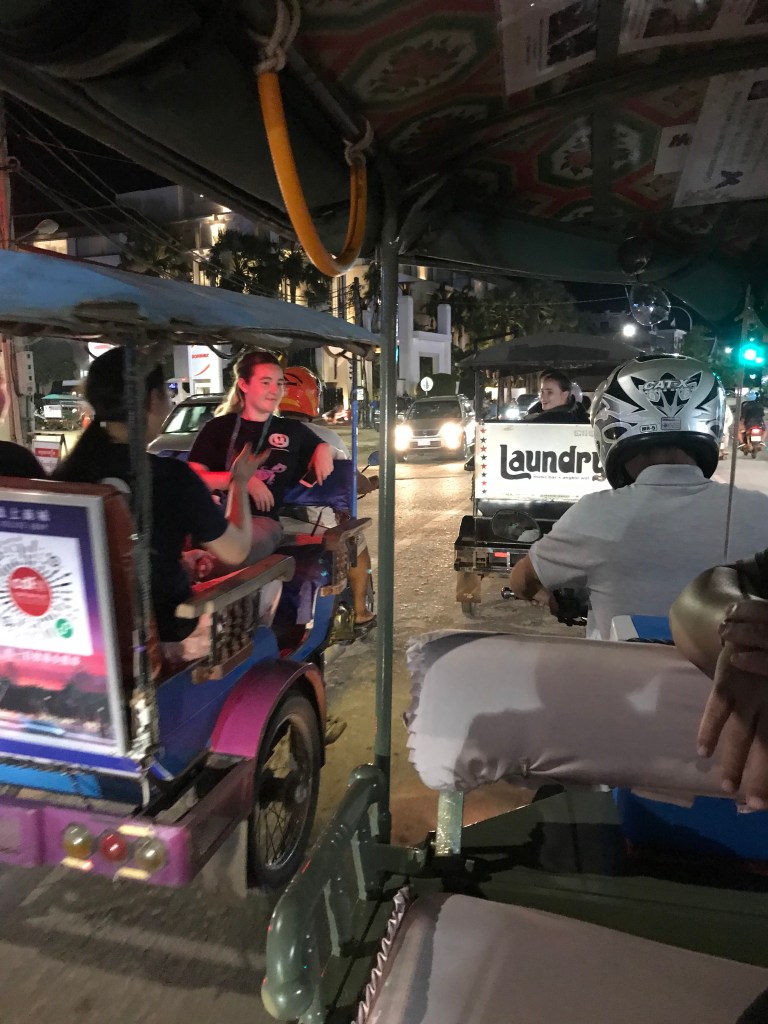
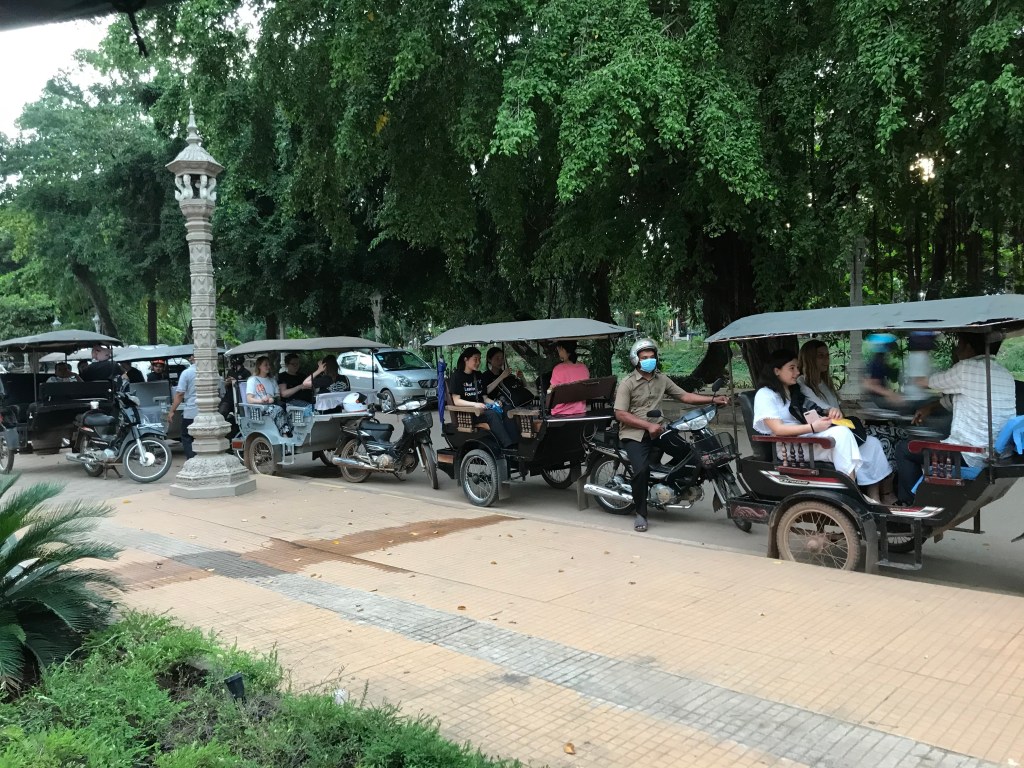
We travelled to dinner in tuk-tuks, which gave us an insight into the busy nightlife of Siem Reap’s streets. We notice the interesting difference in the way Cambodians live when we walk or ride in the tuk-tuks.
Today, Jess and Millie volunteered to share their thoughts:
Seeing the Geckos and having them teach us today was a really empowering experience. We immersed ourselves in the Khmer culture and language. The Geckos were really enthusiastic in teaching us Khmer (writing out names), counting (up to 10) and the Khmer martial art, bokator . We really enjoyed the bokator and learning everything from the geckos today and look forward to teaching them our lessons in art and craft, STEM and logic tomorrow. – Jess and Millie
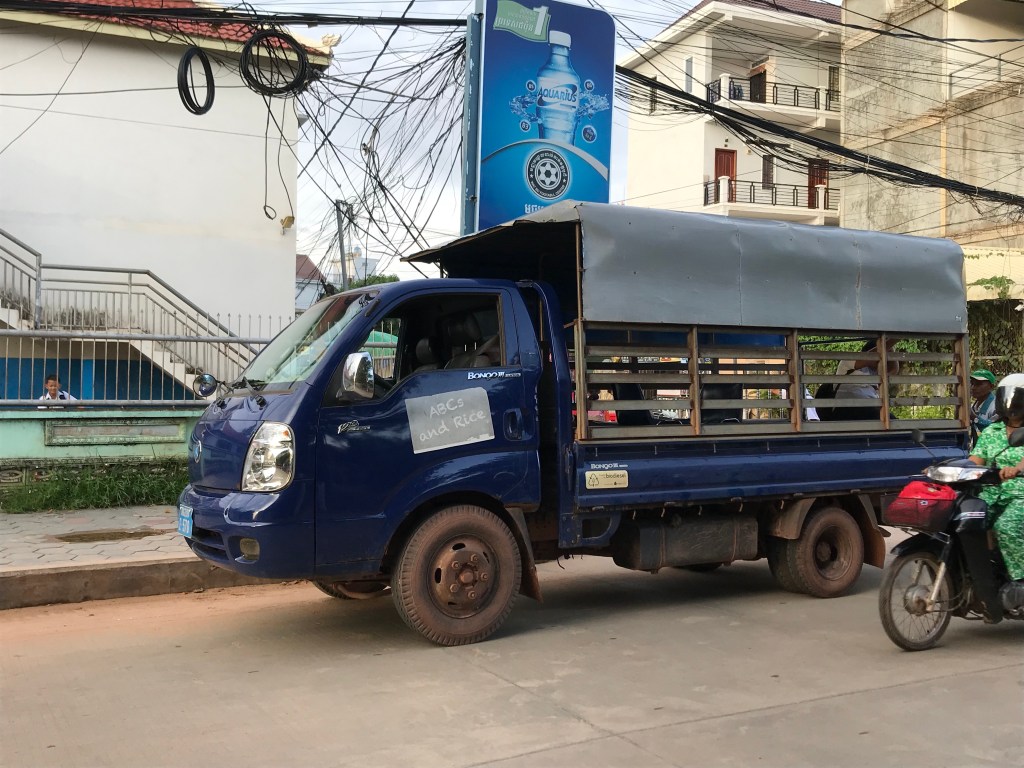
During our morning walk we spotted this “School Bus” taking the young children to school (at 6.30am!)
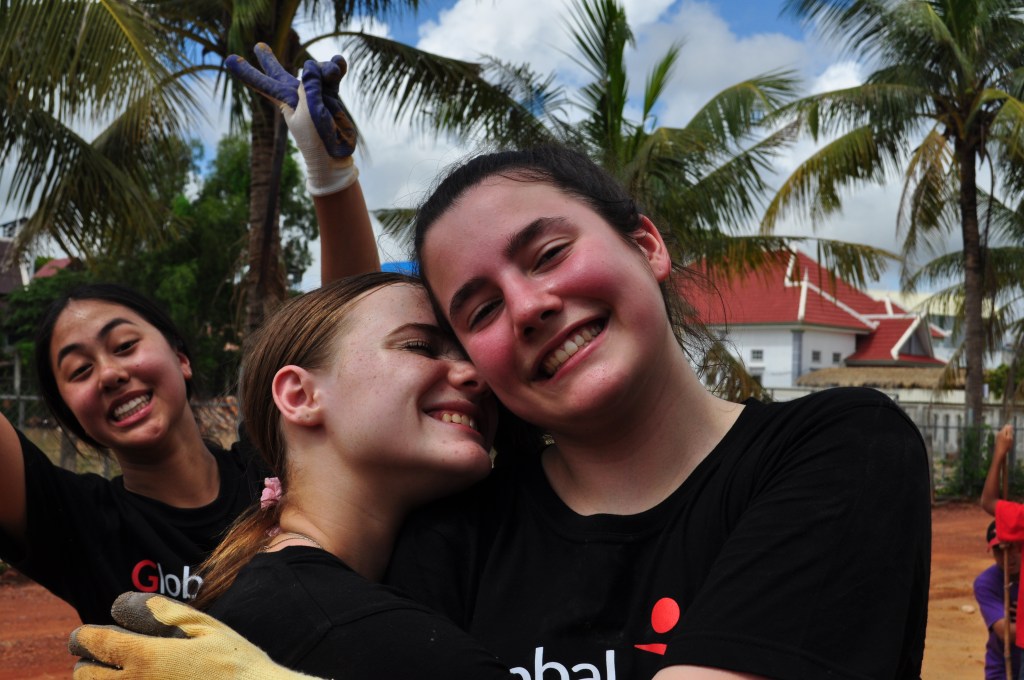
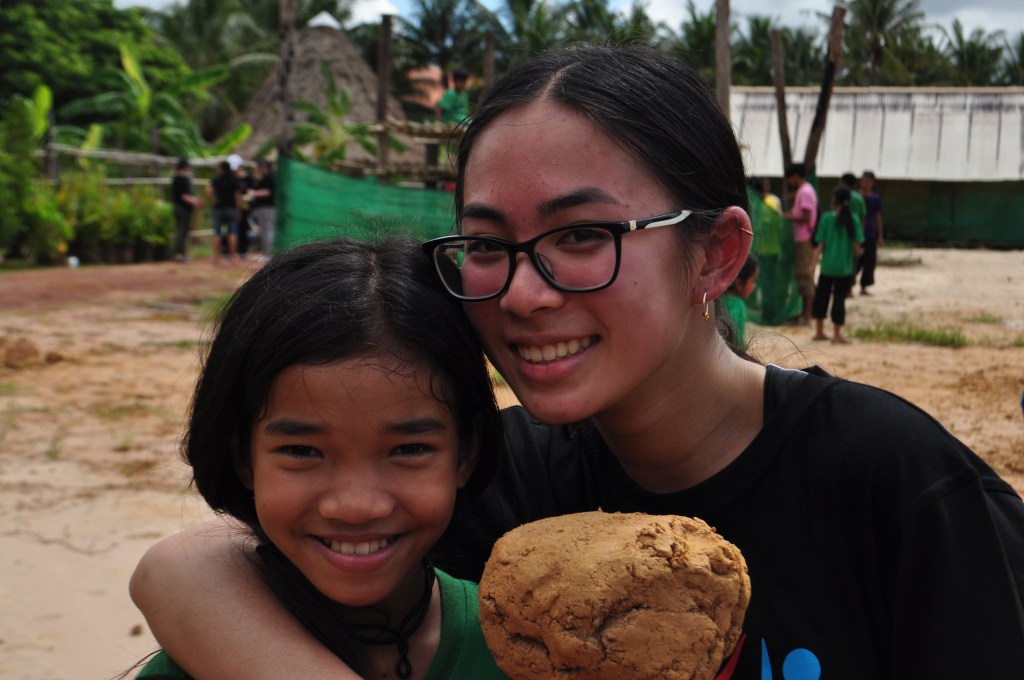
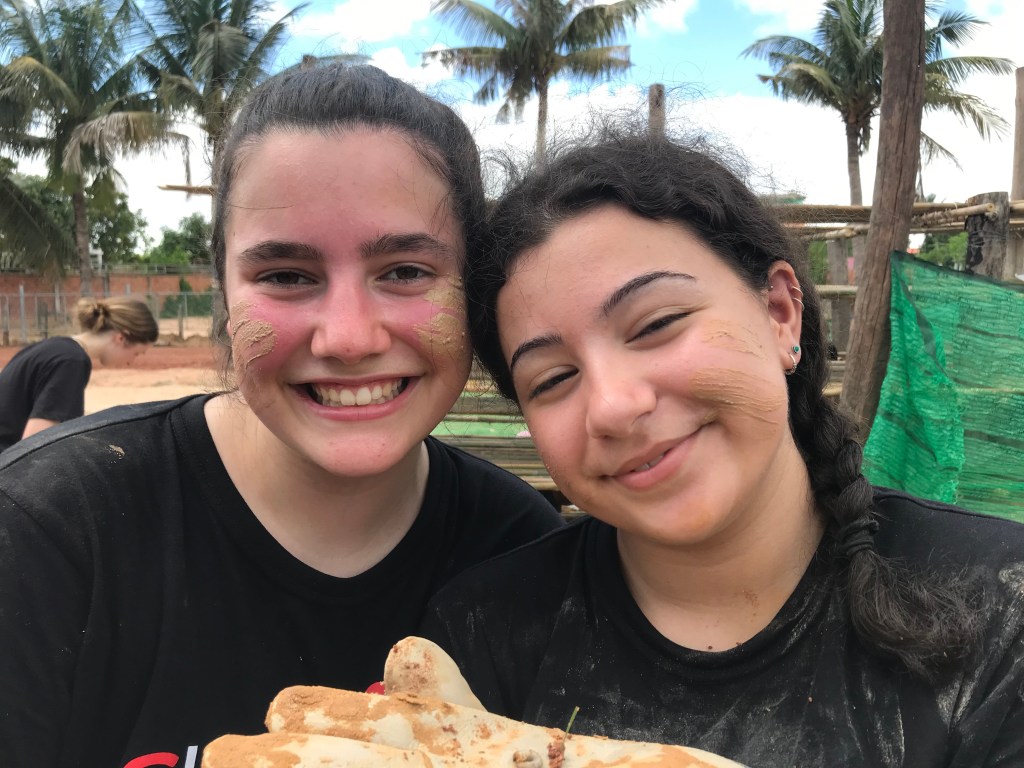
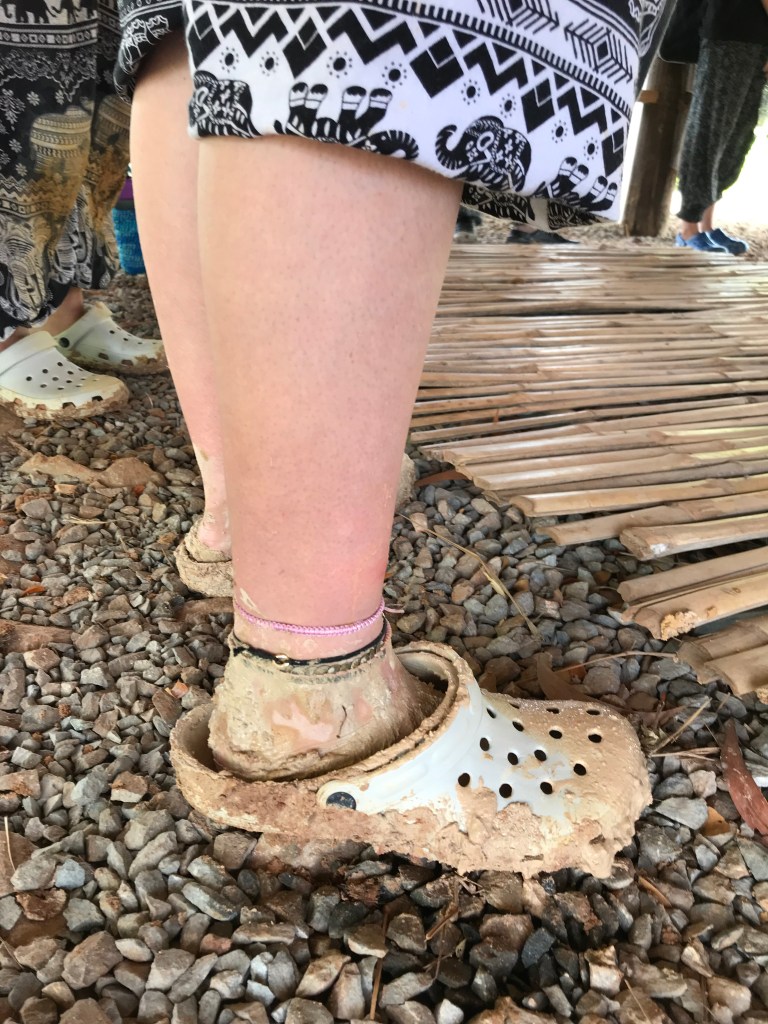
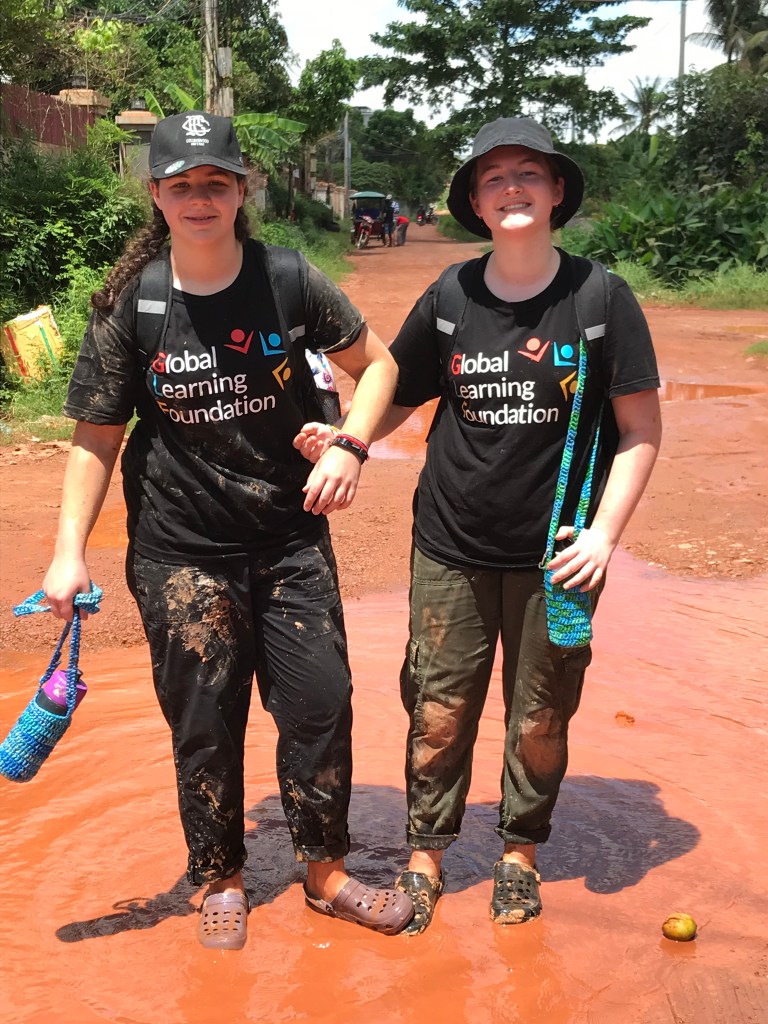
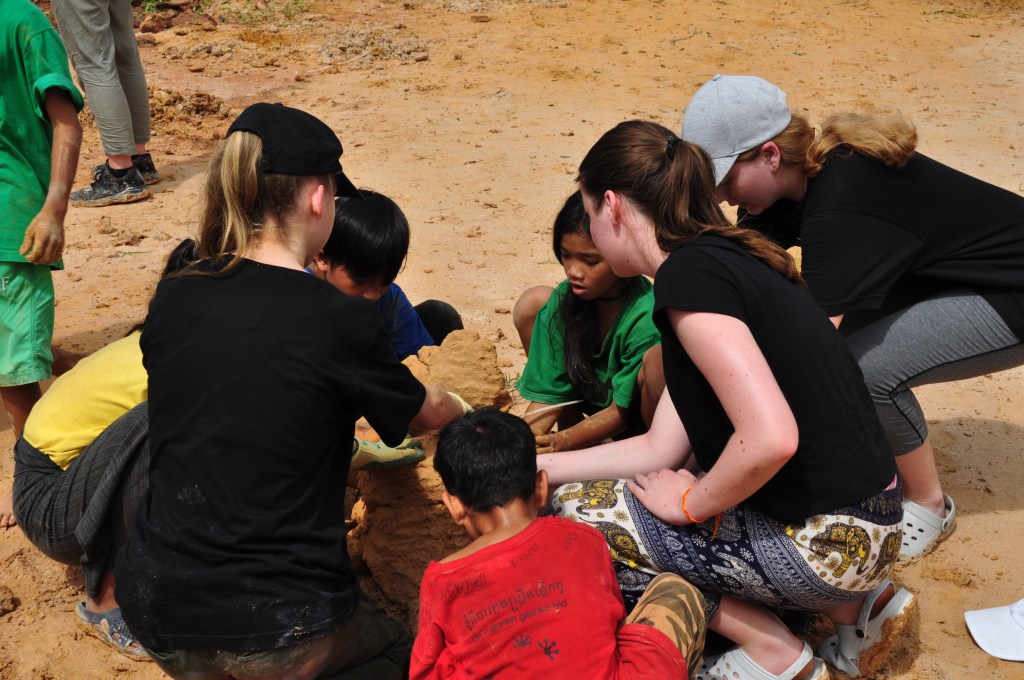
Mud, glorious mud was the order of the day as we spent the morning at the Green Gecko Footprints Farm with our new young friends.
Footprints Farm is a flourishing permaculture enterprise overseen by Rem, husband to Tania Palmer and Gecko Dad. The farm provides much of the daily nutrition for the Geckos, as well as a source of income, employment and training opportunities.
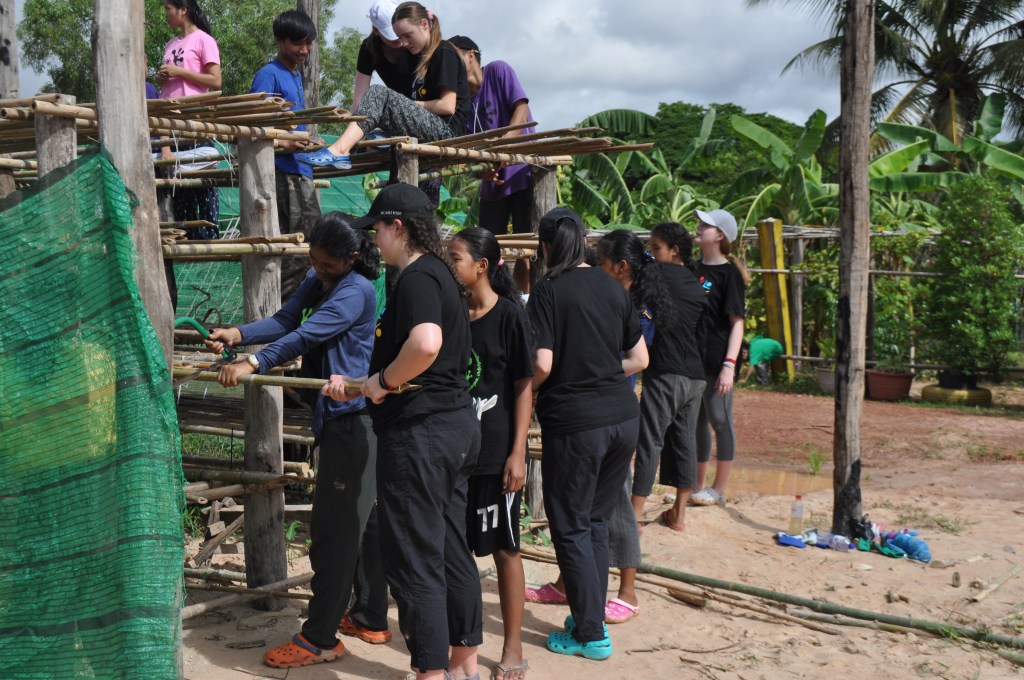
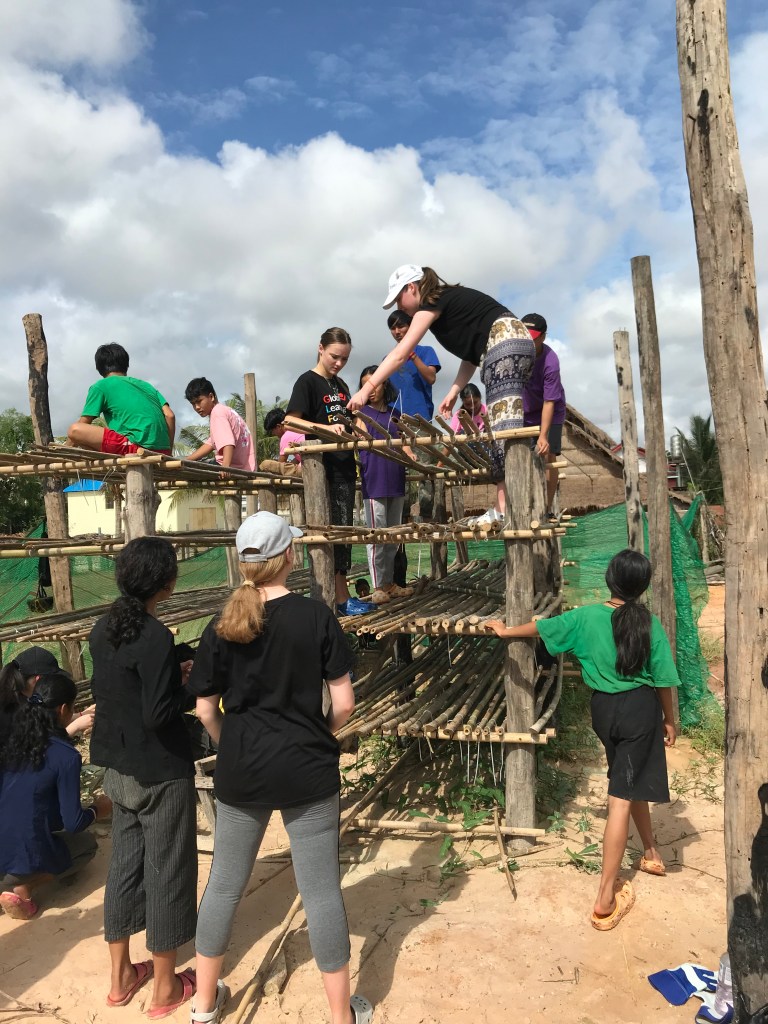
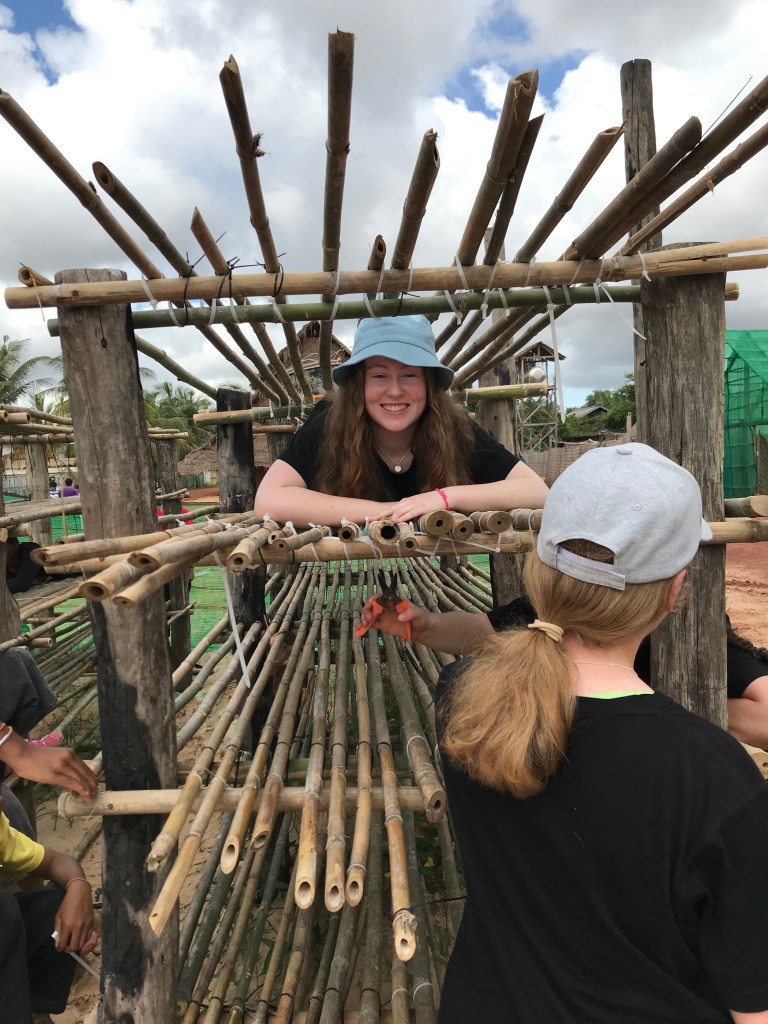
The jobs on our list today included digging holes in the sticky clay for new fence posts, affixing bamboo poles to a mushroom hut, and weeding the garden beds. This was a great chance to get dirty and have fun, with plenty of music to lift the mood.
The afternoon was spent reversing groups from our previous visits to the Silk Screen Printing Lab and Rehash Trash.
Reflecting on the work of Green Gecko, it is really so heartening to see the thought and care invested in cultivating social enterprises that can ensure that the entire families of Gecko kids are looked after. The Gecko’s mums and dads have opportunities for training and employment, and engage in work with a social and environmental impact. It is so humbling to work alongside the people involved in these enterprises and participate in a small way in the work that enriches their livelihoods.
As we travelled back to our hotel this afternoon, I couldn’t help but think how fortunate we are compared to the average tourist, who might spend 2-3 days in Siem Reap “do the temples”, and leave a significant social and environmental cost in their wake. To travel in this way is perhaps not so much sightseeing, but vision-building.
Of course, while we are lucky to work with credible organisations and enterprises, the simple fact is that there is also a lot of the uglier side to confront here: visible poverty, children begging, lack of infrastructure and social support, corruption and lack of access to basic education and health care. Seeing these problems first-hand, need not be cause for disheartenment, but a catalyst for action and change. We are hopeful that your daughters will come away from this experience empowered to work toward positive change, no matter how small.
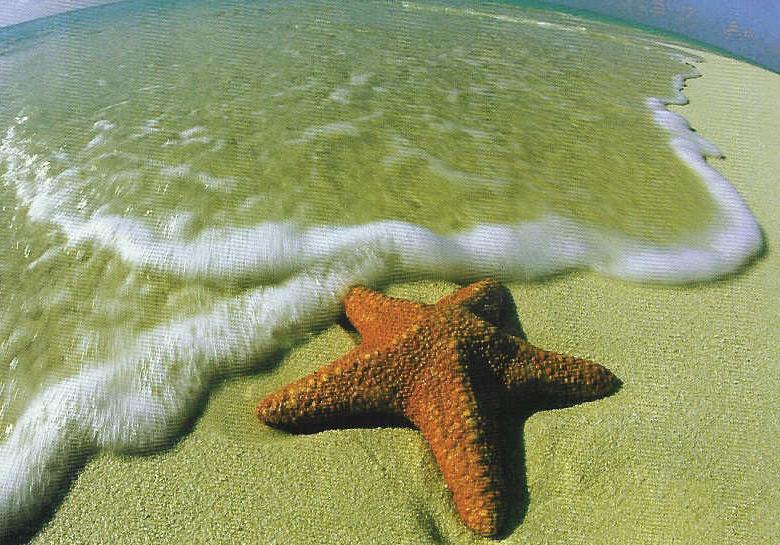
Tonight, we discussed the Starfish Story in our debrief. It is included here for all to share in:
Once upon a time, there was an old man who used to go to the ocean to do his writing. He had a habit of walking on the beach every morning before he began his work. Early one morning, he was walking along the shore after a big storm had passed and found the vast beach littered with starfish as far as the eye could see, stretching in both directions. Off in the distance, the old man noticed a small boy approaching. As the boy walked, he paused every so often and as he grew closer, the man could see that he was occasionally bending down to pick up an object and throw it into the sea. The boy came closer still and the man called out, “Good morning! May I ask what it is that you are doing?” The young boy paused, looked up, and replied “Throwing starfish into the ocean. The tide has washed them up onto the beach and they can’t return to the sea by themselves,” the youth replied. “When the sun gets high, they will die, unless I throw them back into the water.” The old man replied, “But there must be tens of thousands of starfish on this beach. I’m afraid you won’t really be able to make much of a difference.” The boy bent down, picked up yet another starfish and threw it as far as he could into the ocean. Then he turned, smiled and said, “It made a difference to that one!”
Today our reflections are offered by Iliana and Emily:
The most impactful moment for me today was when we went to the farm. As well as having so much fun playing with the Gecko kids, seeing them smiling, laughing, singing and screaming together while playing with the mud, made me realise that while materialistic items can bring you joy it’s the connections you make with other people and the time you spend with them that really mean the most to you.
– Emily
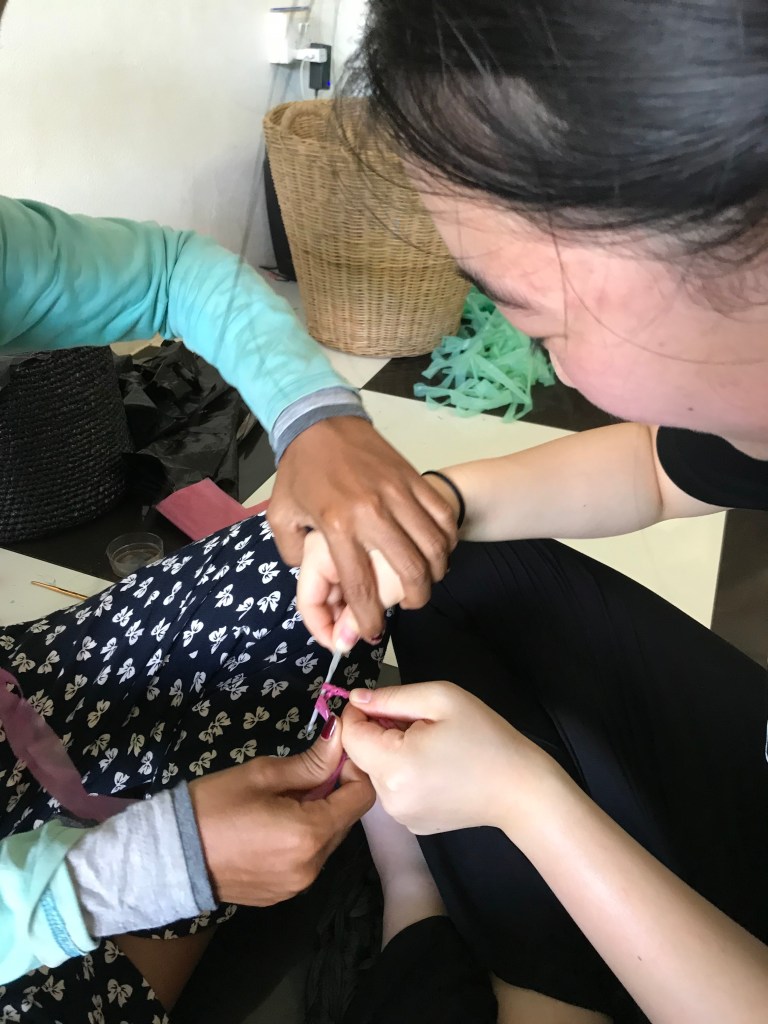
The most impactful moment for me was when I was at Rehash Trash and while one of the ladies where helping me crochet I stopped to read the sign on the wall about how the social enterprise came together and how it helps the women who work there. I suddenly had an overwhelming feeling of warmth in my body to read the positive effects of the project on not only the children but their mothers and whole family. Despite the negative imagine the media portrays by focusing on times of crisis and horrible events, especially in developing countries, I realised that there are good people in the world who do amazing things. Seeing how happy the Geckos and their mothers are and how much pride they take in their culture and work made me hopeful for the future.
Probably the best way to describe today is as we have done in the title: today encompassed exuberance, empathy and a multitude of other expressions.
A ritual on the tour is for some of us to join a morning walk through the streets near our hotel. Accompanied by the teachers, these walks give an insight into the rhythms of the day around us, and the early morning temperatures are cooler, allowing us to take in some of the sensory offerings at a slower pace.
We started the day’s itinerary with two counterpoints of Cambodian history and culture: the Hindu-influenced temple at Banteay Srey, and the Cambodian Landmine Museum.
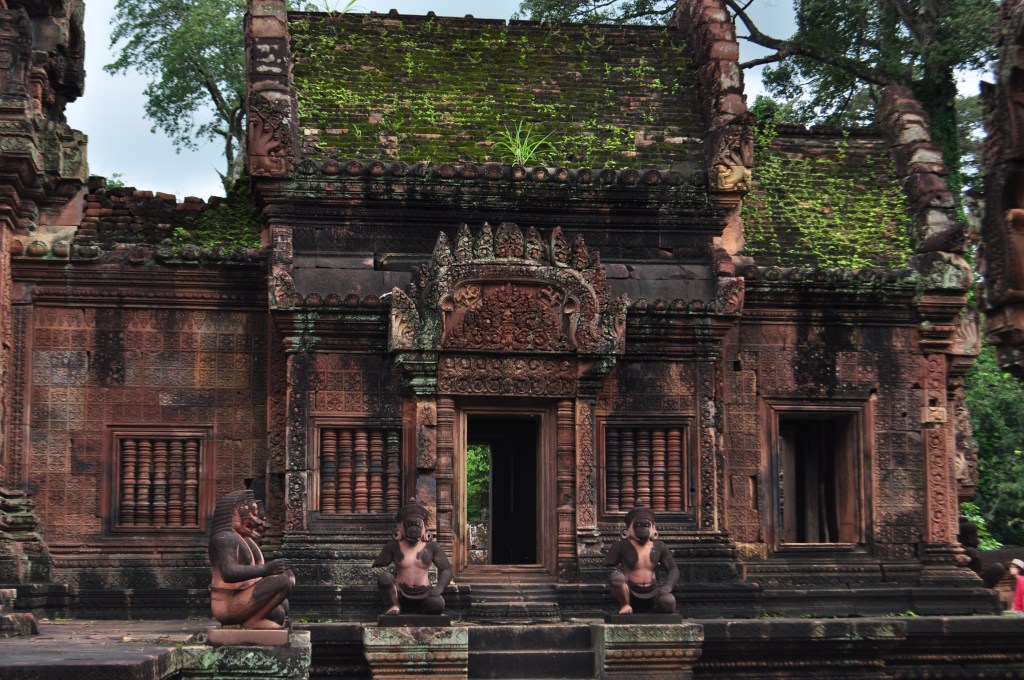
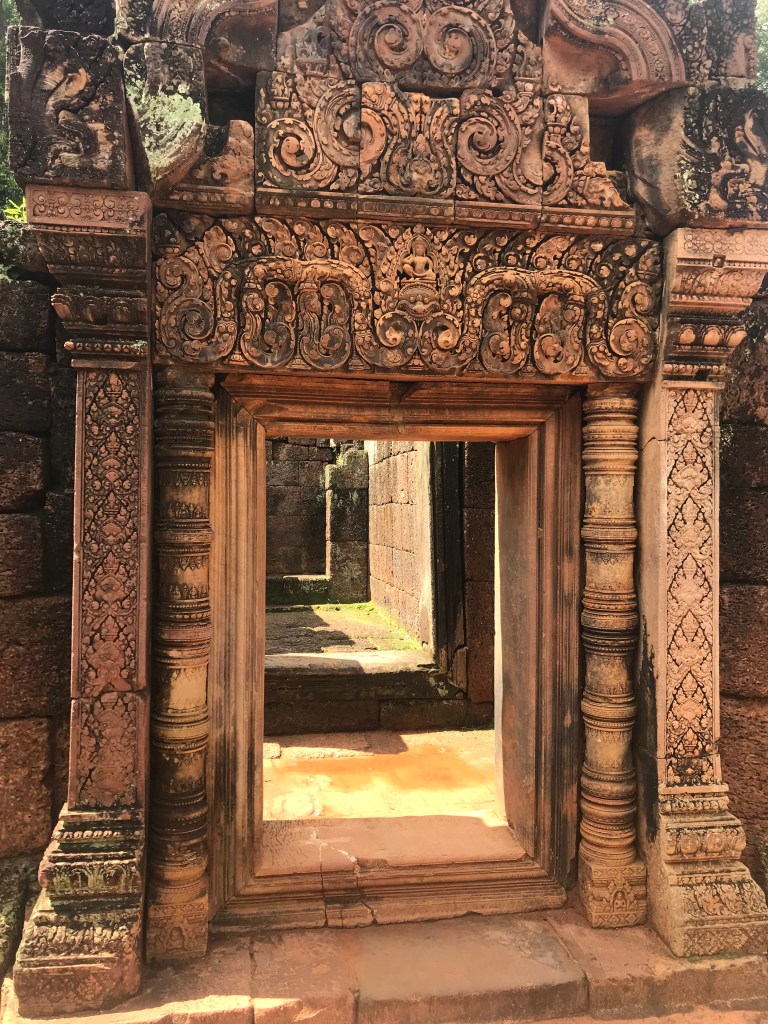
Being a girls school, we are all about celebrating the unique contributions and capacities of women, and the visit to Banteay Srey temple today reaffirmed that. Srey is the Cambodian word denoting feminine, and the unique pink sandstone construction and intricate, deep relief carvings in the stonework reflect this. As a citadel to women, Banteay Srey was not built to celebrate a king’s power like most of the other temples, instead designed to reflect worship of the goddess Shiva.
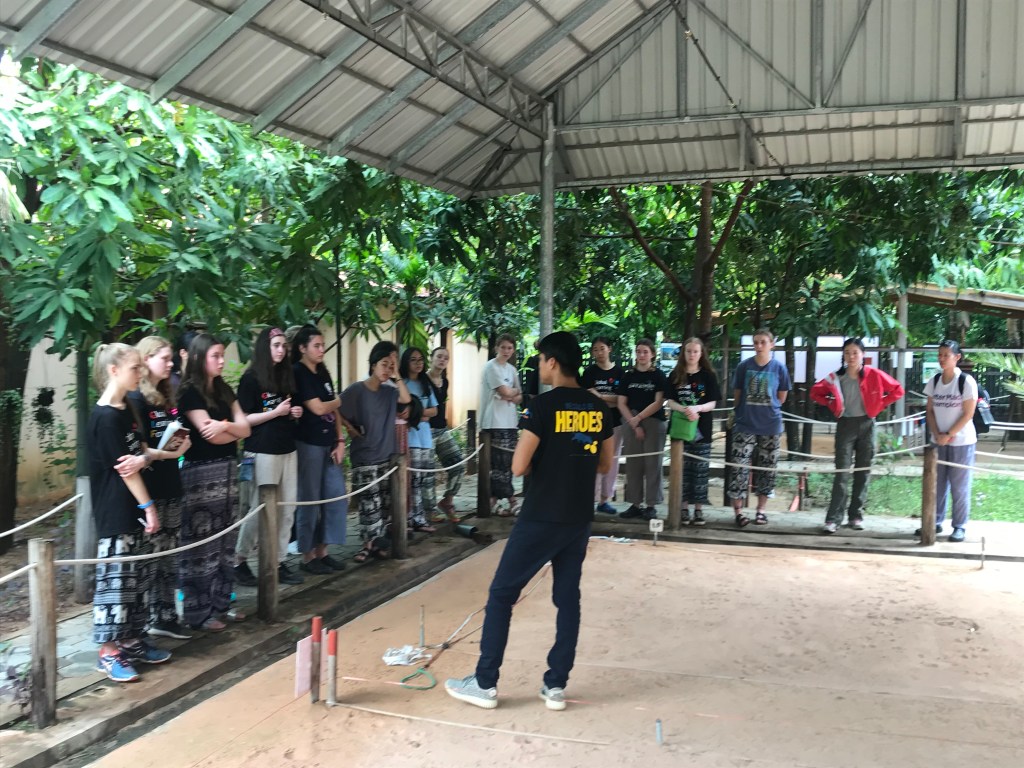
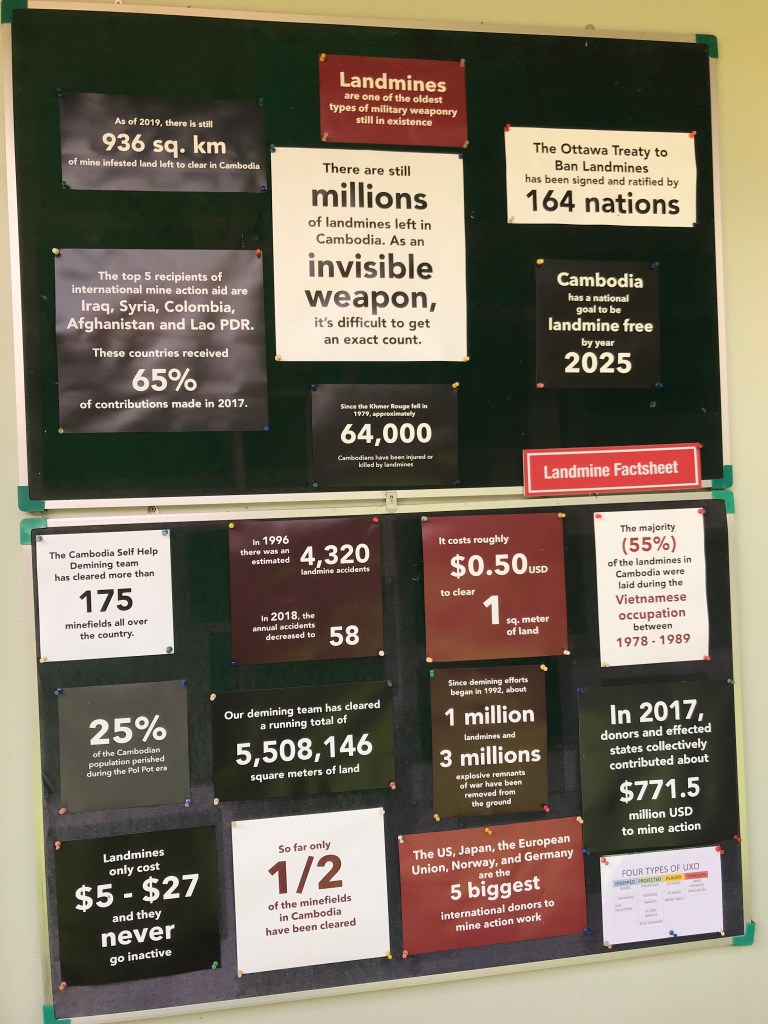
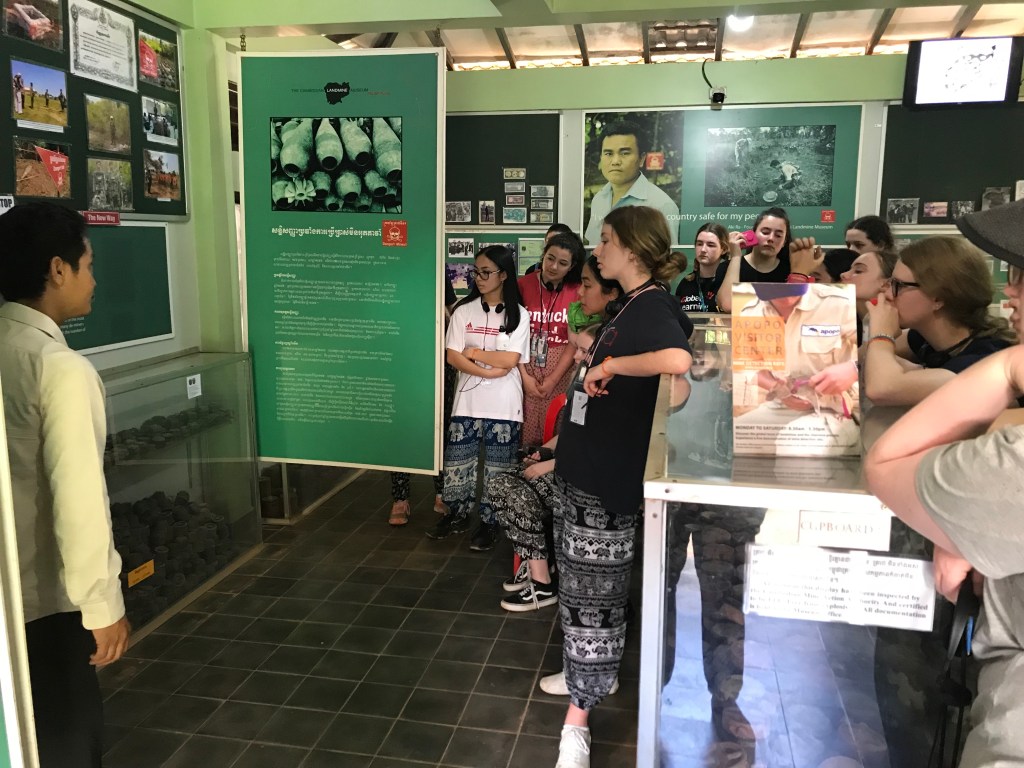
The Cambodian Landmine museum allowed us to develop a deeper understanding of the sad recent history of Cambodia, and the interrelationships of politics and global forces that shaped the conflict that eventuated in Indo China throughout the 20th Century.
After lunch we had a chance to visit the artisan Made in Cambodia market, where we encouraged the students to select some of the gifts they would like to share with loved ones at home.
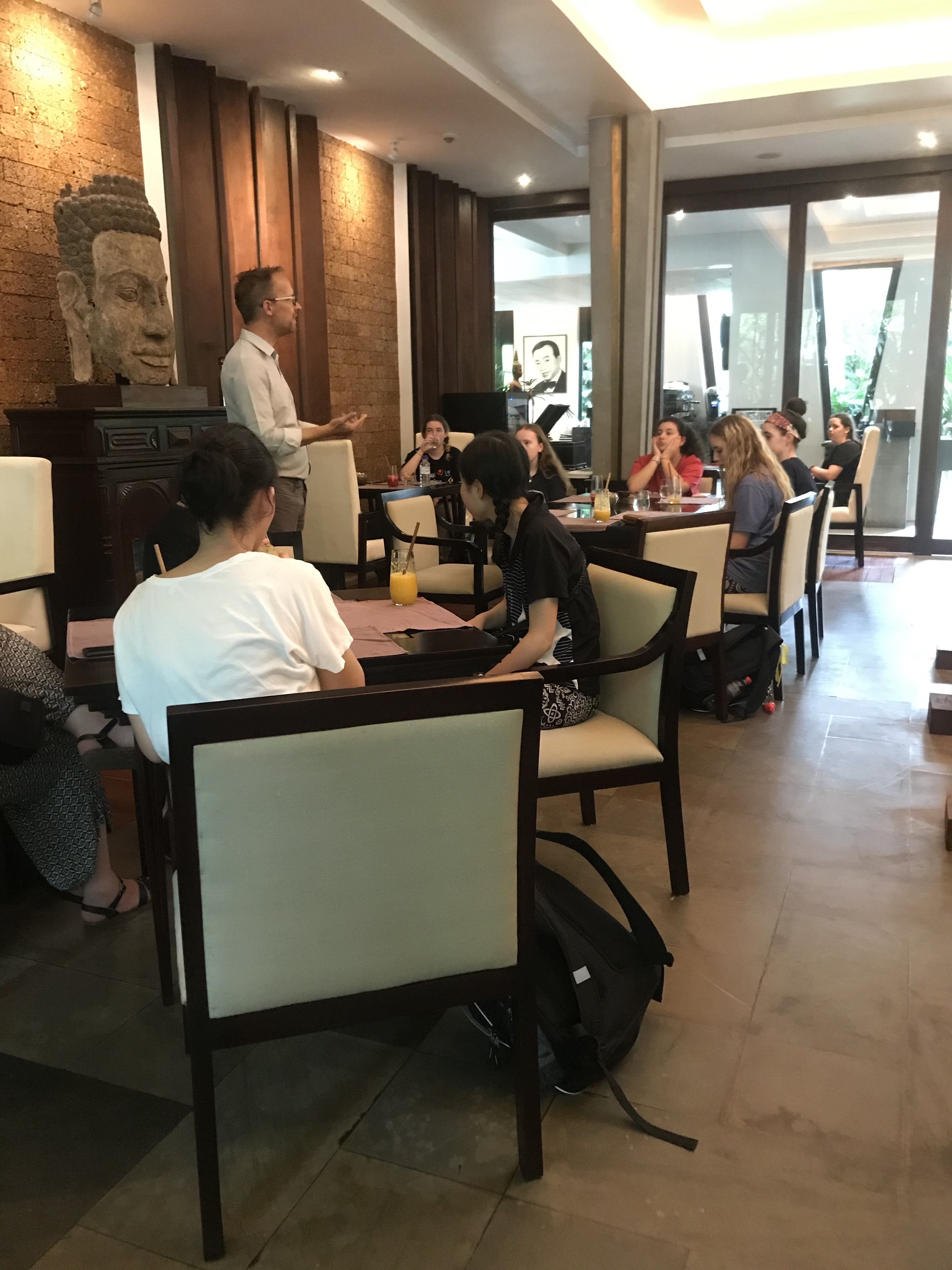
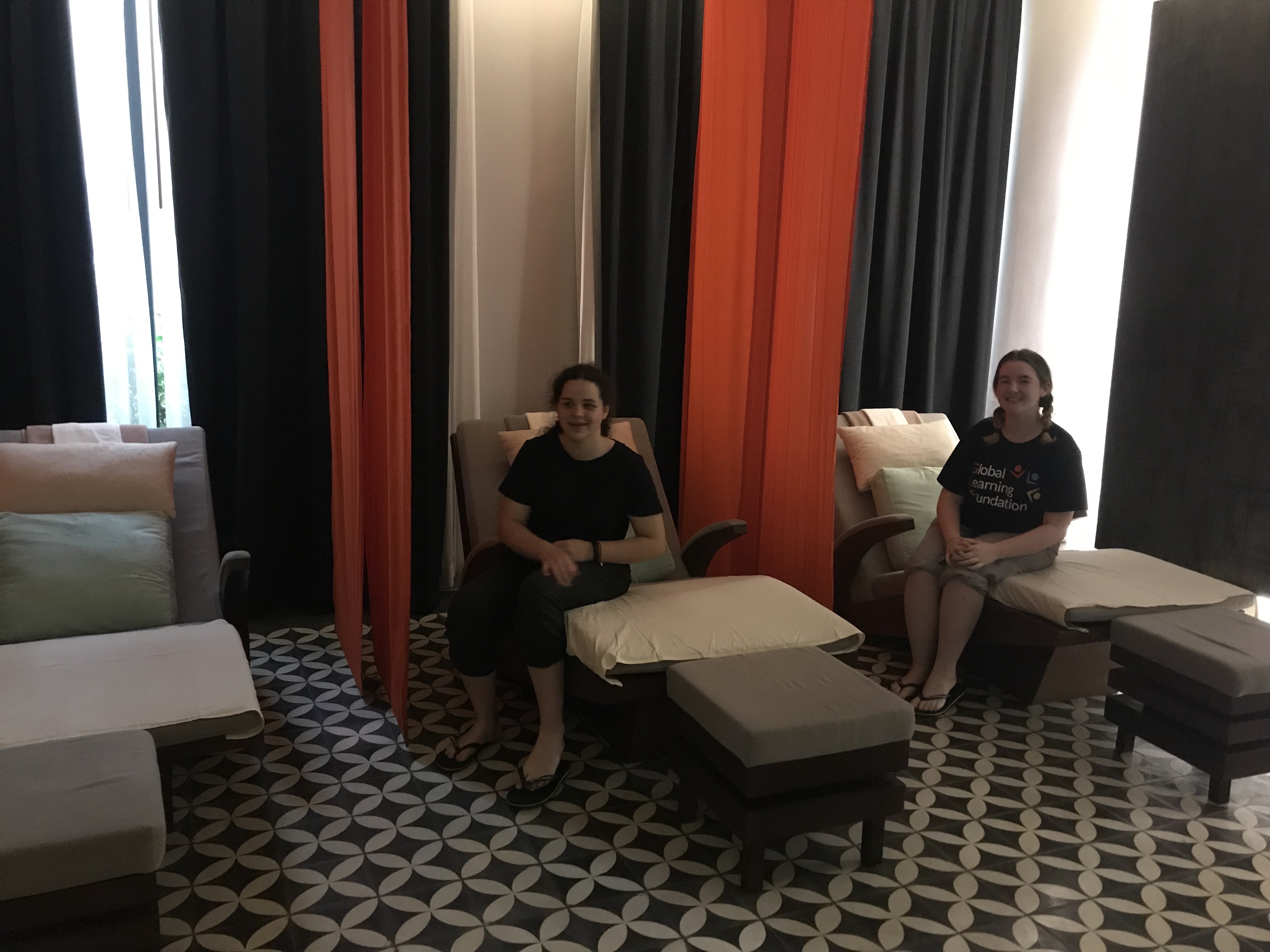
As it was Millie’s 16th Birthday today and we were keen to make it special, we arranged a visit to Jaya House River Park, a 5-star boutique hotel which is also leading the way in environmental initiatives. The surprise of the day was that we were met there by Director Christian De Boer, who explained his mission and purpose in eliminating single use plastics in the hotel industry. We took some time there also to soak in the ambience and enjoy a mocktail, before Millie headed off for her birthday treat of a foot massage with Caitlin.
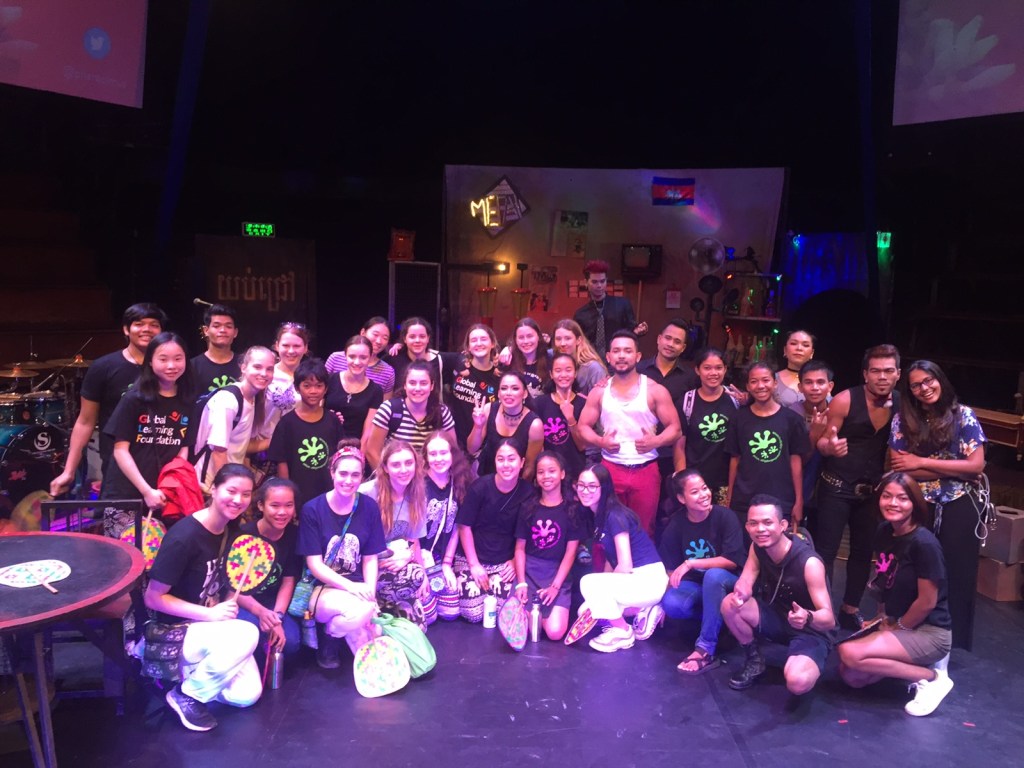
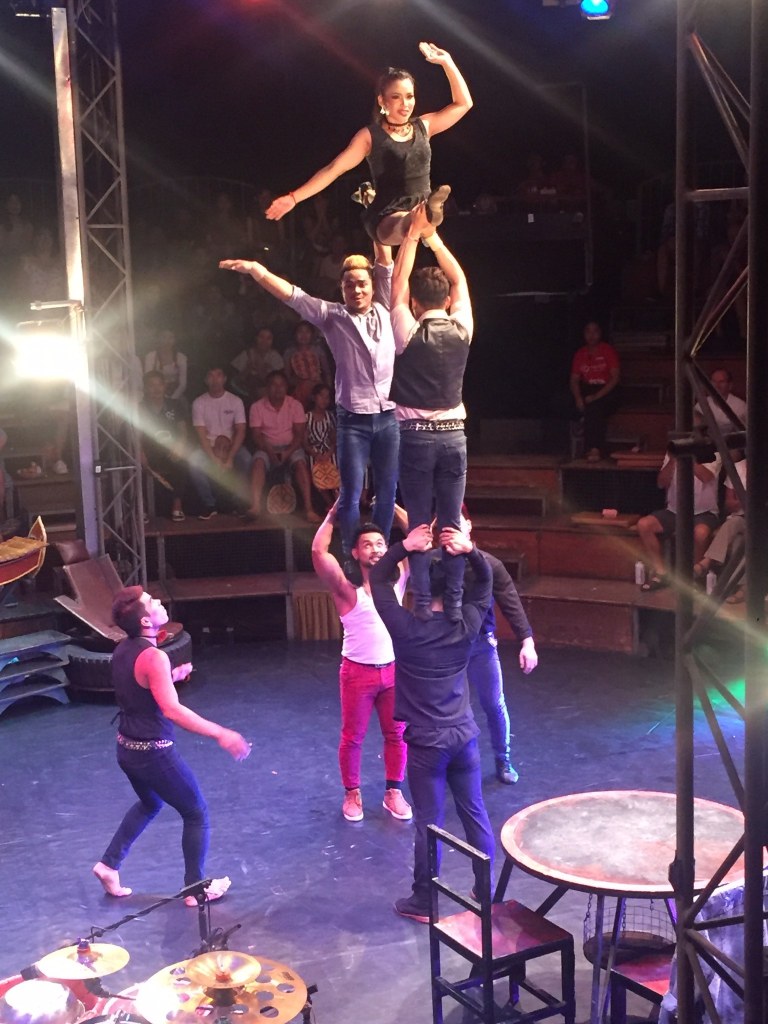
The evening we spent with the Geckos again, enjoying a phenomenal performance of the Phare Circus. The young performers are trained in circus and other performing arts through Phare Ponleu Selpak’s vocational training centre in Battambang.
Today we have some reflections from Hannah and Claire T:
Today we had such a busy day. We visited the Banteay Srey temple (women’s temple) and this temple contrasted the others as it is made of pink sandstone rather than grey sandstone. Next we visited the Cambodian Landmine Museum, for a lot of us, this experience was confronting yet eye-opening and reminded us of our mission for this trip and why we are all here. A volunteer who has been involved with Aki Ra and the museum since he was injured by a landmine spoke to us about his story and the need for help in ensuring safety across the country from uncleared landmines left from the conflict. A shocking statistic that was shared with us is that 1 in 300 Cambodians are affected by land mines. Despite the first half of the day being challenging, the second was filled with fun and bonding as a group. We visited the Made in Cambodia market which was later followed by a visit to the Jaya House River Park Hotel, which is a 98% plastic free hotel. We spent the night at Phare Circus having dinner with the Geckos which was not only fun but gave us a chance to further make connections with them. This is only the 4th day of our trip and already have learnt so much and we can’t wait for what’s to come. Claire T and Hannah
What a joy to observe your daughters forming relationships with the Green Gecko children and young adults already, and immersing themselves fully in the experiences offered. Tomorrow we spend part of the day with them again, starting with a session at the Footprints Farm – prepare for some muddy faces in tomorrow’s blog post!
Today has been a day of cultural immersion, historical insight and burgeoning friendships.
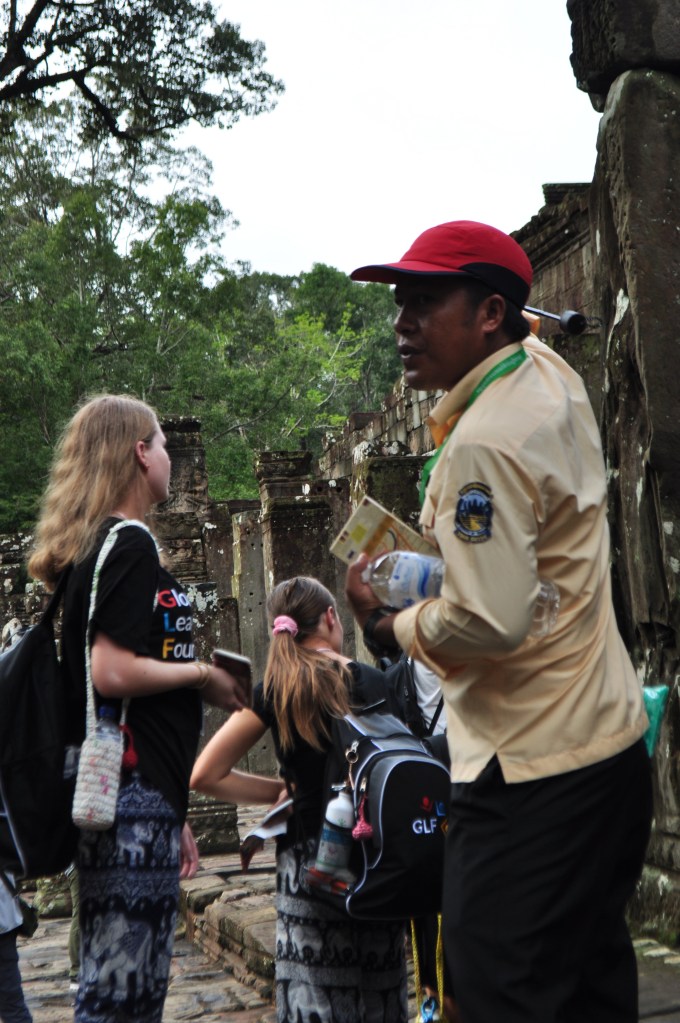
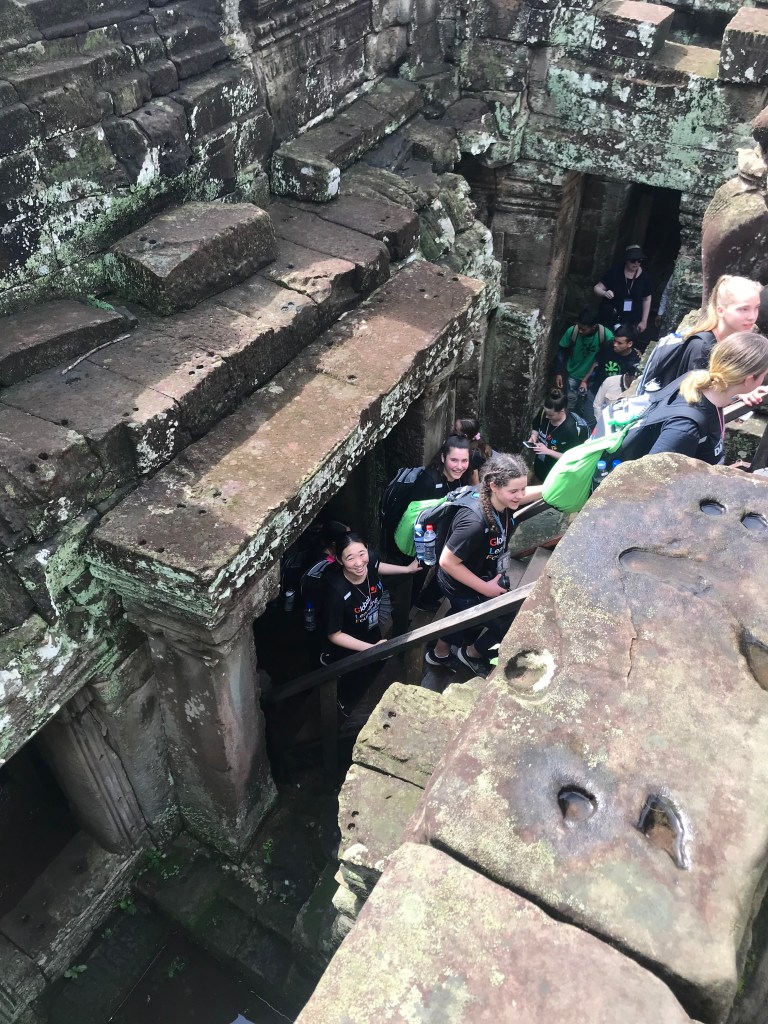
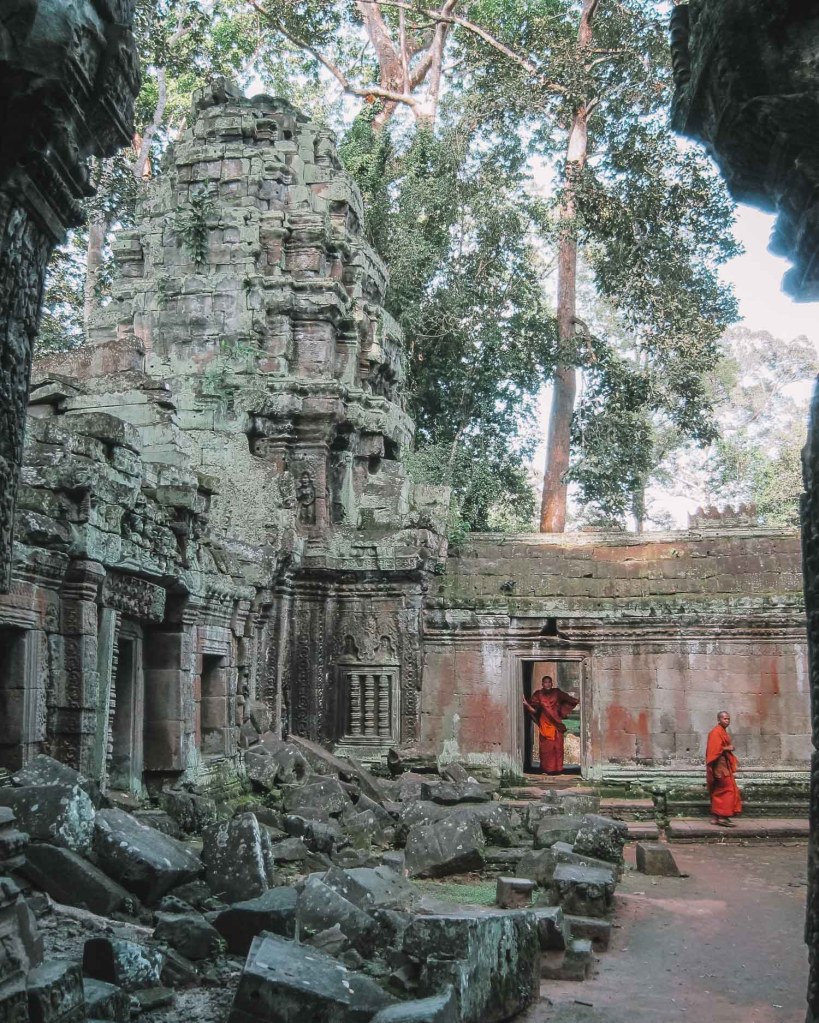
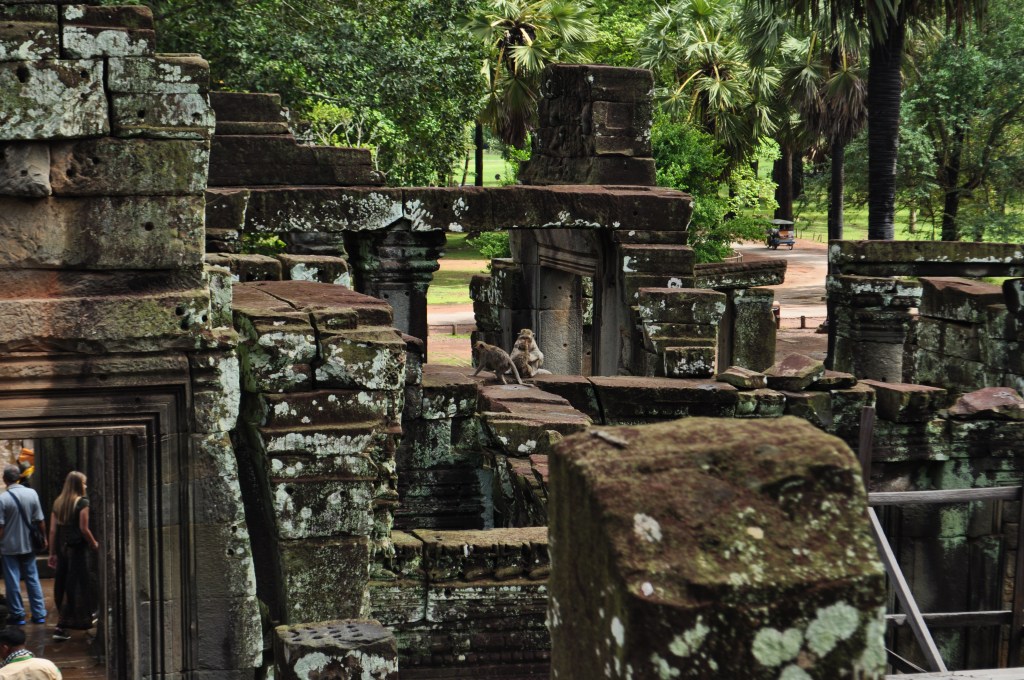
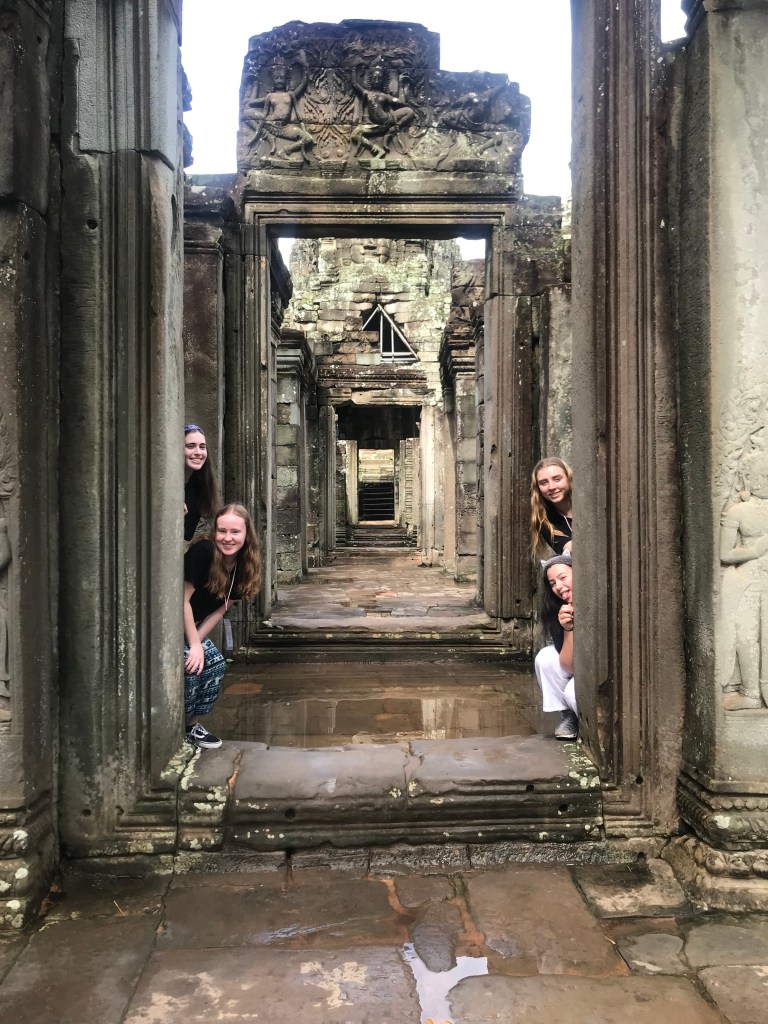
We visited one of the seven man-made Wonders of the World – Angkor Wat (city temple), and also the amazing Ta Prohm and Angkor Thom temples, with the Green Gecko young adults.
Fun Facts about the temples:
Located in the Siem Reap province of Cambodia this UNESCO World Heritage site was once the centre of the Khmer empire that ruled Southeast Asia until its fall. The city was then reclaimed by the jungle and found by western explorers in the 1800s, and after extensive restoration in the 20th century, Angkor Wat opened for tourists from around the world to explore.
Angkor extends over 400 square kilometres and consists of more than 1000 temples!
From the 9th to 15th century, Angkor was the centre of the Khmer Kingdom.
At lunch, each CGGS student sat with, and got to know, the lives and future aspirations of a Gecko student. Despite a rainy start and 100% humidity today, the students showed curiosity and resilience and there was still laughter and chatter. We even had some entertaining karaoke on the bus – certainly a very instantaneous and hilarious icebreaker. We were all very tired when we arrived back at the hotel mid-afternoon and took a few hours to chill in the pool and shower before dinner.
Here are some student reflections from today – Bel and Eloise had this to say:
Visiting the temples was an amazing experience and we loved being able to share this with our new Gecko friends. Getting to know their stories and having fun through jokes, allowed us to form new friendships, and we hope that these will grow throughout our trip and at home. The temples were absolutely breathtaking and definitely worth the walk through the heat! We are looking forward to what other experiences tomorrow will bring!
Today was our first full day in Siem Reap and we certainly packed a lot into it!
Our itinerary for today included:
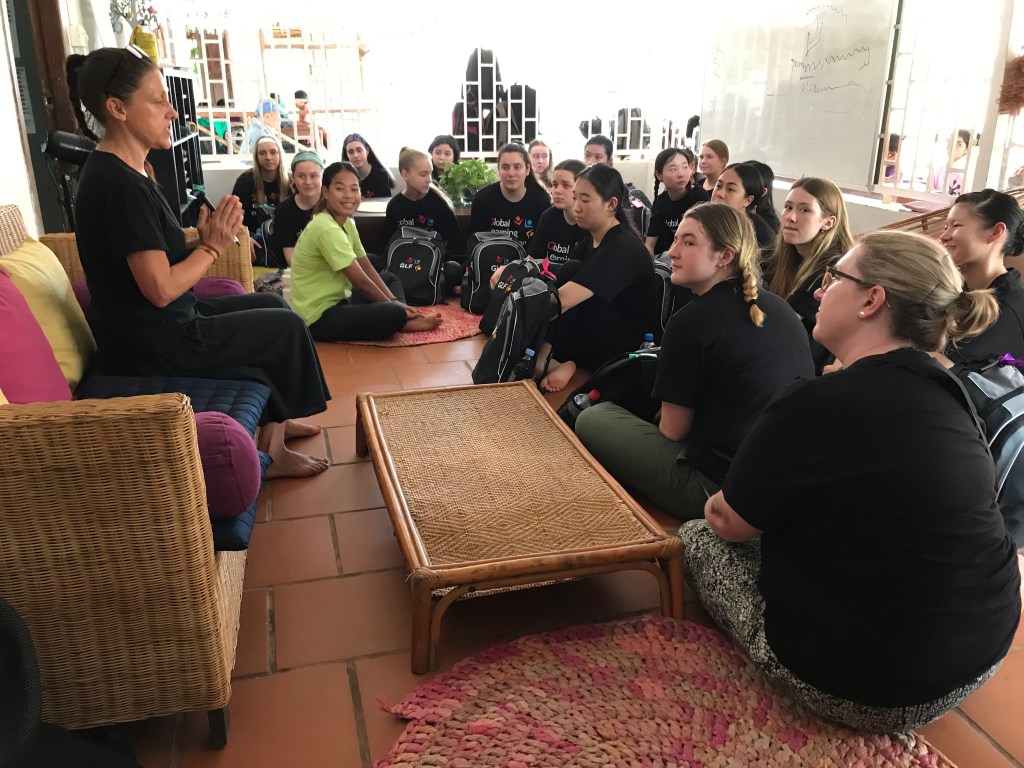
A tour of Green Gecko and presentations by founder Tania Palmer, Green Gecko original Kim Suan, and Reintegration Manager Liz.
Time to explore the local market
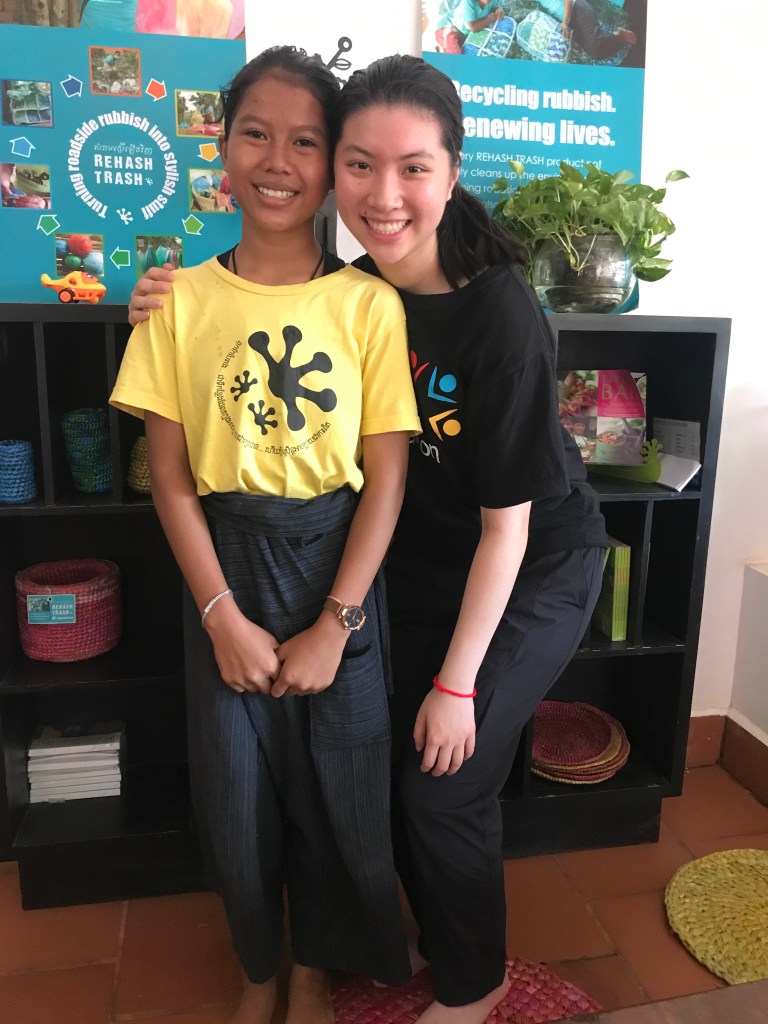
A workshop with Rehash Trash (for half the group)
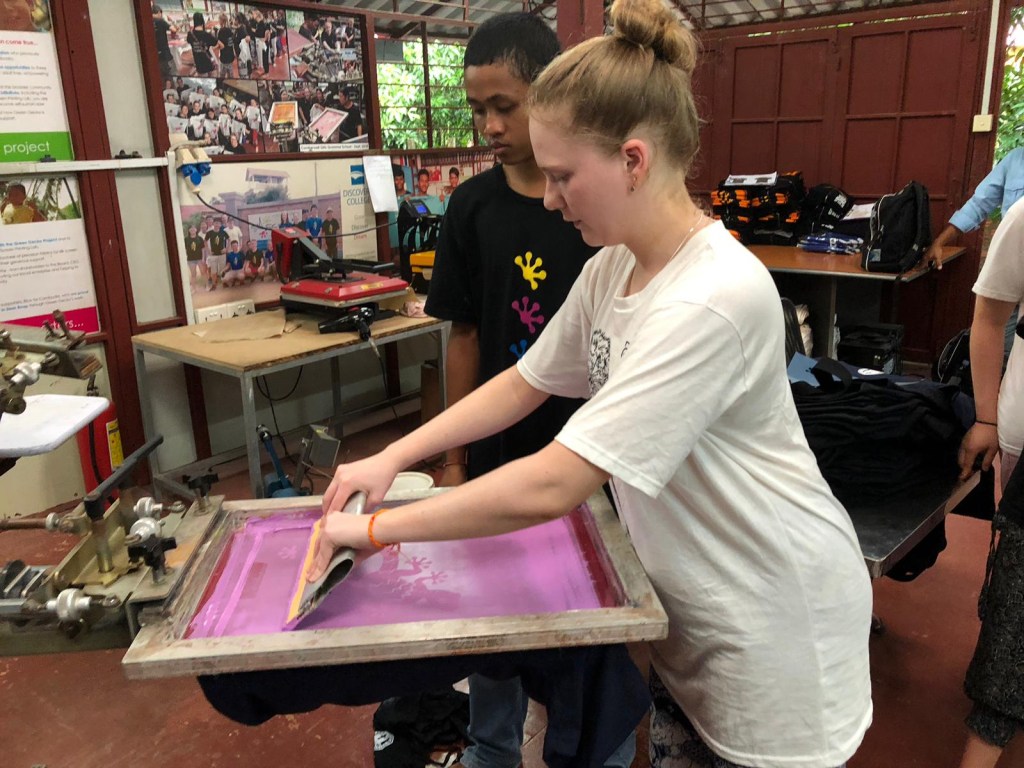
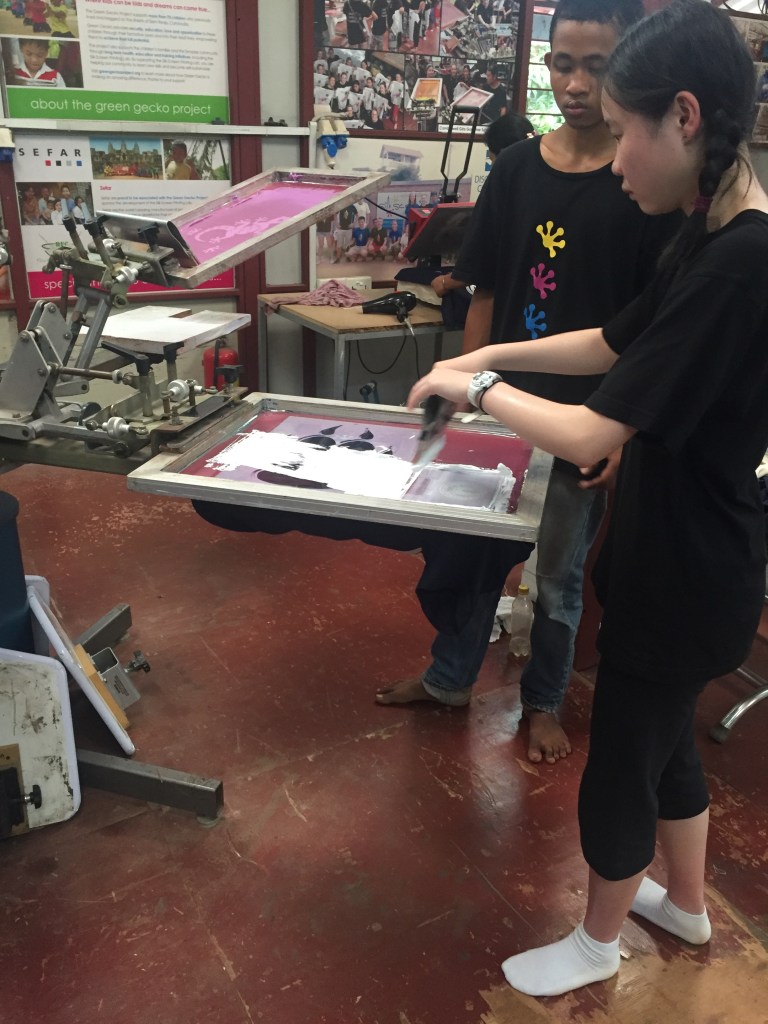
A workshop at the Silk Screen Printing Lab (for the other half) Both of these are local social enterprises started by Green Gecko to provide vocational and employment opportunities to the Green Gecko family members.
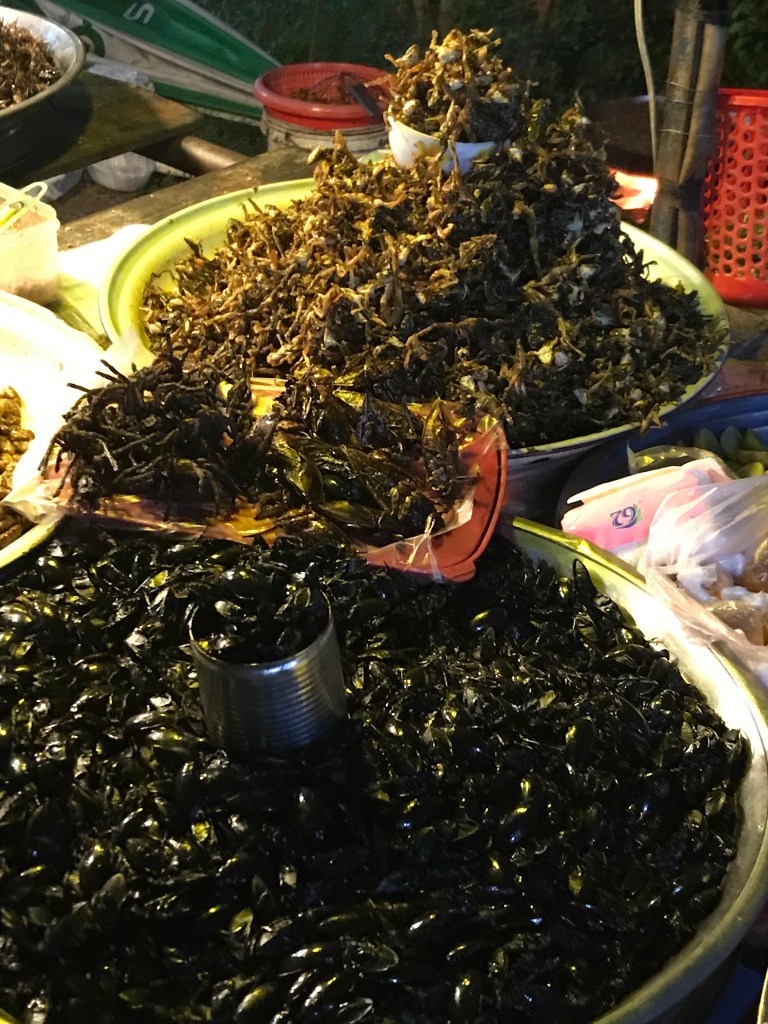
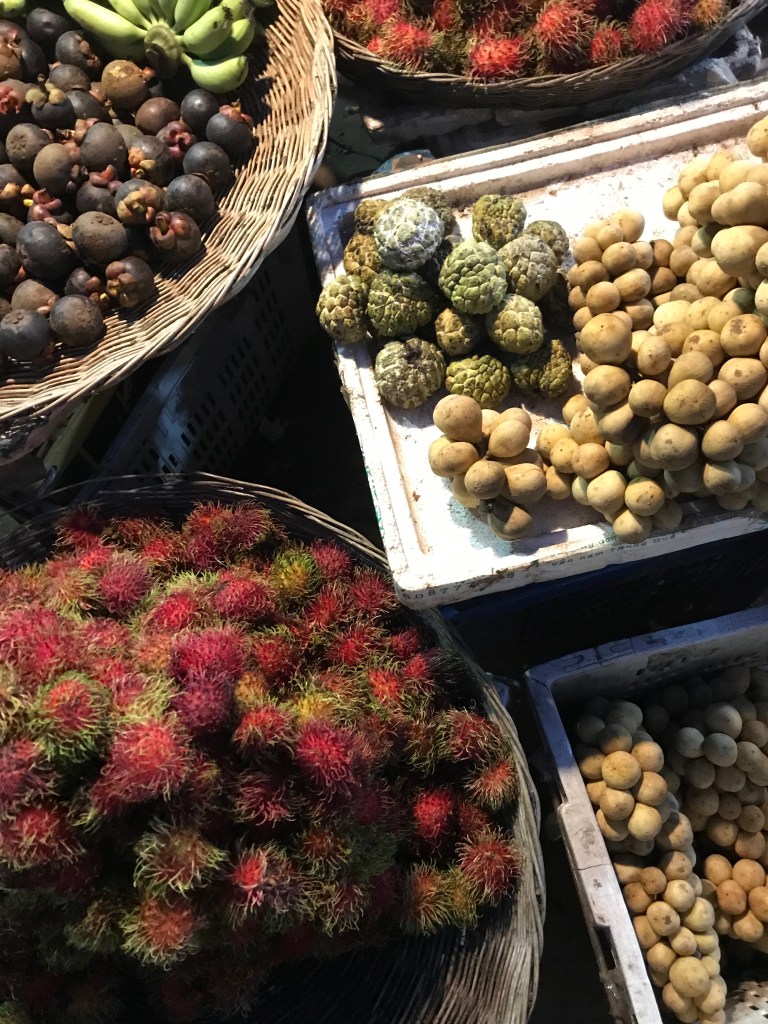
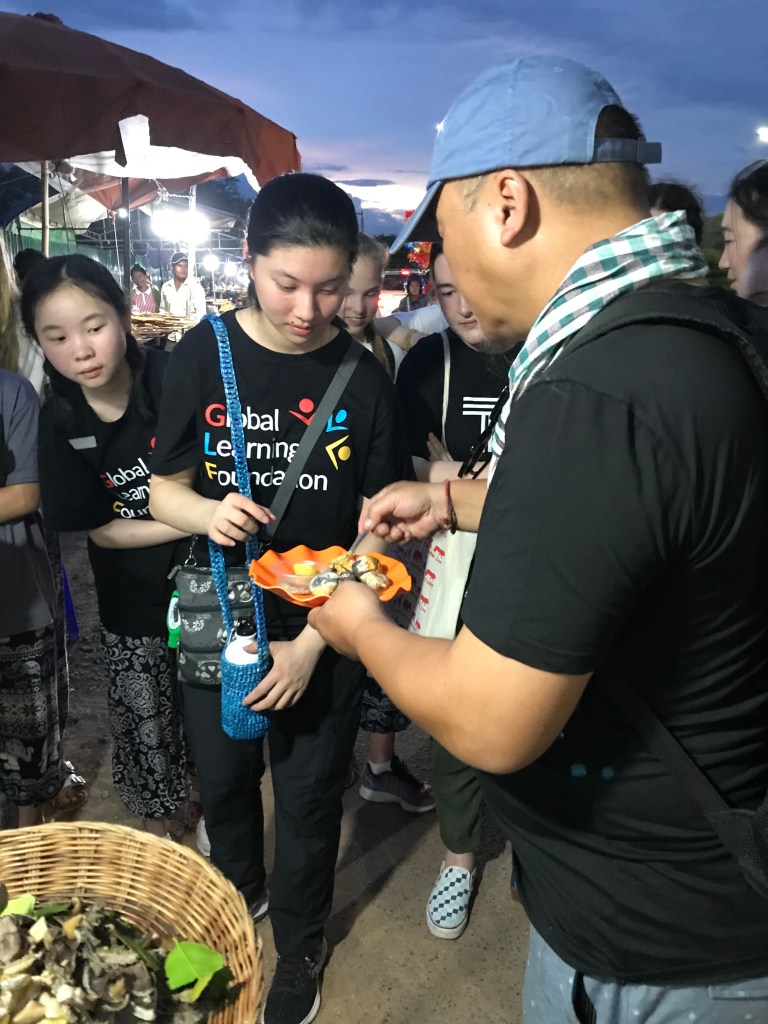
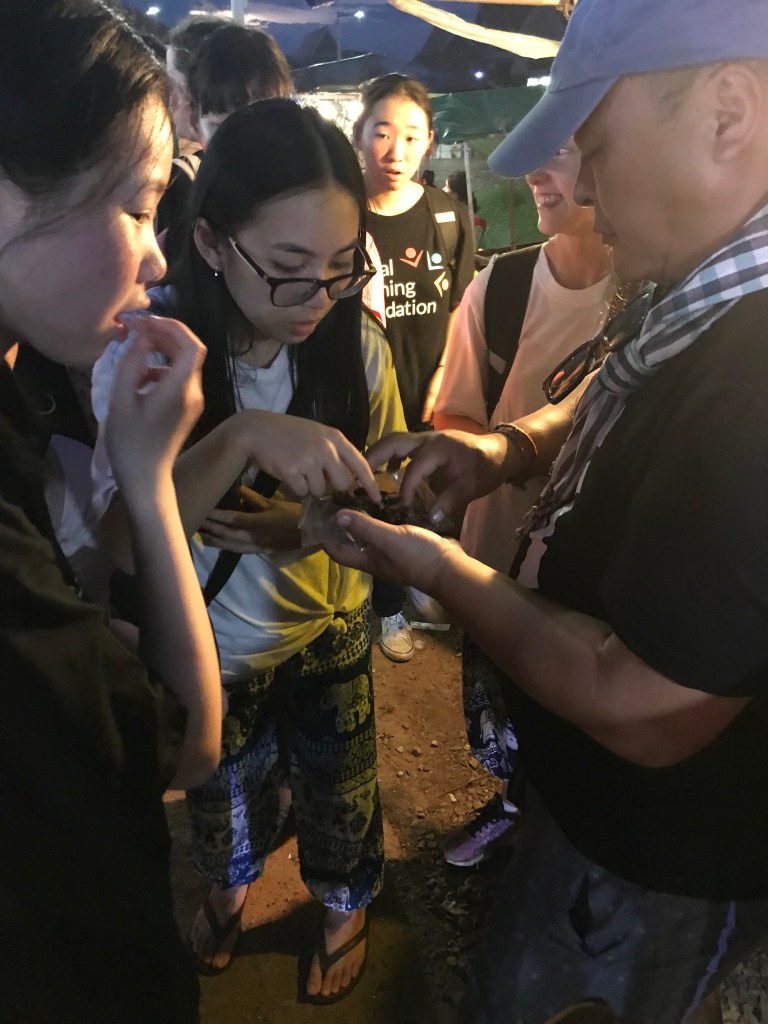
A tuk-tuk ride to the night food market and sampling of local delicacies including duck embryo eggs and crickets
Each day, we will feature some ideas and reflections from two of our group members. Today Claire R and Amy are sharing theirs:
The first day of Cambodia was the beginning of cementing thousands of memories. Today we opened our eyes to the lives of the Geckos as well as Tania and Liz, staff of the organisation. These women taught us meaningful anecdotes about the resilient and powerful stories of the Geckos as well as the transformative potential of love and education. (Claire R)
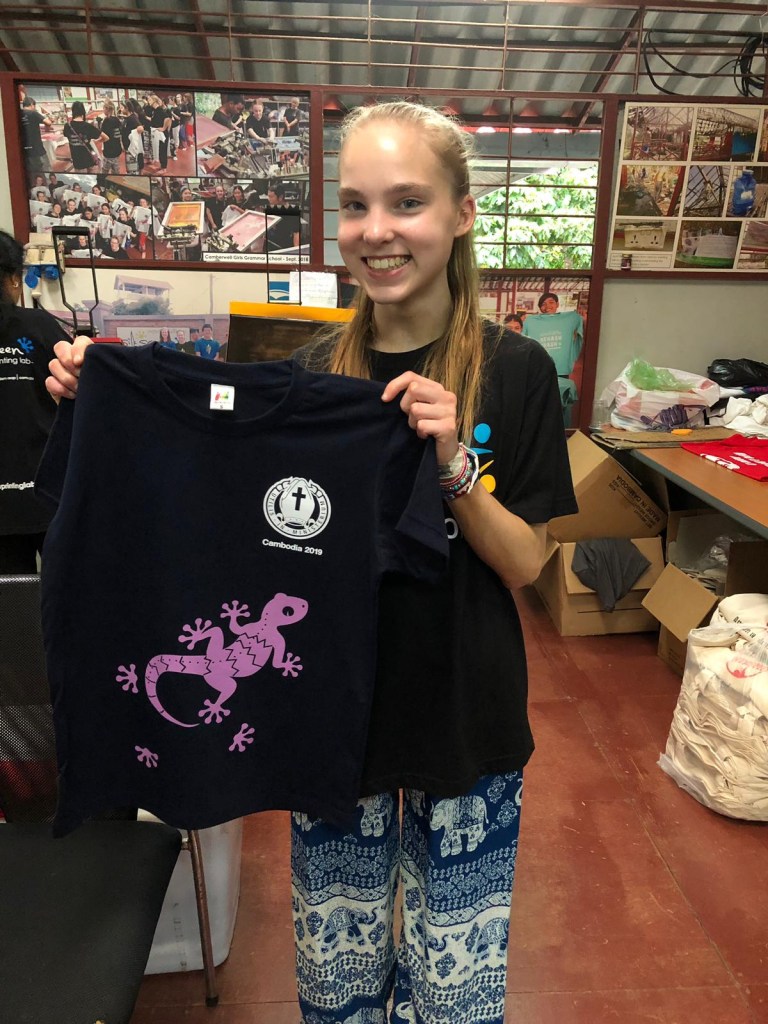
Group B went to the silk screen printing lab, another one of Green Gecko’s social enterprises. Despite the minimal cooling indoors, we all enjoyed the process of creating our personalised t-shirts. In addition, we were introduced to the method of creating stencils for silk screen printing. (Amy)
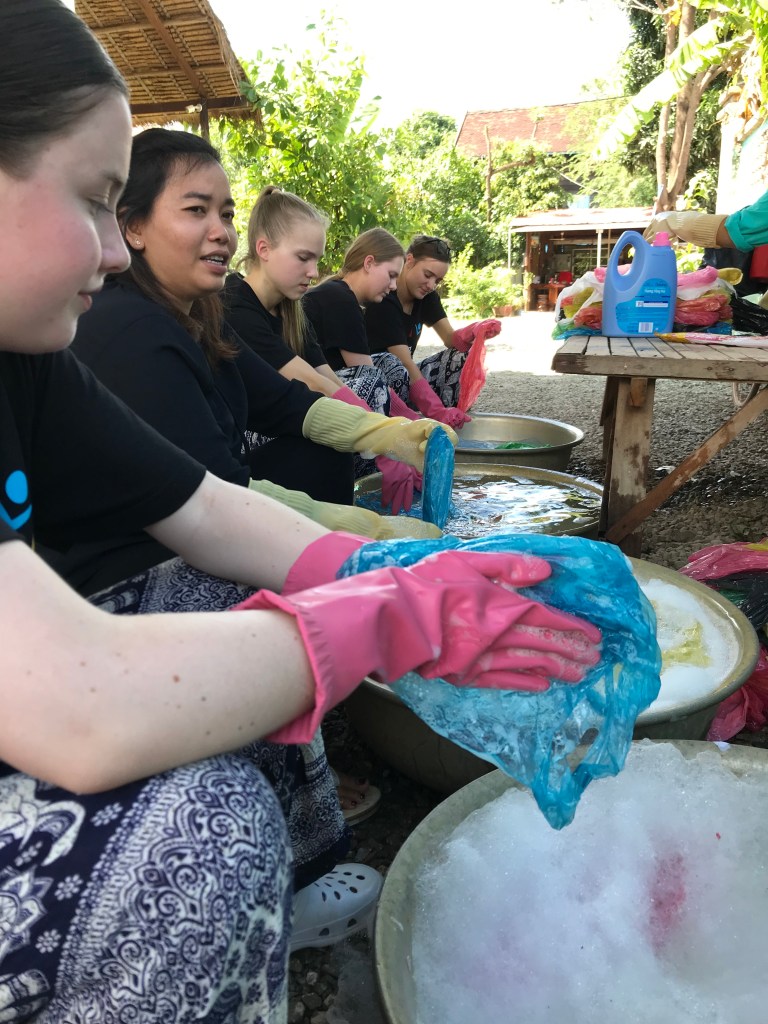
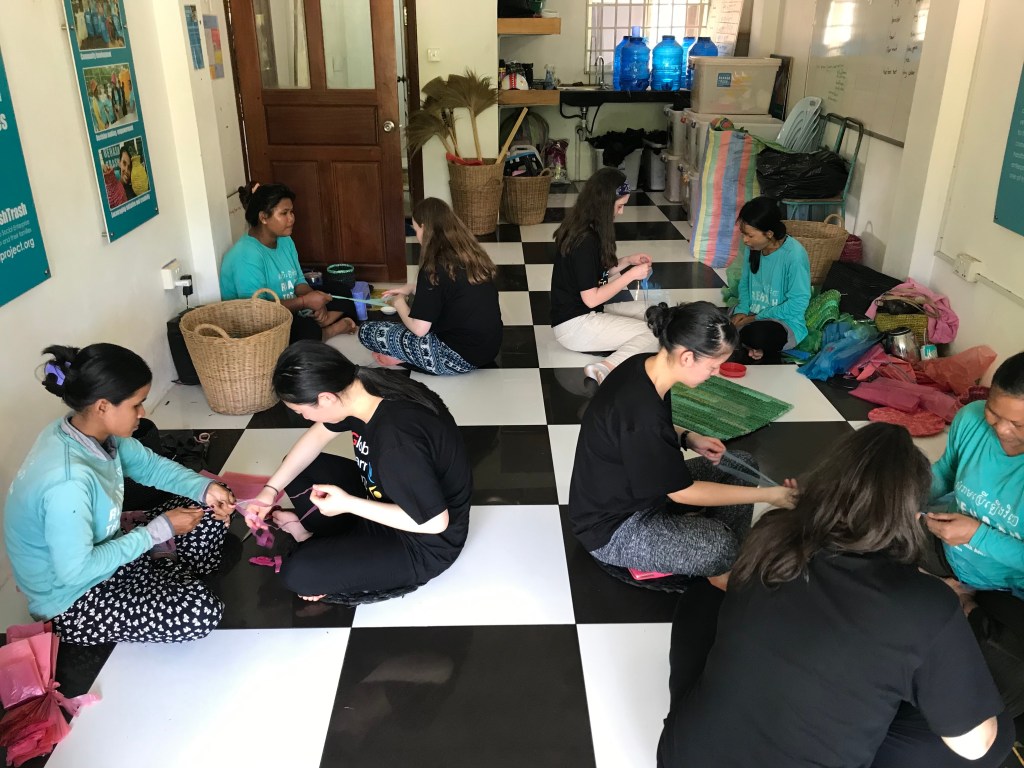
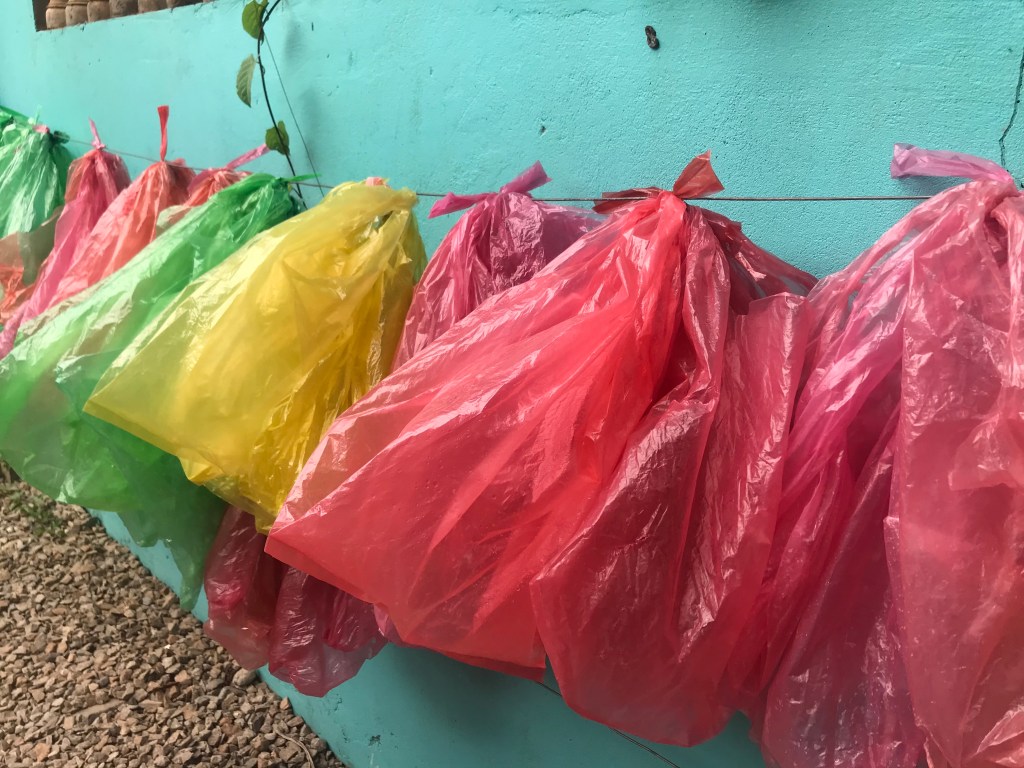
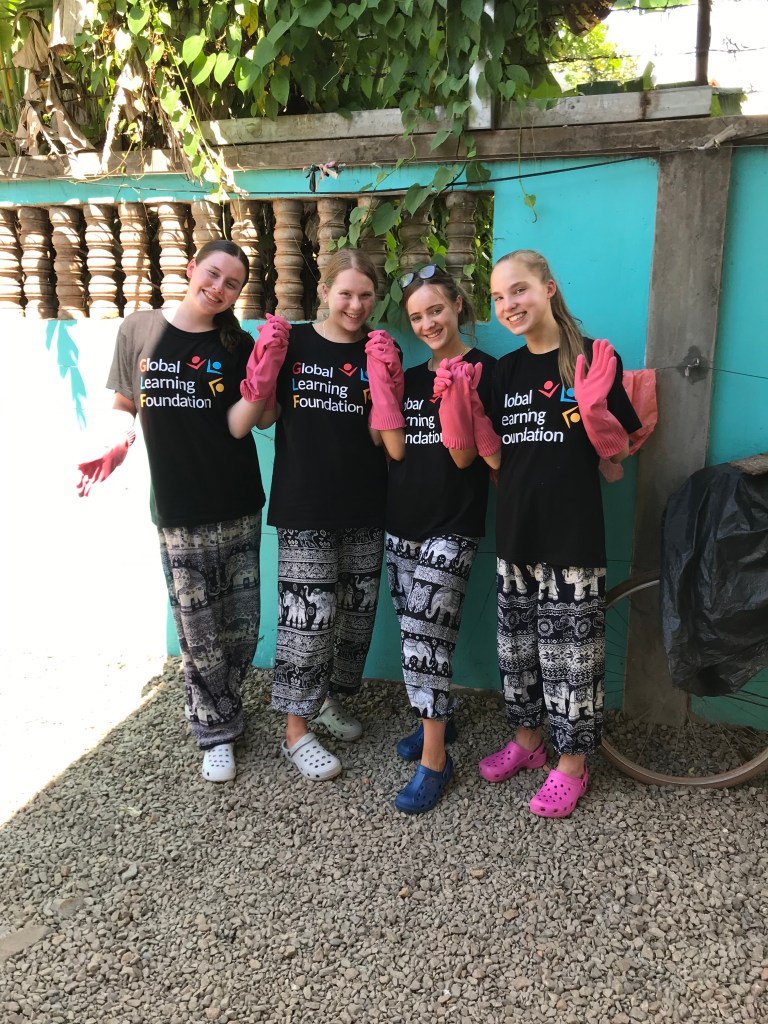
While the students participated in their workshop at Rehash Trash today, I took the time to complete a 5 minute sensory survey. This is one of the reflective tools that we will teach the students about, allowing them to attune to what they see, hear, taste, smell and feel. Here is mine about what I heard from the outdoor area at Rehash Trash, where nearby, some students were laundering used plastic bags for reuse, and some were crocheting with the Rehash Trash women (mums of the Green Gecko kids we are working with).
Motorbikes of different engine sizes and therefore different pitches zooming by. Low tumbling rumbles of small trucks with clang-clanging trays; utilitarian transport options. Whirring of electric fans overhead, punctuated by a rhythmic squeak as they oscillate. Ubiquitous popular music and 7 different remixes of Despacito. A distinctive two-tone bird call, the same one that woke me this morning and speaks of water nearby. Whack-a-whoom of freshly washed plastic bags being swung around to dry in the cloistering, damp air. Water droplets taking flight and causing giggles. Surprisingly sudden yawns as we slump into the afternoon of the second day and strive to adjust to the heat and time difference. Jolting uproars of hilarity as someone slips their hands through the suds or gasps in frustration at another dropped crochet stitch…
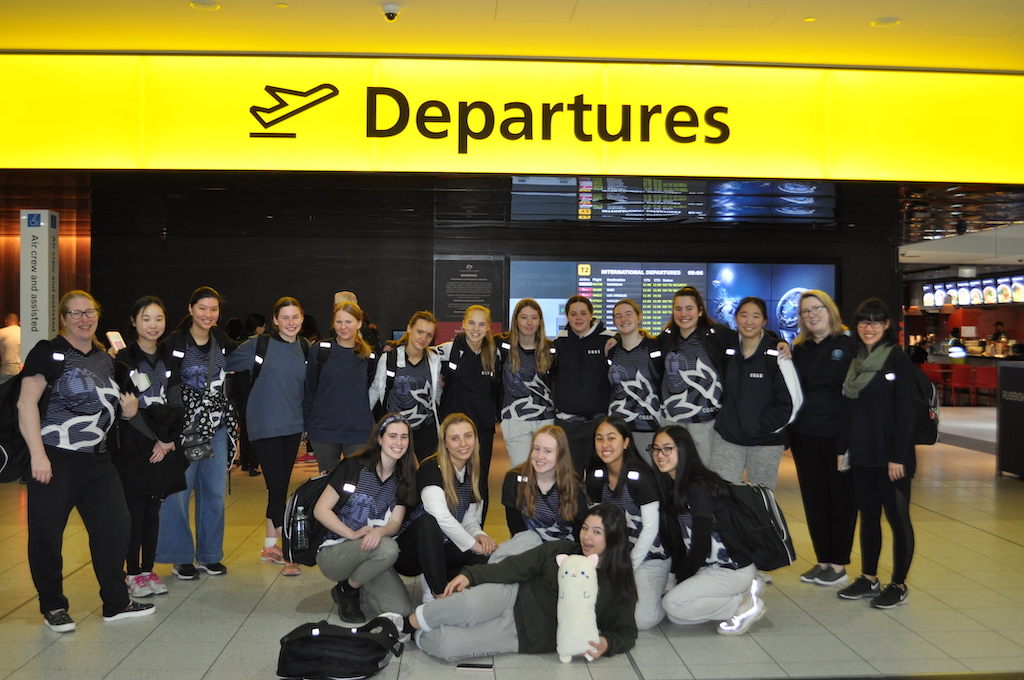
It was wonderful to see many family members at Tullamarine early this morning, and as I write this at 10.30pm local time, we have finally arrived at our destination!
Our travellers are possibly a little weary and are getting their ‘lights out’ call right now, but they were wonderful, patient and flexible as we made our way through Melbourne Airport, our Saigon transit, and into Siem Reap.
As we made the 20 minute bus ride from Siem Reap Airport to City River Hotel, looking out the bus window, showed us a different world to what we know. It left us wondering what the next week will bring….
The students are already enjoying the local flavour of our dynamic duo of guides in Dong and Ven, who have taught them some Khmer phrases to use, such as “sour sdey” (good day/hello) and “aukun” (thankyou).
Day Two of the tour will involve an opportunity to meet with Green Gecko founder Tania Palmer and to be shown around Green Gecko Central, and the first round of workshops with two of the Green Gecko social enterprises – Rehash Trash and the Silk Screen Printing Lab

 cggscambodiaimmersiontour.travel.blog